


In the Dust #6: Junior Wells’ Chicago Blues Band ‘Hoodoo Man Blues’
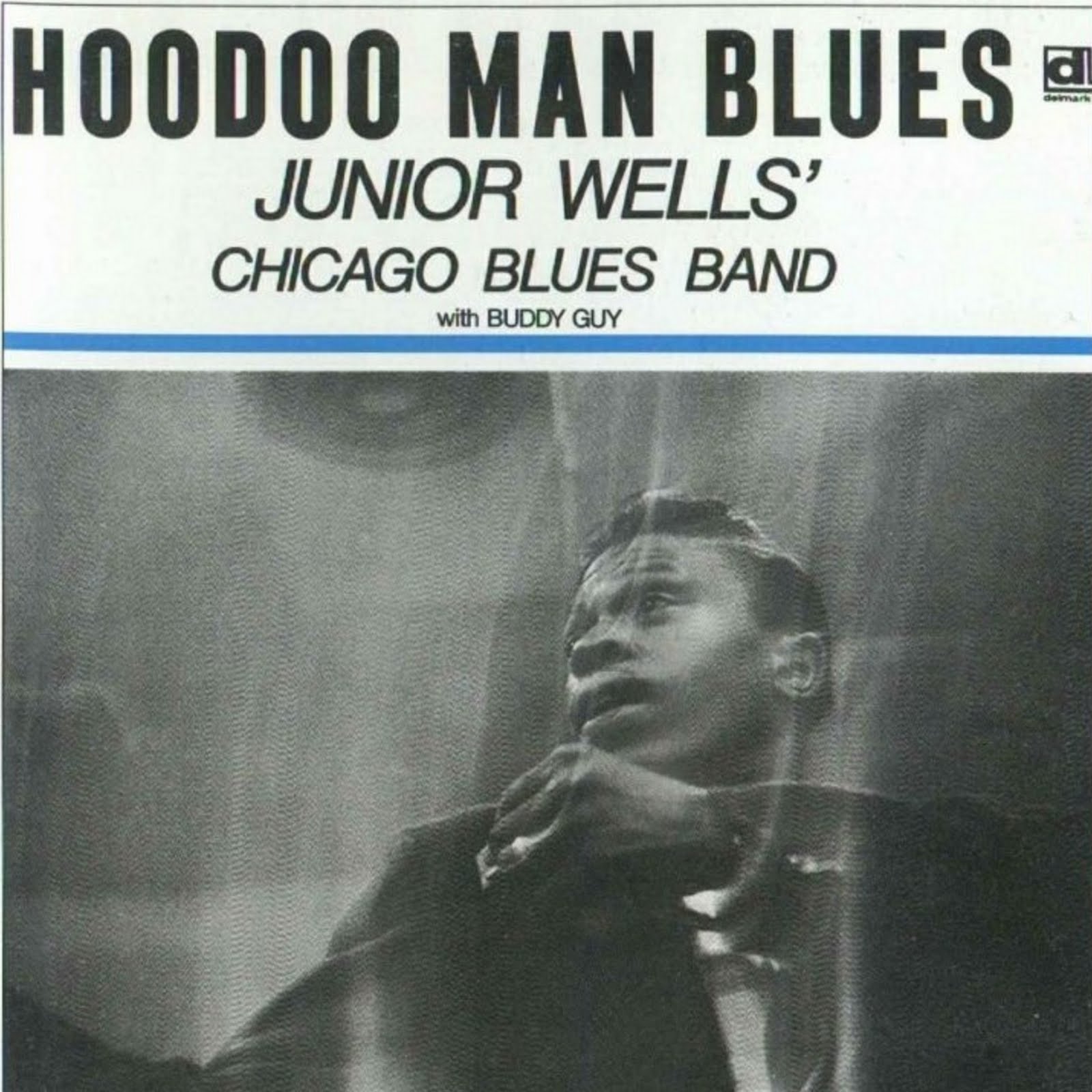
Once a week In The Dust rolls up its sleeves and digs to the back of the rack to find that record, the one you never knew you always wanted, the one that’s lost, but not forgotten.
hoo·doo
noun
1. Magic healing and control, especially in African-based folk medicine in the United States and the Caribbean. Also called conjure.
2. a. Bad luck.
b. One that brings bad luck.
verb
1. bewitch
Almost mystically so, Hoodoo Man Blues, Junior Wells’ first full-length record as a bandleader, began with a feeling.
Bob Koester, a Record Producer and founder and Chicago label Delmark record, had heard Don Kent, of Yazoo Records, and others whisper about a kid who played the harp. They said he’d been playing since the age of seven. They said he learned it from Sonny Boy Williamson II. They said he was good, so good, in fact, that he replaced Little Walter to blow for Muddy at 18. Koester knew he had to find this kid. He remembers his first encounter with Junior well:
I first heard Junior Wells on the States 78’s of “Hoodoo Man“, etc. during my days in St. Louis. I later heard the Muddy Waters band on a trip to Chicago, at the Club Zanzibar c.1957 and was perturbed that Little Walter had left and a new guy had taken his place but when I requested Key To The Highway and Muddy said, “I think Junior Wells does that better than I do.” Junior certainly cut Walter in the vocal department.
By the time Koester found him, Wells had stirred more than just a whisper, but had yet to record a full record. He had already made a name for himself within the Chicago bluesman scene, blowing for The Aces, Muddy Waters and solo for labels such as States, Profile and Chief, where his single, “Little By Little” rose to #23 on the Billboard R&B charts, but he was still relatively unknown outside of those who played the blues on Chicago’s South Westside.
Wells had a few scattered singles under his belt but nothing in which Koester could find the confidence to give him his own record. Wells was only 21. Koester was not sure if Wells could carry 2 sides, 30+ minutes, 10+ tracks. He also doubted that Wells’ music would find the audience necessary to fund the expense of sidemen and ample recording time, given their unusually crisp, urban style, one that featured band uniforms and synchronized movement, which was, of course, a world away from blues, bordering more closely on Motown.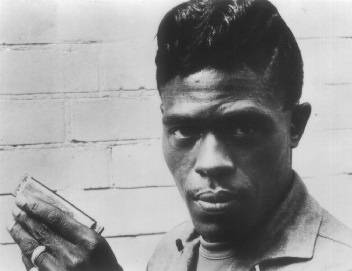
But Koester had a feeling about Wells, one he kept with him since the first moment he saw him blow with Waters in ‘57. Wells’ voice, musicianship, and sense of movement made him a naturally infectious performer, and Koester liked it too much to resist.
He gave Wells the record, and even allowed Wells’ to choose his own band and his track list, without restrictions. The sessions followed resulted in what is one of the greatest blues records ever made, and one of the most genuine, accurate documents of the Chicago blues sound in existence today.
The track list Wells selected is about half original and half blues standards, of which it featured “Good Morning Little Schoolgirl,” a song written by his mentor, Sonny Boy Williamson II, “Hound Dog,” by Leiber and Stoller, “Early In The Morning,” a traditional, and “Yonder Wall,” by fellow Chicago axe-man and “King of the Slide Guitar,” Elmore James.
Perhaps the most noteworthy decision of the entire session, Wells’ invited a 29-year old Buddy Guy to play guitar. This, as it was for the 21-year old Wells, Guy’s first crack at a full studio album. Wells’ rounded out the rest of the group with top-notch session men and Southside bar bluesmen.
The pair of Wells and Guy proved to be an unstoppably ebullient and explosive combination. From the first hit of the first track, “Snatch It Back And Hold It”, the pure force their relationship is palpable. The guitar, drums and bass play in unison a fanfare of a single note, but in this single note is more confidence, attitude and pure ferocity than many whole records of the time. This cocky snarl is accentuated by Koester’s, and all of the Delmark people’s, urge to bring the purely carnivorous Chicago blues sound out the bar and into the perfect acoustics of a recording studio, while leaving its spirit unadulterated. The sound is so raw, so live, so pure, allowing Wells’ natural charisma and masterful harp, Guy’s guitar and the innate infectiousness of their particular blend of Chicago blues-funk-soul to carry itself. “Somebody help me! / I can’t help myself,” Wells screams, as if under his own spell. As with classic blues lore, Wells must seek a way to shake off his hoodoo. The band is just too nasty, the music has a mind of it’s own, and Wells is caught in the undertow. The only way he can release himself is to wail and blow it out until the tidal wave spits him out.
“Hound Dog,” the Leiber and Stoller classic that launched the careers of, first, Big Mama Thornton and, later, Elvis Presley, is re-imagined as a crisp, frenetic sweat-storm and platform for Wells’ electrified harp lines and Guy’s masterful picking. Clocking in at an astonishingly lean 2:11, it is more a display of Wells’ Chicago Blues Band’s mastery of their craft than homage to the blues itself. In the energy of “Hound Dog” and the dogged efforts of his drummer Bill Warren, there is a certain trance-like quality, which is echoed by Guy’s repetitive complimentary guitar, peaking the album’s energy, solidifying that the listener is under his hoodoo, before it brings it back down in preparation for the record’s slowest, smoothest number, “In The Wee Hours.”
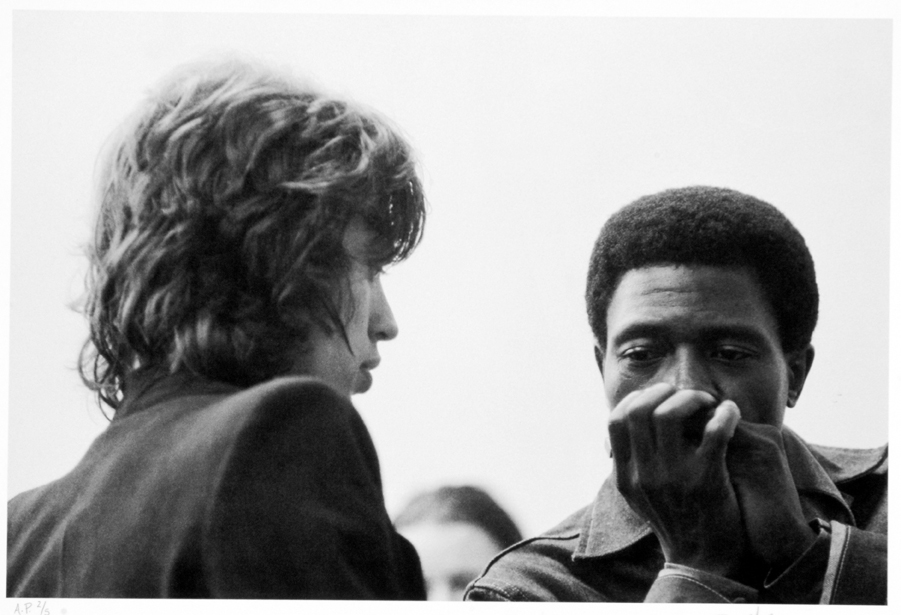
Bring with it the sizzling, sultry swing of the Southside Chicago barroom, “In The Wee Hours,” is the finer of Wells two attempts at slow-groove on the record. Following the frantic intensity of “Hound Dog,” “In The Wee Hours,” functions as a sleepy, hypnotic lobotomy, slicing the crown from the listeners head and slowly sinking its long, dark fingers deep inside to slice and tweak and toy, destroying in the process any previous conceptions of how profound a sub-four minute song can be, how good Chicago blues can be and how indescribably hot Junior Wells and his Chicago blues band can serve it up. Wells’ harp wafts lightly over the steamy, clean lines of Guy’s sensual and cryptically suggestive guitar. The delicate, light touch of Warren’s drums and Jack Myers’ subtle, driving bass add indispensible accoutrement to the midnight-moonlight atmosphere in which Guy and Wells are free move. Almost completely devoid of lyrics, the song has Junior, as in “Snatch It Back And Hold It,” pleading for help. He sings “I just need somebody / Somebody got to help me / Oh, Lord, to sing these blues / Lookie here, Lookie here, baby,” before embarking on a mournful, ethereal harp solo. Guy lends as much help as he can muster, summoning a lean, choppy solo that stands as one of his finest licks on the record, but the tone Wells’ harp is so lost, forlorn, spectral it is clear that Wells is still hopelessly under the spell, beyond assistance, hoodoo’d by the blues and desperately trying to play his way out.
The album’s title track comes soon after, leading off side A with another fanfare, a classic blues turn around in which the band bangs out together, compounding the swinging 4/4 blues rhythm to create a rambling, tumbling feeling that propels the listener into the center of the groove, where it is instantly apparently that Buddy Guy’s guitar sounds remarkably different. Guy’s amplifier stopped working part way through the Hoodoo Man Blues sessions, and so they chose to wire his guitar through the Leslie speaker of a Hammond B-3 organ, the effect of which is distinctive and has since inspired guitarist for generations. It adds a welcomed mystically to the track, in line with the spirit of hoodoo, and a poignant juxtaposition to Wells’ lyrics. Wells’ past pleads for assistance have fallen on deaf ears, and in “Hoodoo Man Blues,” he is determined to explain his case to, hopefully, sympathetic and potentially loving ears:
“Lord, I wonder, what’s exactly the matter / Child you know the time / It seemed like hours / Everything had changed / But I hold up my hand / Lord, I’m trying to make you understand / Lord, now, everybody tell me / Somebody done hoodoo’d the hoodoo man”
Wells is reaching out, as the hoodoo has consumed his life and he can no longer keep it to himself. The blues has grown to rule him and distort his sense of time, state of being and relationships. Somebody truly done hoodoo’d the hoodoo man.
Wells is truly afflicted, as is Guy, Wells’ band and Koester. Hoodoo Man Blues stands as, until recently, Delmark’s best-selling release of all-time, inflicting with the hoodoo man blues Bonnie Raitt, The Rolling Stones, Van Morrison, the author and many more.
In the remainder of the record, Wells never does relieve himself of the hoodoo, though he still tries. Perhaps this is the perfect sentiment for the debut record of an artist who would spend a lifetime under its spell: a hoodoo man chasing the blues.
Written by Ben Brundage
Thoughts on Dum Dum Girls ‘Only in Dreams’

For many years, friends have relied on me as the music guy and constantly asked me the question of “What music should I be listening to right now.” While humbly embracing this distinction, I have been left mildly insane. This question drove me crazy. It was like a persistent sliver of Indiana Oak between my left toe, sock, and Converse. I am the executioner and enjoy delivering on the spot, but this constant thorn in my side left me thinking: “I am really into 11 bands right now, how do I pick just a few? “They know I am not just listening to buzz bands, are they searching for a deeper answer?” “Is there any way I can track the music I have been listening to the past 10 business days and send a report in .xls format?” Feeling exhausted, I search for easy remedies. Then stories like this form and make my job easier. I wish the Dum Dum Girls directly reported to me…they would make me look like the best manager of all time.
San Pedro-based, Sup Pop-backed, beach chicks Dum Dum Girls delivered their second full-length album this September with Only in Dreams. The production quality is astounding and takes all the yummy elements of their first release, I Will Be and bakes them out to deliver a delicious touch of sweetness. This makes sense though right? This album was produced by song-writer Richard Gottehrer who crafted such classics as “I Want Candy” and “My Boyfriend’s Back.” It is my best guess that if the Dum Dum Girls were in formation in 1963 Gottehrer would of subbed them in for Smash Records’ trio The Angels. Dee Dee Penny would have entered with her howling guitar and The Angels would have cut a double. 4 chicks v. 3? I will take the numbers.
The Dum Dum Girls are one of those bands this year that has accomplished tremendous things in the indie-rock scene and established themselves in a way that make it easy for me to tell all my readers that you should be listening to them right now. No Brainer. During my “Best Cover Songs of 2011” post, I slated their interpretation of The Smiths “There is a Light that Never Goes Out” as the best cover song of the year. I confidently gave them this honor because this was not just a cover song I liked, it was more than that. It was song that I really liked. Dum Dum Girls carried this sense of establishment onto their latest LP Only in Dreams and have sold me on their sound. Hook, line, and sinker – I am mesmerized and California dreaming. The Dum Dum Girls shine the summer sun in the fall. Aligning the timing with their geographic location was never their thing – that is why I dig on them.
The first song I heard from this glorious record was “Coming Down.” It was the first track of theirs that hit the blogsphere and I was hearing a different Dum Dum Girls. At first I had to take a step back and reflect.
This was a band I really enjoyed but they were simple. They offered me the luxury to listen to a group of girls beat out songs about heartbreak on their electric guitars. I knew the Dum Dum Girls as a band that delivered simple songs that were easy, quick, and exciting. They owned a special spot in my listening experience – so simple that I underestimated them.
“Coming Down” provided such a powerful impression that I was taken aback. I had no idea these girls had the capabilities to deliver a song that spanned 6 minutes and 30 seconds. It sounded nothing like them, and was still able to attract my attention. After I got use to this song the Dum Dum Girls had me on a platter. The meat and potatoes of the Dum Dum Girls were the next course and all I can say is MAN ‘O MAN! “Bedroom Eyes” is the hottest song going right now and rightfully so. It is so catchy, so “My Boyfriend’s Back”, so Dum Dum Girls. This song has the potential to rise above great tracks such as M83’s “Midnight City”, Cults’ “You Know What I Mean”, Cold Cave’s “Confetti” and SBTRK’s “Wildfire” to become my favorite song of 2k11. Only time will tell, but it owns a longboard that is being driven straight into my heart. “Wasted Away” backs out the lower end of the album and lines like “I would rather waste away then see you only in dreams” resonate with me.
The Dum Dum Girls are not controversial and they continue to find ways to extend their sound. I appreciate these gals because of their authenticity and willingness to take chances. Although the problem will never be completely solved, at least I can thank The Dum Dum Girls for providing me an easy response to questions for at least the next 6 months. Wishful thinking, right? Only in Dreams.
Written by Brett McGrath.
Album Review: Hiromi – The Trio Project ‘Voice’

Listen via Spotify
I have been constantly altering a list throughout my lifetime entitled, “Best Humans I’ve Ever Seen Do Things.” I have had the privilege of witnessing some spectacular individuals. Michael Jordan remains the greatest basketball player that I have ever seen grace the court. Peyton Manning is the greatest quarterback and arguably the greatest offensive mind of my football generation. When I start to think about the greatest musicians that I have ever seen live, the list becomes muddled and varies based upon my mood.
For a couple of years, though, a single musician has sat, unwavering near the top of my list. Hiromi Uehara was born in Hamamatsu, Japan on March 26, 1979. She began playing piano at age six, and started playing jazz at eight. A prodigy at an early age, Hiromi had performed with the Czech Philharmonic Orchestra by age 14. Before she had reached adulthood, a chance encounter with Chick Corea led to a guest spot alongside the legendary pianist during a performance on his tour of Japan.
Hiromi wrote jingles for a few years, composing songs for large Japanese corporations like Nissan. Eventually, she enrolled at Berklee College of music in Boston, where renowned pianist Ahmad Jamal mentored her. She was already signed with the jazz label Telarc before her graduation in 2003.
By the time I saw Hiromi’s quartet Sonicbloom in 2009, at the Blue Note in Manhattan, she was known by jazz aficionados worldwide as one of the planet’s premier musicians. Her moniker rang out like a Brazilian soccer player whose surname was all that proved necessary. Her style of play must not be too unlike riding shotgun with a professional racecar driver. Hiromi drives at a break-neck speed while remaining in complete control. The adrenaline flows as she plays at an impossible rate, but there is never a bead of sweat on her brow or a shred of indecision in her hands.
It was electrifying. In a promotional video for her 2011 album Voice, drummer Simon Phillips picked the perfect word to describe Hiromi, calling her “relentless.” Her solos stream one after another, an endless barrage of flawless, speed-infused mind benders. It was unlike anything I had ever seen. She obliterated jazz standards like “I’ve Got Rhythm” and “Caravan.” The show was so good that I immediately walked up to the box office and purchased another ticket for the following night.
Voice opens with the title track. A dark, descending piano progression. The progression dissolves into a single repeating note, ringing out like the proverbial dinner bell. Her right hand continues to sound the alarm while the left hand joins into a stronger version of the initial break down. A cymbal splashes and superstar Anthony Jackson enters on contrabass. The beat builds from there. The trio stays on course with the song’s melody, but it grows increasingly funky. The first track clocks in at 9:13 and serves as a statement for the rest of the album. This is not a pop-infused joy ride. Hiromi challenges her listeners, from their attention spans to their tolerance for experimentation.
Hiromi is at her most frivolous on “Now or Never.” This song sounds the most like her work with Sonicbloom, with Hiromi switching flawlessly back and forth from her Yamaha grand to the electric keys for the first time. For all you jam fans out there, this is what Mike Gordon and Trey Anastasio sound like in their wettest of dreams. “Now or Never” offers a legitimate give and take between Hiromi and the rest of the band. The song begins with a full-on onslaught from the trio before the drums and bass take the back seat mid way through. She waits to kick it into hyper speed this time, content to riff over her partners from the upper register. It’s at this point in the album that the trio’s collective voice begins to gel, and Phillips and Jackson sound most comfortable.
If there is a forgettable track on Voice, “Temptation” may be it. No real risks taken. That’s not to say that the song is dull, it just lacks the complex explosiveness that Hiromi’s projects typically entail. Whenever the song seems to pick up momentum, it recedes before capitalizing. That being said, “Temptation” serves as a welcome breather when taken in amongst the rest of the album.
“Labyrinth” proves an apt name. The song is confusing, without ever reaching the point of discomfort. The listener is lost, but it feels as if you’re lost with intention. Hiromi has designed this maze and your three guides will get you out of it. Jackson shines in the latter half of the track, playing some incredible lines.
The problem that Hiromi faces is the same one that confronts nearly every virtuoso: Where do you go from the top? I’m sure for the avid jazz fan, there are nuances to be discovered with everything that Hiromi plays. However, for the novice listener it has the potential to become redundant. In my opinion, the only way that Hiromi will be able to ensure that her music remains interesting for herself and her audience is through increasingly unusual collaborations. Bela Fleck serves as the model for this mindset with his exploration of Asia via Abigail Washburn and Africa through Throw Down Your Heart.
Surprisingly, the album’s last track proves its most successful and accessible. The trio’s take on Beethoven’s “Piano Sonata No. 8, Pathetique” is stunning. It begins with the same restrained melancholy that so many pianists have stroked over the years. But Hiromi quickly cuts to the core of the song’s melody. Coupled with Phillips’ subtle snare pattern, she breaks Beethoven’s piece down into a bluesy number that would feel at home in any smoke-filled bar. Here she proves, without question, that Beethoven got down and dirty in his time.
Hiromi may go down as one of the greatest musicians of our generation. However, with the Grammy’s recent decision to scale back the number of jazz categories, I wonder how many people will continue to discover artists like her. One thing is certain, I’ll be listening. Below is a recent video of The Trio Project. Watch and learn:
Written by Rob Peoni

