


In The Dust #2: Son House ‘The Grafton Sides’
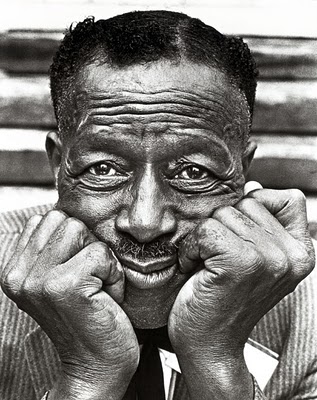
Once a week In The Dust rolls up its sleeves and digs to the back of the rack to find that record, the one you never knew you always wanted, the one that’s lost, but not forgotten.
It begins with a man named Henry Sloan. Shrouded in myth, little of Sloan’s life has been uncovered by historians, but many believe that he is the key to early blues, and possibly the genre’s father altogether. In 1903 W.C. Handy, who, with his band, went down in history nine years later for recording the first blues, “St. Louis Blues”, wrote of a mysterious vagrant he encountered while waiting for a train at Tutwiler Station, in Tallahatchie County Mississippi:
…A lean, loose-jointed Negro [who] had commenced plucking a guitar beside me while I slept. His clothes were rags; his feet peeped out of his shoes. His face had on it some of the sadness of the ages. As he played, he pressed a knife on the strings of the guitar. … The effect was unforgettable… The singer repeated the line (“Goin’ where the Southern cross the Dog”) three times, accompanying himself on the guitar with the weirdest music I had ever heard.
Many believe this man to be Sloan.
Then, there came a bluesman known as Robert Johnson. According to legend, Johnson, overcome with the desire to become a guitar player, heard of a place where one could acquire all the skills necessary to become the greatest living bluesman. Johnson was “instructed” to take his guitar to a crossroads near The Dockery Plantation, off the Sunflower River in Mississippi, and wait. At midnight Johnson met a large black man who offered to tune his guitar for him. The man played a few songs and handed it back to Johnson. In this exchange, Johnson acquired a comprehensive understanding of the guitar.
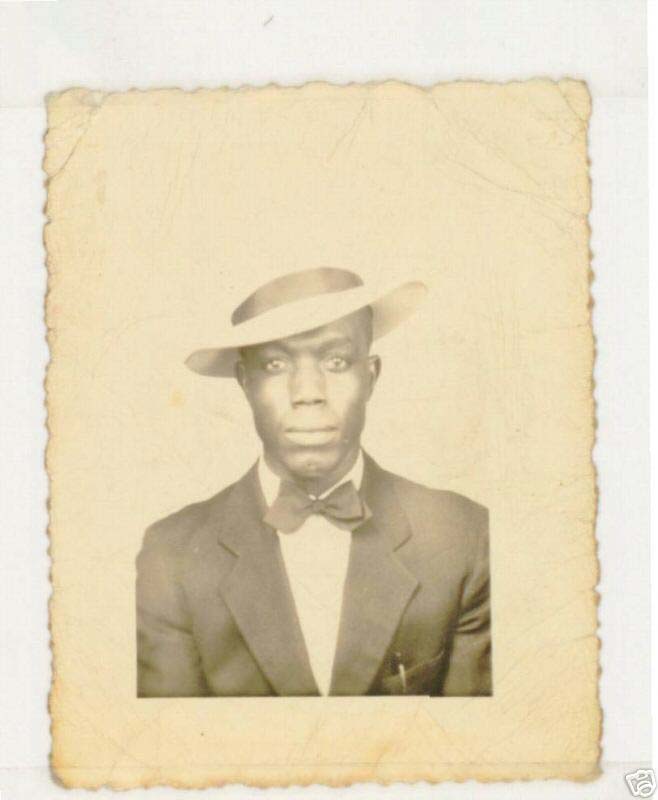
Johnson’s legend circulated amongst the blues community and small towns of rural Mississippi. Pete Welding, a writer for Down Beat Magazine, once asked Son House about Johnson’s seemingly overnight mastery of the guitar. House recounted the legend. It was then featured in a 1966 issue of Down Beat and effectively what we know as the Crossroads Myth began.
Many believe this man of this legend to be The Devil, and this exchange a Faustian agreement in which Johnson sold his soul to be a great guitar picker.
Many believe this man to be Sloan.
While there are many rumors of Sloan’s tutelage and impact on the blues, one detail of Sloan’s life we know for certain. He taught Charlie Patton, one of the most important men to ever pick up a guitar, how to play.
When Patton was nearing nine or ten years of age, his family moved to The Dockery Plantation, the same plantation where, later, Johnson would learn the instrument. At Dockery, Patton met Henry Sloan. He would prove to be a mentor to Patton and his single greatest influence. Patton followed him everywhere. Son House and Tommy Johnson, who played with Patton, remarked that Patton “dogged every step” of Sloan’s. It is through this close relationship, and several years as Sloan’s accompanist, that Patton became one of the greatest guitar pickers to ever live, and to some “the Father of the blues”.
Patton later taught the guitar to Howlin’ Wolf and John Lee Hooker and played with such greats as Willie Brown, Tommy Johnson and Son House.
In 1929, Paramount Records approaches Patton, offering to take him to Richmond, Indiana to make a recording. He makes fourteen, one of which, “Pony Blues” he composed at the age of 19 and is now a part of the National Recording Preservation Board of The Library of Congress. Paramount releases “Pony Blues” as his first recording. It sells well. Later that year, Paramount approaches Patton again, this time offering to take him to Grafton, Wisconsin. He records 28 sides, some of his most famous to date. Early the next year, Paramount taps Patton again to come to Grafton. Patton only has a few sides left, four to be exact, so he brings with him Louise Johnson, Willie Brown and Son House. Johnson records four sides, Brown two, and Son House nine.
Of the nine sides House recorded for Paramount, only eight were released. All were commercial failures. House would not record again commercially for 35 years, but despite the dismal sales figures of House’s Paramount sides, they would come to ensure his legacy as one of the best to have ever had the blues.
“Dry Spell Blues Pt. 1” and “Dry Spell Blues Pt. 2”, the first two sides House recorded for Paramount, illustrate the radiant finger-picking, thundering screech-and-bellow and dark, desperate imagery for which he is known. House coarsely screams, “The dry spell blues have fallen,” and then seamlessly wails with the force of a bus, “drive me from door to door.” He repeats the phrase, and follows it with a characteristically ominous prediction of demise: “The dry spell blues have put / everybody on the killing floor.” Beneath this farmer’s lament, a repetitive, low-end strum-and-hammering anchors the intense, piercing plucks that, as if super-heated, seem to spit from House’s steel strings onto the “Dry Spell” melody. House, never a large man but nonetheless as fearless and formidable as one would expect a man alleged to have killed in self-defense to be, sings and picks with the power of a giant. As if possessed, his timbre is penetrating, ghostly, terrifying. “Well, I stood in my backyard / wrung my hands and screamed,” he sings, and you see him. “Lord, I fold my arms and I walked away / Just like I tell you somebody’s got to pay” he sings, and you fear him.
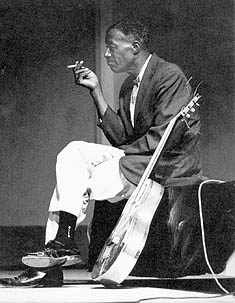 The next two sides House recorded for Paramount, “Preachin’ The Blues Pt. 1” and “Preachin’ The Blues Pt. 2”, are performed with the same fervor as “Dry Spell,” but delivered less darkly, and with different energy, one of enjoyment, not of anger and despair. House strums again an up-and-down rhythm peppered with similarly striking plucks as in “Dry Spell”, but his fingerpicking resonates and shimmers. Unlike “Dry Spell”, it is light as air and floats above his words, ascending as far as it can until it must dip and dive back down into the deep, driving heart-beat thump of House’s thumb on the six string and his foot on the floor. This constant thump excites the sly ecstasy with which House sings, “Yes, I’m gonna get me religion / I’m gonna join the Baptist Church.” A knowing smile on House’s face seems to shape his words as he continues, “I’m gonna be a Baptist preacher / and I sure won’t have to work.” House proceeds to explain how security is the only value he sees in religion, and he’d rather find the Spirit in women and the blues. Of his preference for a good time, he sings, “Oh, I’d-a had religion / Lord, this every day /
But the womens and whiskey / Well, they would not set me free,” and that doesn’t bother him. He doesn’t miss it, and sings of that fact with rapturous joy in Pt. 2, when he concludes that his religion is his own: “Whoa, I’m gonna preach these blues now / and choose my seat and sit down / When the spirit comes, / I want you to jump straight up and down.”
The next two sides House recorded for Paramount, “Preachin’ The Blues Pt. 1” and “Preachin’ The Blues Pt. 2”, are performed with the same fervor as “Dry Spell,” but delivered less darkly, and with different energy, one of enjoyment, not of anger and despair. House strums again an up-and-down rhythm peppered with similarly striking plucks as in “Dry Spell”, but his fingerpicking resonates and shimmers. Unlike “Dry Spell”, it is light as air and floats above his words, ascending as far as it can until it must dip and dive back down into the deep, driving heart-beat thump of House’s thumb on the six string and his foot on the floor. This constant thump excites the sly ecstasy with which House sings, “Yes, I’m gonna get me religion / I’m gonna join the Baptist Church.” A knowing smile on House’s face seems to shape his words as he continues, “I’m gonna be a Baptist preacher / and I sure won’t have to work.” House proceeds to explain how security is the only value he sees in religion, and he’d rather find the Spirit in women and the blues. Of his preference for a good time, he sings, “Oh, I’d-a had religion / Lord, this every day /
But the womens and whiskey / Well, they would not set me free,” and that doesn’t bother him. He doesn’t miss it, and sings of that fact with rapturous joy in Pt. 2, when he concludes that his religion is his own: “Whoa, I’m gonna preach these blues now / and choose my seat and sit down / When the spirit comes, / I want you to jump straight up and down.”
Son House’s signature song, “My Black Mama Pt.1” and “My Black Mama Pt.2”, he recorded next. Later reworked into “Death Letter” or “Death Letter Blues”, and famously covered by The White Stripes, it is House’s most well-known song, and for this author’s money, his best.
House sings of a classically tumultuous relationship. “Oh black mama / what’s the matter with you?” he asks. “Said if it ain’t satisfactory / don’t care what I do,” he complains, but despite her 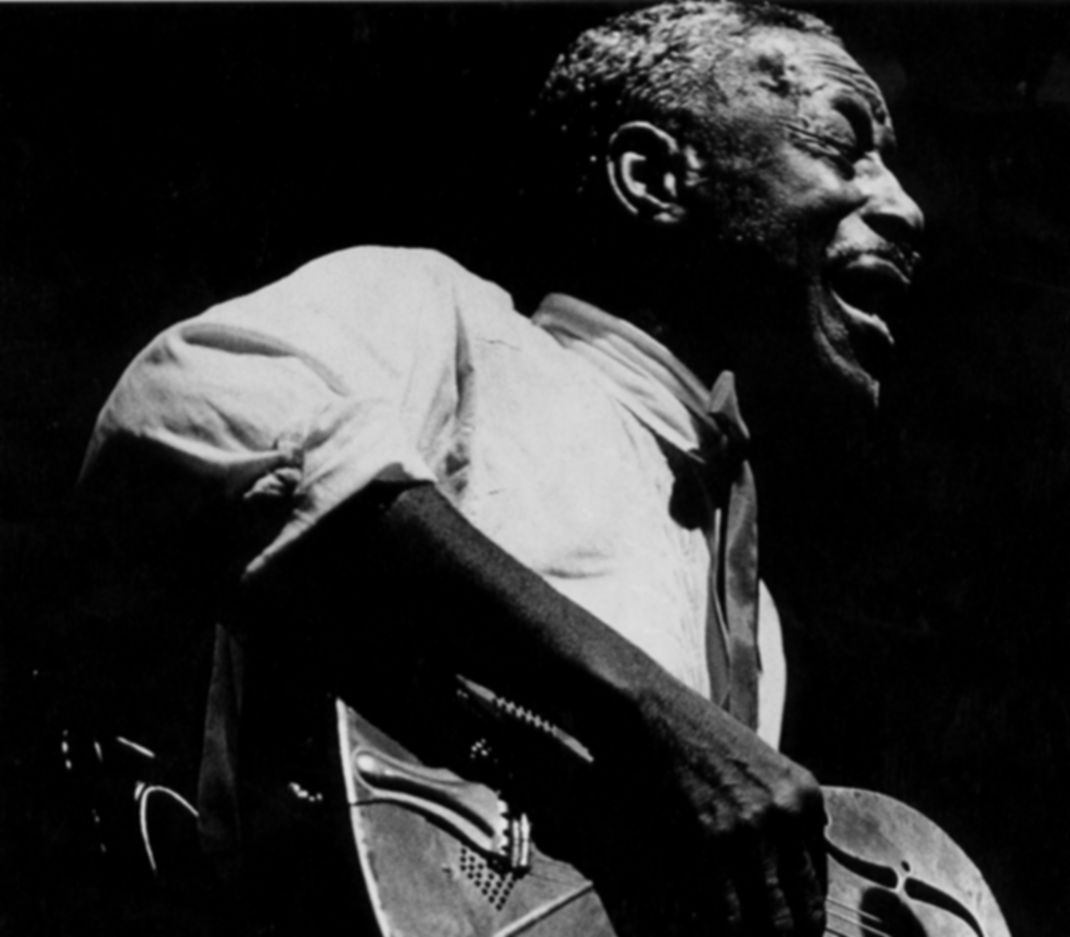 nagging and negativity he finds her so beautiful and knows in his bones he loves her more than he could any other woman. “Well my black mama’s face / shine like the sun
/ Oh lipstick and powder sure / won’t help her none.” He sings her praises until the housework suddenly seems to go undone and he hasn’t seen his mama in sometime. It is then he realizes she has gone. He is hurt and distraught, resolved to leave her, but in Pt. 2, he receives a letter: “I solemnly swear Lord / I raise my right hand
/ That I’m goin’ get me a woman / you get you another man /
I got a letter this morning / how do you reckon it read?
/ Oh, hurry, hurry, / gal, you love is dead”. House must go to the Coroner’s to identify her body. He sees her upon the cooling board and returns home in a deep depression. Another up-and-down strumming pattern, seemingly more frantic than in his other blues, separates quick, choppy bursts of picking and sliding. The single chords House repeatedly strums during the chorus and refrain and the repetitive sound they create evoke the monotonous insanity often brought on by overwhelming grief. To ease his pain, he calls out a line that echoes through the songs of many, many bluesman before and after, a line that derives its power from the very soul of the blues: “Some people tell me the worried blues ain’t bad / Buddy, the worst old feelin’, Lord, I ever had.” His woman is gone from this earth, and it hurts, but nothing hurts quite like being left.
nagging and negativity he finds her so beautiful and knows in his bones he loves her more than he could any other woman. “Well my black mama’s face / shine like the sun
/ Oh lipstick and powder sure / won’t help her none.” He sings her praises until the housework suddenly seems to go undone and he hasn’t seen his mama in sometime. It is then he realizes she has gone. He is hurt and distraught, resolved to leave her, but in Pt. 2, he receives a letter: “I solemnly swear Lord / I raise my right hand
/ That I’m goin’ get me a woman / you get you another man /
I got a letter this morning / how do you reckon it read?
/ Oh, hurry, hurry, / gal, you love is dead”. House must go to the Coroner’s to identify her body. He sees her upon the cooling board and returns home in a deep depression. Another up-and-down strumming pattern, seemingly more frantic than in his other blues, separates quick, choppy bursts of picking and sliding. The single chords House repeatedly strums during the chorus and refrain and the repetitive sound they create evoke the monotonous insanity often brought on by overwhelming grief. To ease his pain, he calls out a line that echoes through the songs of many, many bluesman before and after, a line that derives its power from the very soul of the blues: “Some people tell me the worried blues ain’t bad / Buddy, the worst old feelin’, Lord, I ever had.” His woman is gone from this earth, and it hurts, but nothing hurts quite like being left.
Often dubbed “the holy grail” of lost blues recordings, House next put to tape “Clarksdale Moan”, a tribute to Clarksdale, Mississippi, House’s birthplace. The recording was the only of House’s rumored to be lost. It was in this absence it held its importance. Previously unheard outside of House’s time, in 2005 an anonymous collector discovered the only copy currently known to exist. While lyrically insignificant, House’s blistering fingerpicking and soaring single-string slides make “Clarksdale Moan” an exhibition of some of the finest finger-work of his career.
Also lost, as it was the A-side to “Clarksdale Moan”, “Mississippi County Farm Blues” is thought to be House’s first-hand account of his convicted murder. Said to have shot a man in self-defense after said man had gone on a shooting spree, House sings of enduring an unwarranted fate, “They put me in jail, wouldn’t let me be / Put me in jail, would not let me be / They said I killed old Leroy Lee,” his guitar echoing his voice, rubbing his back, commiserating with him and soothing his soul. He laments his wrongful imprisonment and resents the police and court system for handing down a sentence not only to an undeserving man, but a sentence more severe than most cold-blooded murders: “Some got six months and some a year / Some got six months, lord, and some a year / Poor me, poor me got lifetime here.” In actuality, House received 15 years, and served two , but to a 25 or 26-year old, the age at which House was convicted, 15 years is nearly a lifetime. Being so young, House did not have the foresight to imagine a time beyond prison. Distressed by an impending decade and a half behind bars, he wishes more than anything to go back to his childhood, a time before crimes and before even punishment. Above the mournful arpeggio of House’s masterful finger-picking, he cries, “Wish I was a babe in my mama’s arms / Wish I was a baby in my mama’s arms / Wouldn’t-a been here working on the County Farm.” Of course, such a desire is impossible to fulfill. And so he must press-on and accept life in, and after, prison.
He does so with a wink and a nod to Robert Johnson and, in the process, himself.
For his last Paramount side, House chooses to record “Walkin’ Blues” a song that Johnson had composed as a reworking of House’s own “My Black Mama”. With “Walkin’ Blues” House concludes his first recording session ever with an homage to himself, a cocky gesture, a suggestion of perceived self-worth and perhaps things to come. Could House have known the impact he would have on the world of blues? Could House have known, after being virtually forgotten, of his own rediscovery by The Library of Congress ten years later, and 21 years after that by the world at-large? Could House have known that these songs would be responsible? He tells it best, in the last stanza of his brilliant, 1930, “Walkin’ Blues”:
You know I’m going away / I’ll stay a great long time / I ain’t coming back here / until you change your mind / Oh, I’m going away / I believe I’ll stay a great long time / I said I ain’t coming back, honey / until you change your mind.
Written by Ben Brundage. Check out Ben’s Tumblr: Damned Fine Lion
Album Review: Girls ‘Father, Son, Holy Ghost’

I have a mere 16 gigabytes on my iPhone – It is the bane of my day-to-day existence. Questions. Debates. Self-reflection. I constantly have to cut good albums from the roster to make room for new listening adventures. Deep down in my listening bowels I feel this to be necessary, however, the report tells me I need to SMACK myself in the face. Ticking time and money make it financially impossible for the upgrade that I deeply need. I eat it and fight it.
Exhibit A: Replace Bat for Lashes Two Suns with Miracle Fortress Was I The Wave?
My first inclination is to tell the cats from Miracle Fortress that they were not the wave. The wave is high, but their contribution is minimal. I wish Miracle Fortress gave me something to consider. My only salvation is to listen to their music and attempt to digest its importance. I try to search for wave accreditation and fail. The drone sounds and half-worked dance mixes cause me extreme pain.
Miracle Fortress’ redeeming qualities might peek behind the curtain, but they lack confidence. They remind me of the smart kid in class who was always afraid to raise his hand. Potential might be a matter for debate but delivery is as reliable as a deadbeat dad’s monthly child support payment. Miracle Fortress is as conventional as a PB & J. The only problem is the Jiff ran out months ago. At least I know that if I put Bat For Lashess back into the mix, I will have “Daniel” and I won’t feel like a poser. My lunch break is back and it is delicious.
Exhibit B:
When, Father, Son, Holy Ghost dropped, I had a certain inner excitement. After receiving an early copy of the record, I realized that both previous Girls releases, Album and Broken Dreams Club EP had withstood the test of time. They had remained on my iPhone since their initial purchase. I sincerely enjoy Girls. It may be their San Francisco roots, which I candidly admit I am a SUCKER for, but my enjoyment goes beyond that. From the beginning, they have been their own boss and propelled their own evolution.
Girls makes it happen from track to track. There are few bands right now in the indie hemisphere who have been able to progress their agenda with minimal scrutiny quite like Girls. Album opened the door to the band, but left me to wonder, “Are these guys serious?” Many of the songs from Album seemed as if the band were playing around. This lack of seriousness on certain tracks defines the band.
The best part about Girls is that they challenge our listening experience by making us accept them. Do we really know them? Hardly, but we all trust in their vision. Their subtle projection for satisfaction tries to make us care. It is this dedication that causes me to pay attention.
Father, Son, Holy Ghost rips out with single, “Honey Bunny” which bleeds the Girls true colors all over our living room floors. Sad, simple, effective.
“I’ve been messing with so many girls who could give a damn who I am”
Uncertainty, and a lust for comfort make Girls relatable. They might not be the band you play to your ex-girlfriend to rekindle ties, but they are the band you embrace to regain confidence. That’s Girls out of the box, and that is why they are special.
“Die” is a track that competes for my song of the year. Howling guitars and soothsaying prophecies help breed confidence in any man that has been shut out from sharing the sheets. Plenty more thrillers help smooth over the rough spots. Girls has continued to prove staying power. It might not be with a significant other, but this is why we listen…right?
Written by Brett McGrath.
 Thought on Tracks
Oranje: Naptown’s Craziest Ten-Year-Old
The first few weeks in September tend to be the busiest of Indianapolis’ arts and social calendar. Penrod. French Market. Greek Fest. Irish Fest. Jazz Fest. Art vs. Art. The list goes on. September is possibly the only month that Hoosiers can rely upon consistent, pleasant weather. The humidity of Indiana’s swampy summer is usually behind us. But enough warmth remains for scantily clad nights on the town.
The unfortunate part about jamming some of the city’s most well attended artistic events together is that sacrifices must be made. This year, as I have for the last several, my Saturday night was spent at Oranje. The evening marked the tenth anniversary for the event that bills itself as “Indiana’s Premier Arts & Music Explosion.” Explosion proves an adequate description.
Oranje can be overwhelming. More than 30 musicians and 40 artists fill and surround a warehouse at 23rd and Illinois for a veritable feast of the senses. A whirlwind of sights, sounds and tastes combine for one of Indianapolis’ can’t miss parties. At its best, my memories of the evening wind up a blur of experiences that I rarely separate into individual performances. They all merge together into a single, enjoyable mind fuck.
From an outsider’s perspective, Oranje seems like our city’s ill-fated attempt at trendy, artistic expression. And to some extent all the necessary clichés are in place—half-naked hipsters, experimental music, interactive exhibits. Non-natives may wonder what original thought Hoosiers could offer such a scene. Those who have attended know better.
I always leave Oranje motivated and inspired. This city is home to so many talented, interesting minds. In a state that prides itself on our small government, public funding of the arts is scarce. But the relative low cost of living allows artists to thrive for a fraction of the cost that larger cities, like New York and Los Angeles, demand. What Indianapolis needs to improve upon is providing these artists with a voice. Oranje accomplishes this in spades, but it’s not enough.
Indy’s residents should not wait until the second weekend in September to take in the arts. Terrific, worthwhile events take place all over this city every week of the year. Indianapolis’ greatest strength is arguably its accessibility. We can get almost anywhere in twenty minutes. We can park. With such opportunities all within arm’s reach, there is no excuse for failing to take advantage of all that Indy has to offer.
I thank the Oranje crew for the massive amount of planning and hard work that goes into this annual bash. Their contribution to the Indianapolis art scene over the last decade has opened a lot of local eyes. Now we’ve got to keep those eyes open and get them out of the house before next September. Let’s face it, folks. The Colts are not getting any better. Luckily for us, there’s more than football in Indiana.
Written by Rob Peoni
Photos by Katie Kirkhoff