


Album Review: Twerps ‘Self-titled’

Aside from the radical, retro column ‘In the Dust’ by Ben, the team at Thought on Tracks tends to focus on the brand new. We all make an effort to share our thoughts on what we think our readers should be listening to. I am passionate about introducing new music to the readers of this blog. However, I have come to the conclusion that there should be no expiration date on when an album can be reviewed. If I am listening to it and I think it rules, then I will now be sharing it, regardless of its release date. I pull back six months to share the self-titled release from Twerps.
If Real Estate makes your knees buckle, then Twerps is for you. This Melbourne product breeds a laid back vibe built on smooth, melodic guitar patterns. This album offers a sense of comfort and it improves with each play. This record is one that should have received more attention last year and I am on a grass roots campaign to put it in your rotation. With Anthony Davis like growing spurts, this record is a standalone winner. It is hard for me to put many bands in the same family as Real Estate, but I am doing it here so please take note.
The beginning of this record is crisp. Acoustic rhythm backed by electric fills. Lead singer, Marty Frawley’s vocals pop through the surface on “Dreamin.” This track was my introduction to the Twerps and remains my favorite. This track controls my mood with each play. I find myself getting lost in the lead fills, constantly discovering new sounds within their patterns. I wish every song that I listened to had this type of power.
Follow up track “Don’t Be Surprised” should be noted for its strong change of pace from verse to chorus. A mellow acoustic guitar and slow vocals introduce this track and it appears that the mood will peak at placid. The chorus screams, “Don’t be the one to call my name I don’t want to hear you calling my name” and now we have entered Stephen Malkmus world with the quick switch up. A mild-mannered track in a bit of a musical masquerade is the best way to describe this song. Just in case you are keeping track at home I have mentioned both Real Estate and Stephen Malkmus in this write up. Do I have your attention?
Towards the end of the record you get a bare bones offering of Twerps with the song “Bring Me Down.” Frawley displays a Willie Nelson type delivery with his words. Julia MacFarlane (backup vocals / bass) makes me melt during the chorus. A different, dynamic side of Twerps is seen with this track. This song might be simple and stripped, but helps to complete a captivating debut.
If you missed out on Twerps last year, then there is no better time to let their album introduce itself to you. The band offers melodic, lo-fi, Aussie, indie pop that inspires deep thought. This record caused me to slow down, take a step back and reflect. A half of a year is not so long after all. Twerps are currently on tour in the US with Real Estate. Check out their full tour schedule HERE.
Connect with Twerps via Facebook | Twitter
Written by Brett McGrath
In The Dust #19: Minor Threat ‘Complete Discography’
Once a week In The Dust rolls up its sleeves and digs to the back of the rack to find that record, the one you never knew you always wanted, the one that’s lost but not forgotten.
Editor’s Note:
Check out our Spotify playlist, In the Dust 19: Minor Threat for a sampling of the tracks discussed below.
Hardcore. It’s fast, dirty, loud, and aptly hard to its core. For many, it’s an acquired taste, and in certain cases admittedly difficult to discern one band from the next without a firm knowledge of its intricacies or locales or incestuous past, but Minor Threat is one band, however short-lived, that transcended the social understanding, or even social stigma, of hardcore, leaving a shoeprint much larger than its foot, and that of many of its contemporaries.
The much-maligned hardcore and its aggressively independent, no frills, no airs, DIY aesthetic is generally at odds with the reportage style of this piece from week to week, so let us meet halfway and begin by saying:
I think Minor Threat is fucking great. So fuck you.
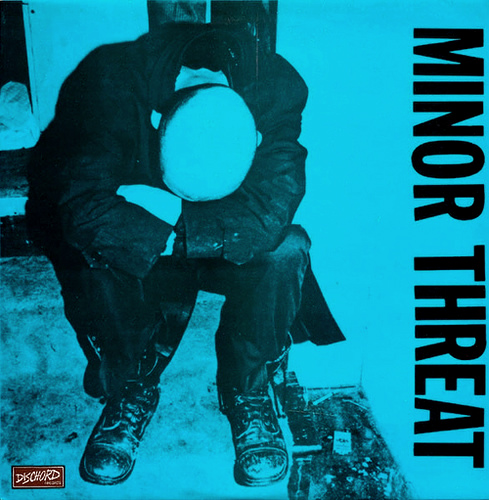
Founded by Ian MacKaye and Jeff Nelson in 1980, Minor Threat is a cornerstone of the world-renowned D.C. hardcore scene. Along with contemporaries like Bad Brains and California hardcore band Black Flag, fronted by D.C. native and D.C. scene veteran Henry Rollins, Minor Threat helped pave the way for many American punk and hardcore of the 80’s and 90s, as well as grungers like Nirvana and Pearl Jam, the significantly funkier side of the Red Hot Chili Peppers, unabashed Minor Threat disciples, and more. MacKaye and Nelson’s business ethics also inspired generations of musicians across genres by releasing all their material, and the material of countless other hardcore bands, on their own label, the now-famous Dischord Records.
Like all subcultures, hardcore began as a reactionary product of life on the fringe, disenfranchised and labeled as hopeless, but the spirit of hardcore itself is the contrary. It is a self-reliant, ambitious and propulsive group, appreciative of its position in the cultural context. In their short body of work, Minor Threat, perhaps of all hardcore bands, best embodies this. Over the 26 tracks and 47 minutes of their Complete Discography, released, per usual, on their own label, Dischord, messages of hope, valorous struggle, independence, indignation, pride and self-acceptance are hurled at you with frightening and exhilarating velocity, one one-minute song at a time. Functioning successfully as a single album with a cohesive narrative, the Complete Discography, tracked in roughly chronological order, immediately establishes these themes and continues to build on them, as the band continues to record and evolve, until they are rendered as complex and complete manifestos of a microcosm speaking for a nation as a whole.
The album’s first track, “Filler”, is anything but. It begins with a triumphant crunch of heavily distorted guitar, then the bass, deep, commanding, ominous, and the drums, fully automatic, firing with pointed precision. MacKaye, the groups vocalist, who later went on to form the comparably iconic band, Fugazi, finally enters with a scathing, self-insisting critique of conformity, Religion and love, what he asserts is equally as opiated and destructive.
What happened to you? / You’re not the same / Something in your head / Made a violent change / It’s in your head / Filler / You call it religion / You’re full of shit / Was she really worth it? / She cost you your life / You’ll never leave her side / She’s gonna be your wife / You call it romance / You’re full of shit / Your brain is clay / What’s going on? / You picked up a bible / And now you’re gone / You call it religion / You’re full of shit / Filler
This is not a reaction to change itself but rather the change of one’s ideals to what is seen as a false ideology, the termination of the effort to conduct one’s self as a reactionary agent and instead give in to join the other side, the easy life, prepackaged for the masses by which one was previously marginalized.
This strict aversion to outside philosophy is reinforced by what, in many ways, is Minor Threat’s most influential cut, the album’s fourth track, “Straight Edge”. Despite its svelte 0:45, “Straight Edge” is responsible for starting the “straight edge” movement, and solidifying Minor Threat, whose lifestyle served as the model, as its progenitors. The core tenants of the movement are a simple, logical reaction to the excesses of punk music: no alcohol, tobacco, or recreational drugs, and in many cases no promiscuous sex. Minor Threat adhered closely to these tenants, detailing those particular to drugs use in “Straight Edge”:
I’m a person just like you / But I’ve got better things to do / Than sit around and fuck my head / Hang out with the living dead / Snort white shit up my nose / Pass out at the shows / I don’t even think about speed / That’s something I just don’t need / I’ve got the straight edge / I’m a person just like you / But I’ve got better things to do / Than sit around and smoke dope / ‘Cause I know I can cope / Laugh at the thought of eating ludes / Laugh at the thought of sniffing glue / Always gonna keep in touch / Never want to use a crutch / I’ve got the straight edge
As with all collections of outcasts labeled as a subculture, there are basic unifying factors. For hardcore, being straight edge quickly became one, expanding from its position on drugs and alcohol to address sexual practices, dietary habits, animal rights, politics and medicine.
Beyond being a polarizing, genre-molding, cultural icon, Minor Threat is, in essence, a damn good band composed of technically proficient, but most importantly inventive and stylistically sound musicians. Their cover of The Monkees’ “Steppin’ Stone” is a testament to that.
The choice of “Steppin’ Stone” might initially seem an odd one, but the song’s message fits perfectly into the ideals of the hardcore community and the message of the band itself: moderation, honesty, respect (if earned) and independence.
You’re trying to make your mark in society / Using all the tricks that you used on me / You’re reading all those high fashion magazines / The clothes you’re wearin’ girl are causing public scenes / I said / I’m not your stepping stone
Their reimagining of The Monkees’ original is mark of an intelligent band making an unexpected but deceptively appropriate choice, and it results in one of the best tracks of their career, sonically, iconically and musically. Watch a live video for “Steppin’ Stone” below.
A brilliant centerpiece to their Complete Discography, “Steppin’ Stone” is the perfect introduction to the perfect band for those who “hate hardcore”, like I did, until I fell in love with Minor Threat, and by association the pieces of hardcore, and my burgeoning understanding of and eventual love for it, fell into place.
I used to scoff at hardcore. Now I scoff back, but I still remember what it’s like on the other side. I look back on it not as a member of the hardcore community, but in the same sad way many look upon those to whom they fail to be understood: guarded, but with empathy, self-confidence and an extended arm.
To be sure, hardcore not for everyone, but it’s also not what you think. Open your ears. Eat your cultural vegetables. Like the straight edge, you might even become a vegetarian.
And if you still just fucking hate it:
We’re just / A minor threat
–
You tell me that I make no difference / At least I’m fuckin’ trying / What the fuck have you done?
-Minor Threat, “Minor Threat” & “In My Eyes”
Written by Ben Brundage
Album Review: Lee Fields ‘Faithful Man’
Expectations can be a tricky bitch. English poet Alexander Pope likely summed it up best when he said, “Blessed is he who expects nothing, for he shall never be disappointed.” Wise words from a smart man, but unfortunately for Mr. Pope, expectations are unavoidable. We stroll through life constantly prepping our minds for the next pitch, taking the curve balls in stride and reacting as best we can.
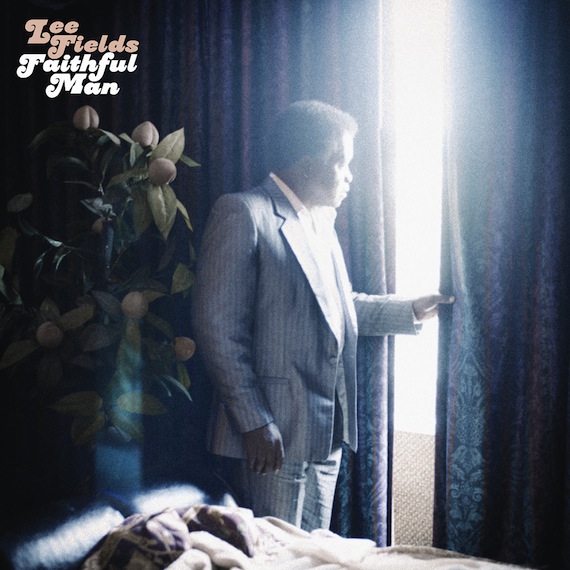
I had great expectations for Lee Fields’ latest release Faithful Man. Fields and his backing band, The Expressions, hit heavy on my pleasure points on their 2009 release My World. The album catered to all of my guilty pleasures, unleashing a powerful blend of soulful vocals, addictive key strokes and the type of sultry horn lines that will keep a bedroom rocking until sunrise. Better still, My World accomplished all of this effortlessly, without the material ever feeling forced or reaching for something bigger than it was.
This month, Lee Fields & The Expressions are back with Faithful Man. The album opens with the title track. Here, Fields leads the listener down the familiar path of admirable intentions and less than admirable behavior. A motif as old as the blues, yet as relatable as the morning headlines. The vocals are strong but feel pushed to the brink, with Fields’ voice breaking as he struggles to compensate for a cluttered production. I am also irked by the production on the backing vocals, where the singers wind up closer to The Chipmunks than The Chiffons.
Next up on the track list is “I Still Got It.” And that ain’t no lie. Even at 61 years young, Fields still has an edge. He’s still catching panties from the third row and moving crowds with the best of them. The song showcases the cocksure delivery that led hip-hop artists to resurrect Fields’ career a few years back. Unfortunately, this album appears to reach for those moments rather than let them fall where they may.
For me, the mellowed out tracks “Still Hanging On” and “Moonlight Mile” are where Faithful Man hits its stride. This is classic soul, and Fields sounds at ease. Elegant, shimmering keys and a simple snare line lead the way on the latter. Here, the band builds around Fields rather than on top of him.
For all of my griping, I still dig this release. More than that, I would stand in line for hours to see this band live. I have no doubt that Fields and The Expressions would bring the house down. Faithful Man may lack that stand out, home-run track that I was looking for. But be sure, that it avoids any stand out failures just the same. Play it for your parents. Play it for your lover. Both will be grateful.
Check out Lee Fields & The Expressions in a video for “Faithful Man” below, where the band offers up the type of restrained focus that I was hoping for throughout this release. Enjoy the bit of dialogue on the front end of the video where Fields reminds us that he is still “the coolest motherfucker to ever sing words into a microphone.”
Connect with Lee Fields & The Expressions via Facebook
Written by Rob Peoni

