


Album Review: Peter Terry & The City Profits ‘I AM JACKSON.’

Last week, Indianapolis native and new Nashville resident Peter Terry released his debut full-length album I AM JACKSON. The album is more radio-friendly than many of the artists we feature on Thought on Tracks. However, its accessibility has nothing to do with an overproduced sound or stale, flavorless songwriting. Quite the opposite, this album gains its mass appeal by addressing those universal emotions and experiences that appear in almost every walk of life: the regrets of a drunken night out with the boys, the first breaths of a new relationship, boyhood crushes and a dance with the devil.
The other element driving the band’s pop appeal is Terry’s singing. These are not the smoke-worn crackles of a road weary blues man, nor are they the off-pitch screams that currently dominate certain segments of the indie scene. Terry’s voice is trained, soaring to heights only reached after years spent honing an incredible natural ability. If this is a crime, it is certainly a crime worth committing.
I AM JACKSON. begins with the steady thump of the bass drum and a filthy, foreboding riff on the double bass. Clashing stabs on the acoustic cut through the bass line as “Stripper Song” builds into the chorus. As the song’s title suggests, the lyrics meditate on the beauty of a talented dancer observed through drunken eyes. The song closes in a whirlwind, with the cello and bass trading textures as effectively as harmonies. Listen:
For me, the album hits its stride on “Piece of Art.” The song starts with a bouncy, walking bass line and simple snare pattern. Terry’s vocals float above the rhythm, lamenting on the frustrations of long distance love. A descending piano line signals the bridge as a raucous horn section fills out the remainder of the song. Female background vocalists serve as the icing on this auditory cake, adding a call and response that combines to create one helluva guilty pleasure.
“Godmother” is another track that has the potential to dominate the playlist of every college co-ed within earshot. The song features some of Stephen Juergensen’s best riffs on cello. Terry’s chorus is one that engrains itself in the listener’s mind, resurfacing in subconscious mutterings throughout the day. He shouts proudly, “My baby don’t take shit from no man / And if you trust it gives you the back hand / Said my baby don’t take shit from no man / If trouble comes, she keep left, she keep heart, she keep it on movin’”
With each successive spin of I AM JACKSON., the more convinced I become that Nashville is the perfect stage for Terry & The Profits to call home. Though country would hardly be described as a major influence, the prevalence of strings make the album immediately relatable to that audience. With country fans accounting for an increasingly larger portion of CD sales, Nashville maintains deep ties with the radio industry. And this album deserves radio play.
Pick up a copy of I Am Jackson. on iTunes or stream it via Spotify. Buy it for your girlfriend and watch her heart melt. Buy it for your mother and wait for her to inevitably say, “I didn’t realize they still made albums like this.” Buy it for yourself and discover what five talented musicians and an astounding voice sound like when they’re making the music that they love.
Written by Rob Peoni
In The Dust #9: Louis Armstrong and his All-Stars, ‘Louis Armstrong Plays W.C. Handy’
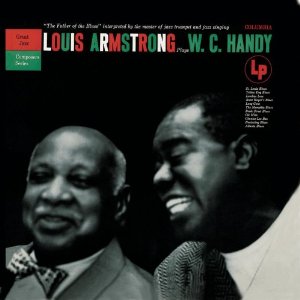
Once a week In The Dust rolls up its sleeves and digs to the back of the rack to find that record, the one you never knew you always wanted, the one that’s lost but not forgotten.
Pops plays “The Father of The Blues.” Could it get much better? The answer, immediately apparent in the first three seconds of the album’s opener, “St. Louis Blues”, is found in seven notes from Armstrong’s horn: no, no, absolutely not.
W.C. Handy is a name that has been tossed around a few times in the history of In The Dust. It happens to be a very important one, particularly when concerning the blues. Popularly referred to as “The Father of The Blues,” Handy is most well known not for inventing the blues, but inventing its modern form and building the archetypal framework for cross-genre interpretations of the blues and visa versa. He introduced blues scaling, color and form into jazz music, a marriage that has stood the test of time and grown to become nearly one. Because of this, it is no surprise that Armstrong would select Handy as his subject of interpretation. However, when concerning Armstrong’s own personal history and musical development, it is a tad curious.
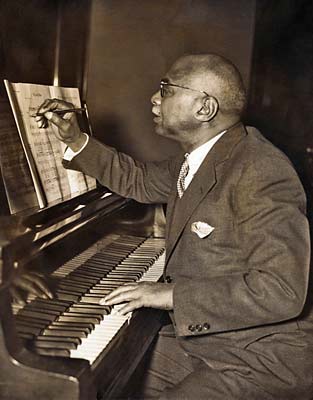
Armstrong grew up in a rough-and-tumble area of New Orleans known as “Back of the Town”. He attended a nearby boys’ school but did not last long. He dropped out at age eleven and joined a boys’ vocal quartet, but the unstructured, latchkey lifestyle led to trouble. Because of periodic delinquency, and firing a gun in a crowded square, Armstrong was sent to the New Orleans Home for Colored Waifs. It is here he learned how to play coronet, joining a military-style brass band with an emphasis on discipline and musicianship. Despite just learning the instrument, Armstrong quickly became bandleader, garnering considerable attention for his command of the instrument at such a young age. Armstrong graduated to playing in city brass bands and fell under the tutelage of the great Joe Oliver, better known as “King”, of King Oliver and his Creole Jazz Band.
Armstrong remembers Oliver thusly:
It was my ambition to play as he did. I still think that if it had not been for Joe Oliver, Jazz would not be what it is today. He was a creator in his own right.
Armstrong credits Oliver as a father figure, and the one who taught him nearly everything he knows, joining Oliver’s Creole Jazz Band in 1922, the hottest and most popular New Orleans’ jazz band of the time, and playing with him off and on for the rest of Oliver’s career.
It is interesting to note that only three years later, in 1925, after Armstrong had moved to New York, joined Fletcher Henderson’s band and switched from the coronet to the trumpet, he played on Bessie Smith’s rendition of Handy’s “St. Louis Blues,” a recording that become of the most popular of the 1920’s and garnered Handy, and Smith, widespread fame and considerable pay.
Armstrong continued to revisit Handy’s work for the remainder of his career, and in full on this collection. Perhaps for economic reasons, perhaps for reasons unbeknownst to the author, but, while Oliver’s influence is the one that dominates Armstrong’s sound, it is the work of Handy that dominates his oeuvre. This collection asserts that, maybe, it is because no one but Armstrong can play Handy so beautifully.
“St. Louis Blues,” the song that inspired the foxtrot, also known as “the jazzman’s Hamlet”, opens the record, beginning with a classically beautiful Armstrong fanfare that, despite the year of this album’s recording, 1954, seems right at home snaking over the undulating dance floor of Harlem’s famed Savoy Ballroom or Cotton Club. The tempo and color when compared to Handy’s 1912 recording is indicative of Armstrong’s recognition of the need to modernize, while retaining the song’s essence and an eye, always, on New Orleans, an impulse that followed him, more or less at times, throughout his career. In his horn and the thick, sultry vocals of Velma Middleton you smell the Pastis and taste the Sazerac as the mixture cascades down upon impossibly slowly, like molasses, until you are encompassed and saturated with joy.
“Yellow Dog Blues,” follows, a lazy-river blues that relieves the tension of the terrifically jubilant, 8:50, “St. Louis Blues,” and sets a deep, upright bass-heavy groove that shines a light on Armstrong’s beautifully quirky and remarkably infectious voice. Drunken horns laugh in the background, cracking blue jokes and downing bourbon with droll, harping clarinets as Armstrong issues references to classic blues lore of the “easy rider,” the “bole weevil”, the “cotton stalk” and even those immortal words W.C. Handy first heard at the Tutwiler Station, waiting for his train, on the infamous day he first heard the blues and the namesake of this song: “goin’ where The Southern cross The Dog”.
“Beale Street Blues,” a true slow-blues standout, opens with soft-lipped clarinets over a fat backbeat, Armstrong singing what is one of the author’s favorite lines in all of music, and, more importantly, the spirit of New Orleans: “You’ll see pretty browns / In beautiful gowns / You’ll see tailor-mades / and hand-me-downs / You’ll meet honest men / and pick-pockets skilled / You’ll find that business never closes / Till somebody gets killed.” Armstrong unrolls his trademark vibrato like a red carpet unfurling, flapping and bouncing past drunks, bums, slinking adulterers, and down a gas-lit promenade. “If Beale Street could talk,” he growls, “if Beale Street could talk / Married men would have to take their beds and walk / Except one or two, who never drink booze / And the blind man on the corner / Who sings the Beale Street Blues”. An image echoed in blues from Blind Willie McTell and a host of others to follows in Handy’s footsteps, “Beale Street Blues” is the familiar smell and the feel against your cheek of the cool side of the pillow on your first night back home after a long time away. Perhaps you have never been to Beale Street, or New Orleans, but this Beale Street, and the warm, bright and perpetually breathtaking solos of Armstrong, are there to greet you and assure you that you never really left.
Armstrong selects “Atlanta Blues (Make Me A Pallet On The Floor)” to close out the collection. The tempo, walking bass line and shuffling hi-hat of “Atlanta Blues” makes a sly, joker’s nod-and-wink to the emerging bebop movement before returning to the rapturous, Charleston-ing blues bounce of Armstrong’s New Orleans, “hot” jazz, Dixie sound. Featuring some of his most boisterous and emphatic solos, it is clear that this song, in classic New Orleans style, is Armstrong’s give-it-your-all send-off. “Just make me a pallet on the floor,” Armstrong repeatedly suggests, as playing like that would leave anyone bushed, and a pallet will suit his humble needs just fine.
And in grand style, Louis Armstrong and his All-Stars draw their tribute to W.C. Handy to a close, Armstrong repeating, “So please, just make me a pallet on the floor,” for once the listener has concluded the last track in this collection, is it not the end of their time together. The curious timbre and lovable theatricality of Armstrong’s voice, the amazement at his unparalleled virtuosity and his friendly, comforting persona will stay with you, as the most welcomed and celebrated houseguest, for some time.
This is a record not to be missed, with a place in every jazz or blues lover’s collection. Handy first appropriated the blues for jazz in 1912. Louis Armstrong, in 1954, re-appropriates Handy for everyone, and in gratitude, respect and pure love, we devote to them, and their brilliant careers, as much space as they should like.
Written by Ben Brundage. Check out Ben’s Tumblr Damned Fine Lion.
In the Dust #6: Junior Wells’ Chicago Blues Band ‘Hoodoo Man Blues’
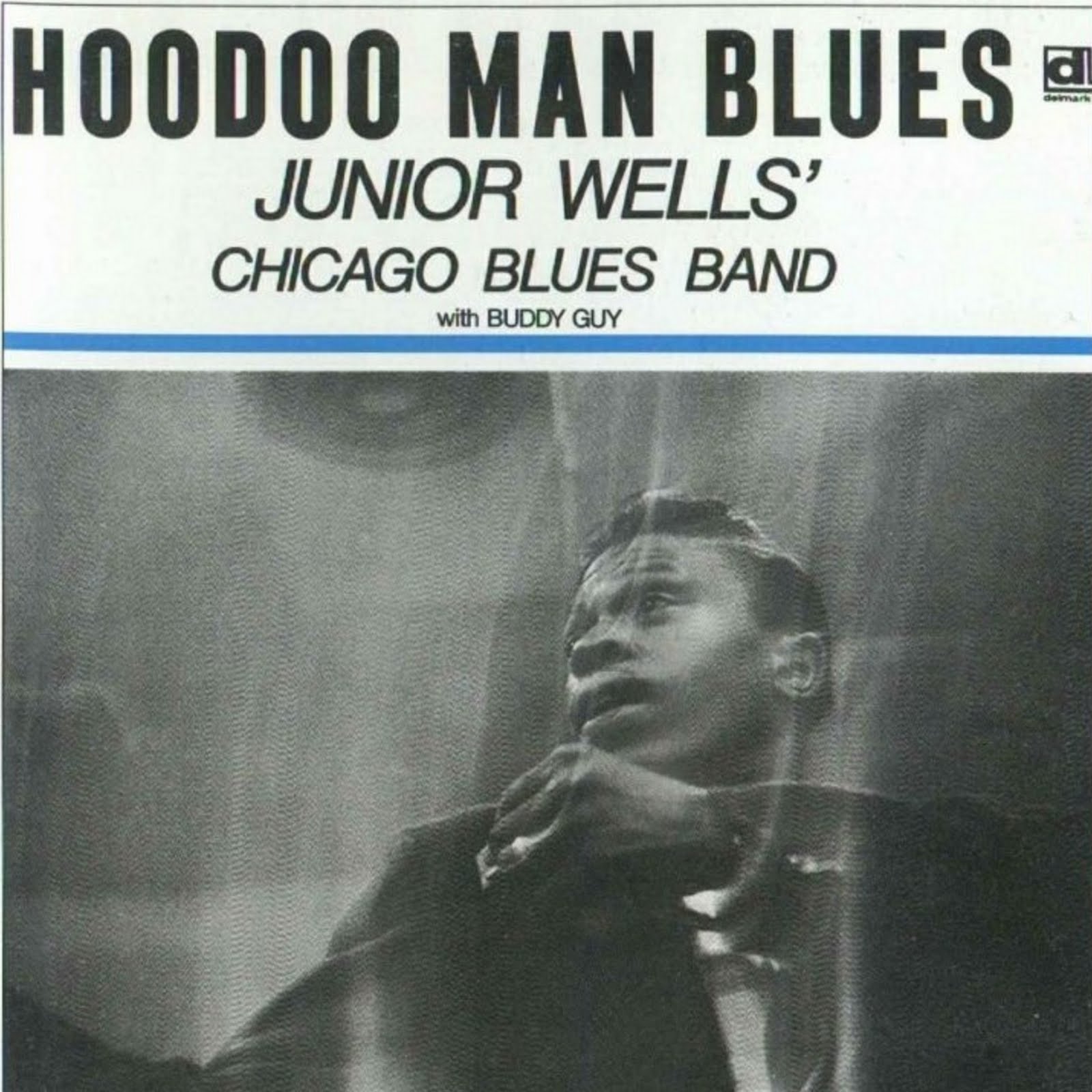
Once a week In The Dust rolls up its sleeves and digs to the back of the rack to find that record, the one you never knew you always wanted, the one that’s lost, but not forgotten.
hoo·doo
noun
1. Magic healing and control, especially in African-based folk medicine in the United States and the Caribbean. Also called conjure.
2. a. Bad luck.
b. One that brings bad luck.
verb
1. bewitch
Almost mystically so, Hoodoo Man Blues, Junior Wells’ first full-length record as a bandleader, began with a feeling.
Bob Koester, a Record Producer and founder and Chicago label Delmark record, had heard Don Kent, of Yazoo Records, and others whisper about a kid who played the harp. They said he’d been playing since the age of seven. They said he learned it from Sonny Boy Williamson II. They said he was good, so good, in fact, that he replaced Little Walter to blow for Muddy at 18. Koester knew he had to find this kid. He remembers his first encounter with Junior well:
I first heard Junior Wells on the States 78’s of “Hoodoo Man“, etc. during my days in St. Louis. I later heard the Muddy Waters band on a trip to Chicago, at the Club Zanzibar c.1957 and was perturbed that Little Walter had left and a new guy had taken his place but when I requested Key To The Highway and Muddy said, “I think Junior Wells does that better than I do.” Junior certainly cut Walter in the vocal department.
By the time Koester found him, Wells had stirred more than just a whisper, but had yet to record a full record. He had already made a name for himself within the Chicago bluesman scene, blowing for The Aces, Muddy Waters and solo for labels such as States, Profile and Chief, where his single, “Little By Little” rose to #23 on the Billboard R&B charts, but he was still relatively unknown outside of those who played the blues on Chicago’s South Westside.
Wells had a few scattered singles under his belt but nothing in which Koester could find the confidence to give him his own record. Wells was only 21. Koester was not sure if Wells could carry 2 sides, 30+ minutes, 10+ tracks. He also doubted that Wells’ music would find the audience necessary to fund the expense of sidemen and ample recording time, given their unusually crisp, urban style, one that featured band uniforms and synchronized movement, which was, of course, a world away from blues, bordering more closely on Motown.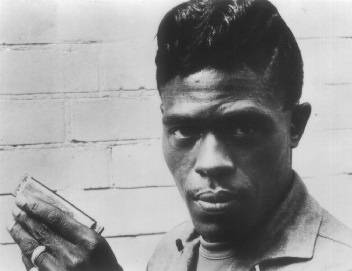
But Koester had a feeling about Wells, one he kept with him since the first moment he saw him blow with Waters in ‘57. Wells’ voice, musicianship, and sense of movement made him a naturally infectious performer, and Koester liked it too much to resist.
He gave Wells the record, and even allowed Wells’ to choose his own band and his track list, without restrictions. The sessions followed resulted in what is one of the greatest blues records ever made, and one of the most genuine, accurate documents of the Chicago blues sound in existence today.
The track list Wells selected is about half original and half blues standards, of which it featured “Good Morning Little Schoolgirl,” a song written by his mentor, Sonny Boy Williamson II, “Hound Dog,” by Leiber and Stoller, “Early In The Morning,” a traditional, and “Yonder Wall,” by fellow Chicago axe-man and “King of the Slide Guitar,” Elmore James.
Perhaps the most noteworthy decision of the entire session, Wells’ invited a 29-year old Buddy Guy to play guitar. This, as it was for the 21-year old Wells, Guy’s first crack at a full studio album. Wells’ rounded out the rest of the group with top-notch session men and Southside bar bluesmen.
The pair of Wells and Guy proved to be an unstoppably ebullient and explosive combination. From the first hit of the first track, “Snatch It Back And Hold It”, the pure force their relationship is palpable. The guitar, drums and bass play in unison a fanfare of a single note, but in this single note is more confidence, attitude and pure ferocity than many whole records of the time. This cocky snarl is accentuated by Koester’s, and all of the Delmark people’s, urge to bring the purely carnivorous Chicago blues sound out the bar and into the perfect acoustics of a recording studio, while leaving its spirit unadulterated. The sound is so raw, so live, so pure, allowing Wells’ natural charisma and masterful harp, Guy’s guitar and the innate infectiousness of their particular blend of Chicago blues-funk-soul to carry itself. “Somebody help me! / I can’t help myself,” Wells screams, as if under his own spell. As with classic blues lore, Wells must seek a way to shake off his hoodoo. The band is just too nasty, the music has a mind of it’s own, and Wells is caught in the undertow. The only way he can release himself is to wail and blow it out until the tidal wave spits him out.
“Hound Dog,” the Leiber and Stoller classic that launched the careers of, first, Big Mama Thornton and, later, Elvis Presley, is re-imagined as a crisp, frenetic sweat-storm and platform for Wells’ electrified harp lines and Guy’s masterful picking. Clocking in at an astonishingly lean 2:11, it is more a display of Wells’ Chicago Blues Band’s mastery of their craft than homage to the blues itself. In the energy of “Hound Dog” and the dogged efforts of his drummer Bill Warren, there is a certain trance-like quality, which is echoed by Guy’s repetitive complimentary guitar, peaking the album’s energy, solidifying that the listener is under his hoodoo, before it brings it back down in preparation for the record’s slowest, smoothest number, “In The Wee Hours.”
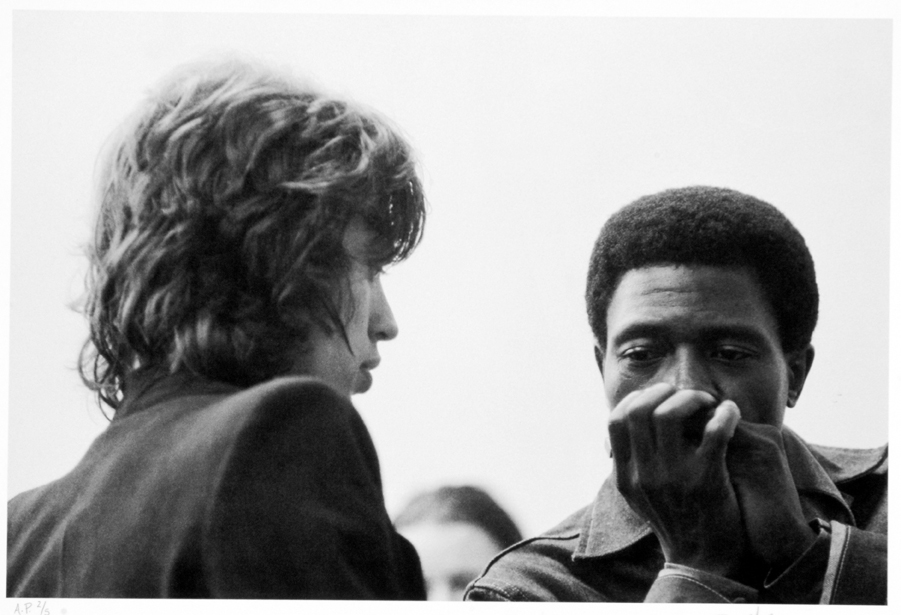
Bring with it the sizzling, sultry swing of the Southside Chicago barroom, “In The Wee Hours,” is the finer of Wells two attempts at slow-groove on the record. Following the frantic intensity of “Hound Dog,” “In The Wee Hours,” functions as a sleepy, hypnotic lobotomy, slicing the crown from the listeners head and slowly sinking its long, dark fingers deep inside to slice and tweak and toy, destroying in the process any previous conceptions of how profound a sub-four minute song can be, how good Chicago blues can be and how indescribably hot Junior Wells and his Chicago blues band can serve it up. Wells’ harp wafts lightly over the steamy, clean lines of Guy’s sensual and cryptically suggestive guitar. The delicate, light touch of Warren’s drums and Jack Myers’ subtle, driving bass add indispensible accoutrement to the midnight-moonlight atmosphere in which Guy and Wells are free move. Almost completely devoid of lyrics, the song has Junior, as in “Snatch It Back And Hold It,” pleading for help. He sings “I just need somebody / Somebody got to help me / Oh, Lord, to sing these blues / Lookie here, Lookie here, baby,” before embarking on a mournful, ethereal harp solo. Guy lends as much help as he can muster, summoning a lean, choppy solo that stands as one of his finest licks on the record, but the tone Wells’ harp is so lost, forlorn, spectral it is clear that Wells is still hopelessly under the spell, beyond assistance, hoodoo’d by the blues and desperately trying to play his way out.
The album’s title track comes soon after, leading off side A with another fanfare, a classic blues turn around in which the band bangs out together, compounding the swinging 4/4 blues rhythm to create a rambling, tumbling feeling that propels the listener into the center of the groove, where it is instantly apparently that Buddy Guy’s guitar sounds remarkably different. Guy’s amplifier stopped working part way through the Hoodoo Man Blues sessions, and so they chose to wire his guitar through the Leslie speaker of a Hammond B-3 organ, the effect of which is distinctive and has since inspired guitarist for generations. It adds a welcomed mystically to the track, in line with the spirit of hoodoo, and a poignant juxtaposition to Wells’ lyrics. Wells’ past pleads for assistance have fallen on deaf ears, and in “Hoodoo Man Blues,” he is determined to explain his case to, hopefully, sympathetic and potentially loving ears:
“Lord, I wonder, what’s exactly the matter / Child you know the time / It seemed like hours / Everything had changed / But I hold up my hand / Lord, I’m trying to make you understand / Lord, now, everybody tell me / Somebody done hoodoo’d the hoodoo man”
Wells is reaching out, as the hoodoo has consumed his life and he can no longer keep it to himself. The blues has grown to rule him and distort his sense of time, state of being and relationships. Somebody truly done hoodoo’d the hoodoo man.
Wells is truly afflicted, as is Guy, Wells’ band and Koester. Hoodoo Man Blues stands as, until recently, Delmark’s best-selling release of all-time, inflicting with the hoodoo man blues Bonnie Raitt, The Rolling Stones, Van Morrison, the author and many more.
In the remainder of the record, Wells never does relieve himself of the hoodoo, though he still tries. Perhaps this is the perfect sentiment for the debut record of an artist who would spend a lifetime under its spell: a hoodoo man chasing the blues.
Written by Ben Brundage

