


Album Review: Van Morrison ‘Veedon Fleece’
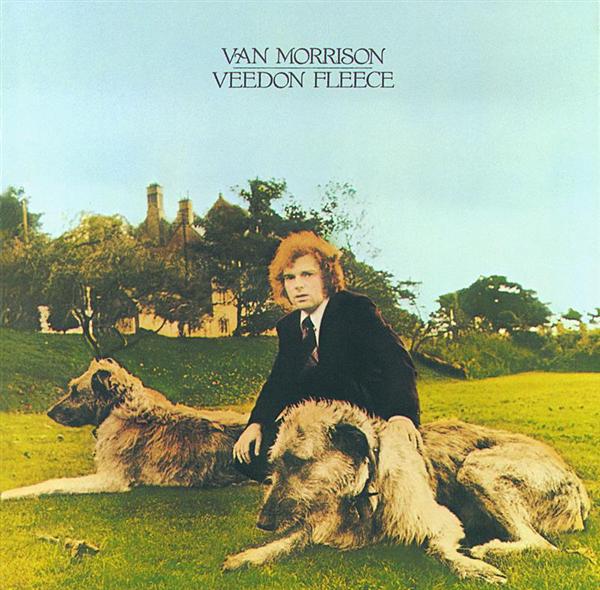
In the fall of 1973, Van Morrison returned to his native Ireland for the first time since his 1967 departure. The vacation arrived on the heels of a successful summer tour with his 11-piece band The Caledonia Soul Orchestra and the dissolution of his marriage to Janet Rigsbee. Accompanied by his new fiancée and the core of his orchestra, Morrison spent the bulk of the trip traveling southern Ireland and recording much of the material that would comprise his eighth studio album Veedon Fleece.
Released a year later, Veedon Fleece was dismissed by critics as a misguided attempt to recreate the magic of Astral Weeks. Rolling Stone’s Jim Miller went so far as to refer to the album’s score as “mood music for mature hippies” and argue that Morrison’s vocals suggested “a pinched vocal nerve drowning in porridge.” Needless to say, the reaction was less than a ringing endorsement of the songwriter’s return to his mellower roots.
In the decades since its release, Veedon Fleece has taken on a mythical quality amongst Morrison devotees, with many slapping the title of “forgotten masterpiece” on the release. One prominent reason for Veedon Fleece‘s forgotten status largely falls on the shoulders of Morrison, whom at least publicly, appears to have no affection for the LP. He has rarely, if ever, performed the material live and it is routinely ignored on Greatest Hits releases and retrospective compilations. The album is unavailable for digital download on iTunes and cannot be streamed by U.S. users on Spotify. However, CDs and vinyl surface routinely on Amazon and most decent record stores. Morrison appears content to leave the album as what it is: a stream-of-consciousness snapshot of an artist’s return home in the midst of an emotional transition.
Morrison spent the years between Astral Weeks and Veedon Fleece churning out a string of R&B and soul classics. Moondance, Tupelo Honey, St. Dominic’s Preview and Hard Nose the Highway all found their way into the top 30 of the Billboard charts for their respective years. Those releases solidified Morrison’s position as a bona fide star, and largely found the artist working within the constraints of American pop music of the era. Though much of that material represented a sharp contrast to the free-flowing Astral Weeks, tracks like 1972’s “Listen to the Lion” should have indicated Morrison’s return to his earlier self.
Veedon Fleece opens with a pair of sprawling, piano-driven tracks accompanied by an upright bass, brush-stroked drums and acoustic guitar. Flourishes of flute and strings replace the big brass sound that had dominated Morrison’s preceding records. The additions provide depth without abandoning the album’s sparse, intimate feel. The music tends to swell and recede in intensity giving the collective tracks the feeling of a long conversation more than separate discussions. While Veedon Fleece may not reinvent the wheel from a musical standpoint, it is nevertheless a satisfying slow roll that coheres nicely.
Lyrically, Morrison appears inspired by his Irish landscape and the bards of previous generations. He references Oscar Wilde, William Blake and the Eternals and the “architecture of his mind.” Miller is reasonable in his assessment of these themes in his review, arguing that they are pretentious and self-aggrandizing. However, I would argue that it’s little more than Van being Van. To expect otherwise is a futile task.
There is little on Veedon Fleece that resembles a radio-ready track, with the notable exceptions of the album’s centerpieces “Cul de Sac” and “Bulbs.” Although, the same could be said about Astral Weeks, long thought of as an all-time-great pop record, but one that largely worked in contrast to the more traditional folk and rock of its peers. Love it or hate it, Veedon Fleece is the closest that Morrison ever came to offering up a sequel to Astral Weeks. For that reason alone, it deserves your consideration.
Connect with Van Morrison via Facebook | Twitter
Written by Rob Peoni
Video: Freddie Gibbs & Madlib “Shame”

Gary native Freddie Gibbs has been perhaps the most talented and the most visible Indiana rapper for a while now. Gibbs has released numerous mixtapes and appeared on tracks with everyone from Young Jeezy to Domo Genesis, but he hasn’t had a project yet that has seen him fully realize his potential. His new video for “Shame” from the EP of the same name with the ‘Beat Konducta’ Madlib finds Gibbs acting out his player/drug dealer verses and trying to give the listeners a visual that truly represents his perspective, just like his video for “Thuggin” (a prequel to “Shame”). Gibb’s brand of unapologetic gangsta rap is always technically solid, but his recent work over Madlib’s soulful production has me thinking that the duo’s upcoming album has classic potential. Pick up the Shame EP and the Thuggin EP over at Stones Throw Records.
Connect with Freddie Gibbs via Facebook | Twitter
Written by John Bugbee
Fresh Track + Video: Oreo Jones ft. Freddie Bunz “Needy”

The stars appear to be aligning for Indianapolis rapper Oreo Jones. Fresh off his selection as Indy’s best rapper in NUVO’s Best of Indy poll, today Jones released the debut single from his forthcoming LP Betty, due to drop via local label Rad Summer on September 4. Always a skillful MC, Jones’ rhymes often underscore his acerbic wit and wry sense of humor. “Needy” takes care of business first and jokes second, hitting listeners with a more serious, no nonsense approach. This makes sense given Jones’ confession via Twitter that the track was inked following the theft of his lap top, an earth shattering blow to any DIY artist.
The video, shot at DOPE Couture, features Jones performing alongside Freddie Bunz and DJ Action Jackson for an intimate crowd that includes fellow Rad Summer labelmate Andy D. The track’s producer J. Brookinz looks content, head-bobbing and half-smiling, as he watches the song unfold in live time. If “Needy” is any indication of Betty‘s strength as a whole, consider my breath officially bated.
Connect with Oreo Jones via Facebook | Twitter
Written by Rob Peoni

