


Live & Reel Session: The Little Bear

Last month we featured the first two videos from Nashville’s Live and Reel video series. The series is a monthly feature from Reel Recording. As I said then, I’m looking forward to see the consistently great material that surfaces out of this upstart. With Indiana-native Mark Galup at the helm, we can expect consistent, solid songwriters like The Little Bear to appear here.
This quartet, led by blonde siren Claire Guerreso, harkens back to the simple songwriting of their Nashville roots. Signed to Plastic 350 Records, the band recently released their debut EP Bridges. The two songs featured on their Live & Reel Session are “Sweet as Honey” and “Hello.” Stream the videos below, then go pick up Bridges for $5, HERE.
Written by Rob Peoni
Check out last month’s Live & Reel session featuring Natalie Prass & Evan P. Donohue
In the Dust #7: Magic Sam Blues Band ‘West Side Soul’

Once a week In The Dust rolls up its sleeves and digs to the back of the rack to find that record, the one you never knew you always wanted, the one that’s lost, but not forgotten.
When asked if Magic Sam would, were he still alive today, rank on the same echelon of the blues annals as the great Buddy Guy, Delmark’s Bob Koester, producer of Junior Wells’ Hoodoo Man Blues (last week’s In The Dust), responded without hesitation, “Yes, indeed, oh, God, yes!” Early this year, Delmark reissued Magic Sam’s classic Chicago blues opus, West Side Soul. Long a record with a deep and rabid cult following, Magic Sam and West Side Soul are to the novice blues fan what finding $1000 in your pants pocket is to the rest of us. His is not a name that is often tossed around outside of deep blues circles. Granted he is certainly not unheard of, but he is certainly, and most criminally, under-heard of.Born in Grenada, Mississippi, just after the action of the first Great Migration and just before the second, Samuel “Magic Sam” Gene Maghett was raised in an era of Mississippi life during which Chicago hung heavy in the air. The idea of Chicago was now a bona fide one. While still an achievement, it was also a newly realistic and widely attainable destination, promising a prosperous life for blacks of the South.
The trip from Mississippi to Chicago is a subject of myth in many of the blues songs Sam grew to admire. He began, early in his youth, listening to the records of Little Walter and Muddy Waters, who were among the first wave of Chicago-style blues titans. Inspired by the hot, heavy sounds of these records, Sam fashioned a variation of what is known as the Diddley Bo, a string nailed to a board or wall and stretched by hand, and set about learning the guitar.
Sam moved to Chicago at the age of thirteen, where he began gigging as a guitarist on Chicago’s West Side. By nineteen Sam signed to Cobra Records, where the great Buddy Guy was his label mate, and began recording singles. None of them made the charts, but all were greatly influential, especially to fellow Chicago bluesmen.
But like the careers of many artists inopportunely stalled, Sam was drafted into the Army. His service was short-lived, as Sam deserted soon after reporting for duty. He was caught and imprisoned as a result, issued a dishonorable discharge and returned to Chicago, but somewhere in the rigmarole Sam had lost his mojo. Subsequent recordings for Chief Records were found wanting, Mel London, the label’s chief, citing that Sam had lost his energy, his soul.
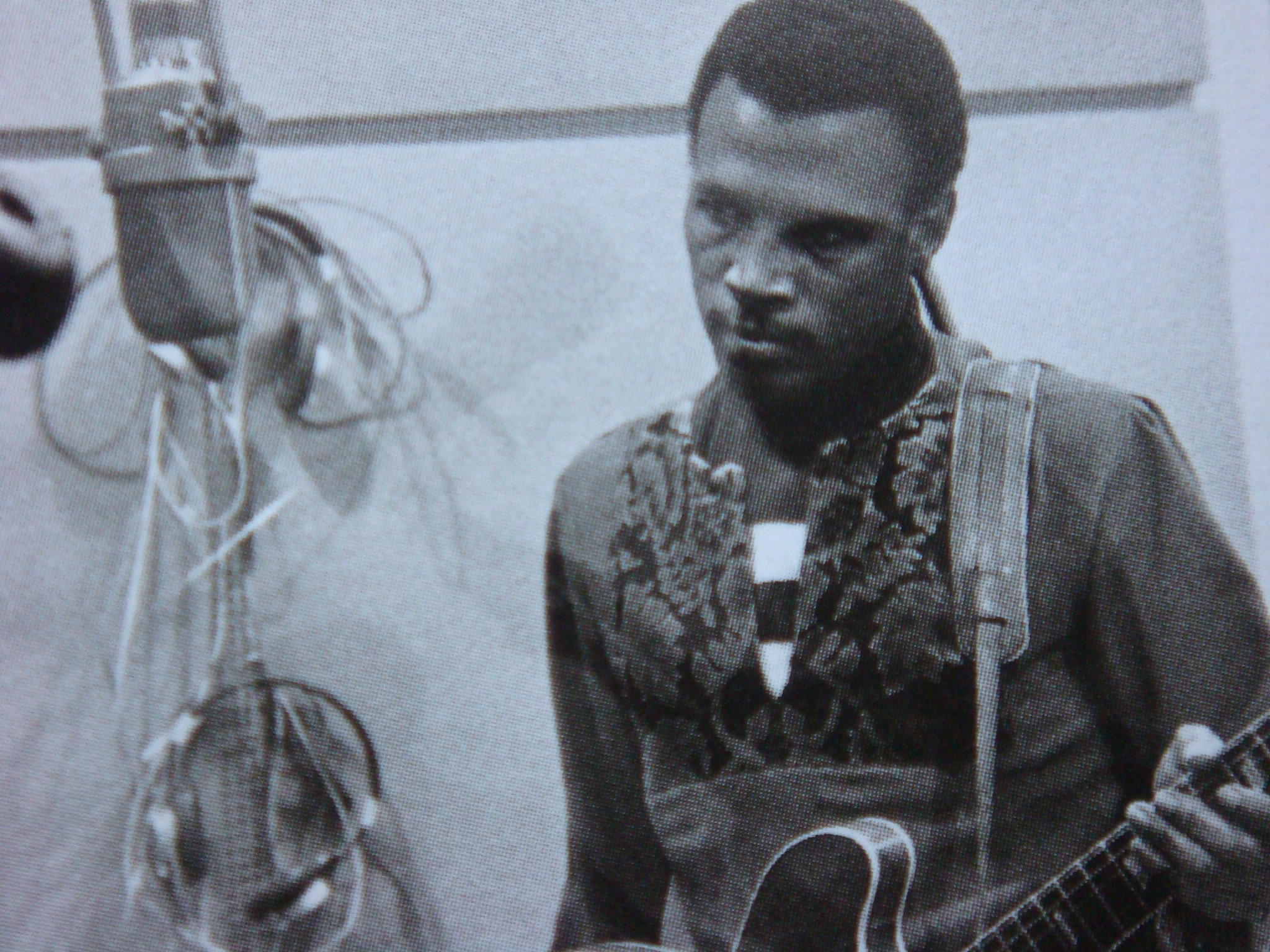
Luck struck and in 1963 Sam grazed the charts with a hit single, “Feelin’ Good (We’re Gonna Boogie)”, and Sam embarked on a tour of the US, Germany and the UK. Upon his return in 1967, Bob Koester signed Magic Sam to Delmark and, appropriately enough, that is where the magic happened.
Magic Sam and his band recorded West Side Soul in 1967 over the course of two days, two months apart from one another. The name is a reference to a particular new brand of blues, a crisper, more polished Chicago style that bordered closely on blues-inflected soul music. Much like the music of Junior Wells and Buddy Guy, West Side Soul is at times smooth as butter, but also raw, uninhibited and carnal. Thanks in part to Bob Koester and his hands-off production style, the album is akin to Hoodoo Man Blues in the sense that it captures the unadulterated energy of the Chicago blues club, and the music of Magic Sam itself, without the impurity of overdubs, extra effects and fader-tweak-heavy production techniques. Men. In a good room. Playing blues. To echo the philosophy of Bob Koester and quote Magic Sam: “That’s all I need.”
Koester granted Magic Sam the same liberties with his recordings as he did Junior Wells. Sam could pick his band and pick his track listing. Among the musicians he selected, many are staples of the West Side Chicago blues club: Mighty Joe Young on guitar, Odie Payne Jr. and Odie Payne III on drums, Mack Thompson on bass, Sam’s accomplice Shaky Jake Cadillac assisting in production and many other fine shuffle-slingers.
Half of the songs picked for the sessions are originals, but all of them Magic Sam makes his own.
The album begins with “That’s All I Need,” a Magic Sam original and a simple blues plea for love. Over the joyful, rubbery shuffle of Odie Payne III’s drums and Sam’s simple-but-ample rhythm guitar, the true jewel of Sam’s sound shines: his incredible voice. Bob Koester, perhaps, said it best:
He was a great singer. He was a great singer. I don’t judge artists by how well they play. I judge ’em by how well they sing. That’s why we record occasionally people who don’t even play an instrument.

Bookending “I Feel So Good (I Wanna Boogie)” are, for the author’s money, Sam’s two finest vocal performances on the album, “I Need You So Bad,” and “All Of Your Love,” respectively.
“I Need You So Bad” is a brilliant, almost-slow groove upon which Sam’s voice cascades down like the purest clover honey. The grace and beauty of how Sam slides into his “Oh, I, I need you so bad,” is the kind of indescribable, shiver-inducing moment of infamy that is produced outside of music only by the best meals, most existential, sunset-drenched epiphanies, greatest art, and the voice, face and scent of the most stunning, captivating woman you convince yourself you have ever seen. That said, Sam’s solos of comparable beauty are not to be overlooked. Again simple, understated, but not limp in any sense of the word, it is as much about what he is playing as what he is not, touching only the right and necessary notes, in their right and necessary order, evoking the ethos of an entire, culture, locale musical movement in 16 bars or less.“All Of Your Love,” recorded first nearly ten years prior as his premier single, is another, equally penetrative, almost-slow groove. The cadence, timber and vibrato in Sam’s repetition of the line “All of your love…” is transcendent in a similar way to “I Need You So Bad”. His voice trembles with such subtlety and lovely uncertainty of control that it seems to shake the listener’s heart along with it. The radiant tremolo and reverb of Sam’s lead line applies much needed complimentary heat to his sultry vocal caress, lulling the listener into complete adoring submission, in which the listener willingly remains until the albums end.
“I Don’t Want No Woman,” is Sam’s assertion of perpetual independence in the face of adoration. While he craves love and affection, he also “don’t want no woman telling [him] what to do”. He is “grown now, woman / just as grown as you”. Classic of cocksure bluesmen, singers, harpists, lead guitarists and singular virtuosos of importance in general, the frequent reminder of autonomy and alluded-to-if-not-totally-affirmed infidelity is the milk to the cookies of this textbook, bar-burning blues jam. As sure it shines on record as it would in the blues club, “I Don’t Want No Woman,” is two hands on the bootstraps of every red-blooded blues-loving male, regardless of his personal disposition to companionship and faithful behavior. “You used to boss your men,” Sam sings, “of that I won’t deny / Before I let you boss me I’ll lay down and die / I don’t want no woman / Tellin’ me how to live my life / Yes, I’m gonna leave you, darlin’ / ‘Cause I don’t want no wife,” admittedly, a variation of a sentiment that has crossed the mind of every man.
West Side Soul being a Chicago blues classic, and Magic Sam being a Chicago bluesman, he also performs a cursory rendition of the Robert Johnson standard, “Sweet Home Chicago,” of which the author will say nothing more than that, for what it is, this version is one of the best, purest, least tired and most replay-able versions he has ever heard, aside from Johnson’s original and that of other delta bluesmen. Sam’s solo is, per usual, immaculate.
Every song on this record, in its own right, is a gem, especially “Every Night and Every Day,” a trim 3:11 slow groove that Sam occupies with trademark poise, issuing one of the most understatedly beautiful vocal performances in electric blues. All flourishes in the right place, it is Sam’s subtle hand, and voice, at work again to craft a painfully perfect, tantalizingly succinct and satisfying blues bite that commands you eat everything else around it as well. And, again, Sam’s solo is immaculate.
Magic Sam, in the words of Bob Koestner, was a great singer, and stands as one of the best in the blues. West Side Soul proves that, and Koester knew it all along.
[Sam] wasn’t a great music writer, but he wrote some nice lyrics and he picked some damn good songs, and he as a damn good singer and a damn good guitar player, and probably got some records in the collections of a lot of rock ‘n’ roll musicians I would imagine.
Willie Dixon, famous contrabassist and songwriter for Chess Records, stolen-from by umpteen artists (most famously Led Zeppelin), and later, one of Sam’s producers, recalled Sam’s sound with distinction:
“Magic Sam had a different guitar sound. Most of the guys were playing the straight 12-bar blues thing, but the harmonies that he carried with the chords was a different thing altogether. This tune “All Your Love”, he expressed with such an inspirational feeling with his high voice. You could always tell him, even from his introduction to the music.
Soon after his breakthrough performance at the Ann Arbor Blues Festival in 1969, Sam died of a heart attack, a tragic turn of events on the eve of a string bookings in the US and Europe. It is because of Sam’s untimely death that his oeuvre is widely unknown. While West Side Soul and Black Magic are largely considered his finest works, all of Sam’s work is special simply because Sam himself is special, not because he is unknown, but because when you put on a Magic Sam record you feel something. You feel like a thousand dollars has slipped into your pocket. Like Sam says, you “feel so good.” You feel like magic.
Written by Ben Brundage Check out Ben’s Tumblr Damned Fine Lion


The Age of Engagement with Musicians Through Social Media Platforms
Some bands just have it. These bands understand their market and strategically find ways to expand their brands. I believe we are seeing an unbelievable movement occur within the independent music scene. The bands that thrive and escape the one-and-done album lifecycle are those that truly own every element of their band. The good ones are true entrepreneurs and continue to find ways to make themselves interesting to us. They collaborate with their audiences and gather feedback to improve. We are experiencing the engagement era of the independent music scene. They are marketers and their product is the sound that transmits from a myriad of both traditional and unconventional instruments (i.e. guitar, bass guitar, drums, horns, synths, maracas, turntables, violins, cellos, beat box, harmonica, jazz flute, loop machine, and recorder). They provide the beat and then take the time to ask us how it felt.
We have seen bands build their brands out by using easily accessible free tools such as Twitter and Facebook. Wavves, Best Coast , Unknown Mortal Orchestra and Tyler the Creator have grown in popularity by communicating with their audiences. They understand the power that social media can provide and they are capitalizing on all of its projecting strengths.
Case in point:
RT @thefader: The FADER FORT by FIAT NYC lineup: @LIVELOVEASAP @wavveswavves @PURITY_RING @XDannyXBrownX +EVERYONE http://bit.ly/nwKfWO
This was a RT (retweet for non-social media users) by Wavves this week promoting their CMJ Showcase. The RT of the venue / promoter is a common move by engagement driven bands. A simple click of a button can drive more people to the door. I will bet my bottom dollar that this got the attention of a few Hipsters in NYC that saw this and said to themselves “Oh shit, Wavves is in town. I have something to do tonight”. I am thrilled writing this and finally sharing some of my observations with the readers of this blog. My other favorite part about Wavves front man, Nathan Williams, and his use of social media is that he builds off of the engagement. Another tweet he sent was so easy, but so thoughtful.
“Who’s coming to fader fort tonight?”
Williams not only chooses to promote his show, but opts to engage with his audience. This is so awesome and is a perfect display of someone who just gets it. Williams also lets his fans into his life of drug use, partying, and random whacky thoughts. I have never met Williams, but I know exactly who he is and this man is a character that I find interesting. He likes to party, write radical music, and eat at Applebees. I will always pay attention to him and always buy his records because he has earned this loyalty. An owner who is himself…and he creates pretty kick ass music.
These bands are allowing all of us to understand who they truly are and what they do when they are not behind the microphone. It is amazing that 146 characters can project as much power as a live show these days. An @ mention from a band you love truly makes a fan feel special. They are really out there, they are real people, they care enough to thank me for promoting their show. This is cool and causes me to build a special allegiance with these engagement-driven bands. It does not matter what musical direction they decide to turn to with their next album because I will automatically accept it. I trust them because they allow me to engage and connect with their vision. This is tremendously exciting not only for me, but it is also thrilling to these bands who are on a tight budget searching for easy promotional resources.
Here is my story:
One of my favorite independent band’s Hooray for Earth came through Indianapolis this Saturday night as the supporting act for Cymbals Eat Guitars. I was an early adopter of Hooray for Earth as they caught my attention when they released their six-song EP Momo in 2009. This band did a fantastic job of using social media to keep their audience engaged and after releasing their full-length True Loves, in June of this year, I was hooked. They are such a cool band and are a prime example of a band that finds as much value in their instruments as they do with social media. Noel Heroux is an incredibly fascinating visionary that displays his inner creative genius with his fans through many channels of communication. Heroux & Co. did an absolutely amazing job during their stop in Indianapolis. They verified everything that I thought about them because they had already built that impression with me via their Twitter account.
I left the White Rabbit Cabaret convinced on two fronts. This band rules as much as I thought because they sound incredible live and they are authentic. They truly care about building a relationship with their fan base.I was truly humbled after their set. I was sitting at the bar enjoying a Kentucky Lexington Bourbon Ale (which is perhaps the most fantastic brew I have had in ages – I am serious, if you are a beer drinker you MUST try this) when Heroux stepped off of the stage and approached me. He thanked me for using social media to pump them up and drive traffic to the show. He went on to tell me that he truly appreciated Indianapolis’ scene and fans. He felt a special energy in the room that night, people were connected with his vision. He gave me one of the best compliments I have received since I started promoting the music I love. Heroux told me that bands like Hooray for Earth could use another couple thousand people like me. This was an absolute honor for me. He gave me the opening to stay in touch and it is my greatest hope that I can continue to engage with amazing people like the guys from Hooray for Earth.
I tried to remain cool during this chat, but found myself playing the role of fan by the end of the conversation. I told Heroux that “No Love” was in contention for song of the year for me because it had an outstanding energy. I asked him what it was about and his response was fantastic. He attempted to piece together different reasons and themes for why the song was written and what it meant, but at the end of the day the song was just instinct. This song now has become not only my favorite song of the year, but an “indiegnma” (word I just created: noun, An authentic, good song in the independent scene that leaves you a bit puzzled). I left knowing less of what I thought the song was about, but I feel like I have gained so much more. This was truly a compelling dynamic.
I am so passionate about creating more stories like this that I have been working on a start-up company called IndiEngage (follow us on twitter @IndiEngage). This is a start-up company for start up fans and bands. My vision is to create an online interactive community for like-minded individuals to collaborate, influence, and be scene! I am spending a tremendous amount of work connecting with fans, bands, and promoters to help bring my vision to life.Saturday night was not just a routine night of attending a concert. Saturday night was an experience. I am hoping to build a unique unity during this new engagement era. I want more people to experience these experiences. Who knows how long it is gong to last and where it is going to go? What I do know is that I want it to blindly take me for a ride and then strategically build engagement with this time. I am happy that I have a good band to reach out to when this thing goes live. Hooray for Music, Hooray for Engagement, Hooray for Earth.
Written by Brett McGrath