


Band to Watch: The Lumineers

An artificial layer continues to spread through the musical landscape that encompasses my listening experience. The rise of the low budget DIY approach in the independent music scene has paved acres of innovation, while embracing alternate forms of musical communication. The number of musicians that use drum machines and synthesizers to substitute band members mounts. As the electronic influence rises and machines slowly chip away at the human element of music, it grows more difficult to dig up a project that roots itself deep in the dirt of traditional Americana sound. While I appreciate the new direction of independent music, I find myself trying to break the earth for its missing authenticity. Luckily for me, I have cracked my shovel on a dependable band whose roots are deep in the stratum sound.
The Lumineers hail from Denver, CO and have shown that they treat tradition with a specific respect. Their songs ring with an authentic emotion that sends chills down my neck with each play. This band embraces the feeling of vulnerability as their songs are stripped to let the voice of Wesley Shultz shine through their surface. A sense of honesty lures me in, as it feel like I am being let in on a secret with each line. Track, “Ho Hey” highlights their return to the rustic while promoting the rich vocals of Shultz. This song resonates because it perfectly pairs sound with lyrics. Shultz pleads, “I belong with you, you belong with me, my sweetheart,” displaying his confident honesty. This track hangs on an acoustic guitar, tambourine, and back up vocals. While stripped and simple, Shultz’s powerful vocals create a mountain of sound. After each listen of “Ho Hey” I reflect on not only the elevation of this song, but also the future of The Lumineers.
The Lumineers will release their first full length LP on April 3. If you like what you have heard and need to continue your Lumineers fix make sure to check out their Daytrotter session.
Live in Indianapolis:
When: Friday – May 25, 2012
Where: Radio Radio
Tickets: $10-12 via MOKB Presents (On sale beginning March 30th)
Connect with The Lumineers via Facebook | Twitter
Written by Brett McGrath
In The Dust #17: Harry Smith’s ‘Anthology of American Folk Music’
Once a week In The Dust rolls up its sleeves and digs to the back of the rack to find that record, the one you never knew you always wanted, the one that’s lost but not forgotten.
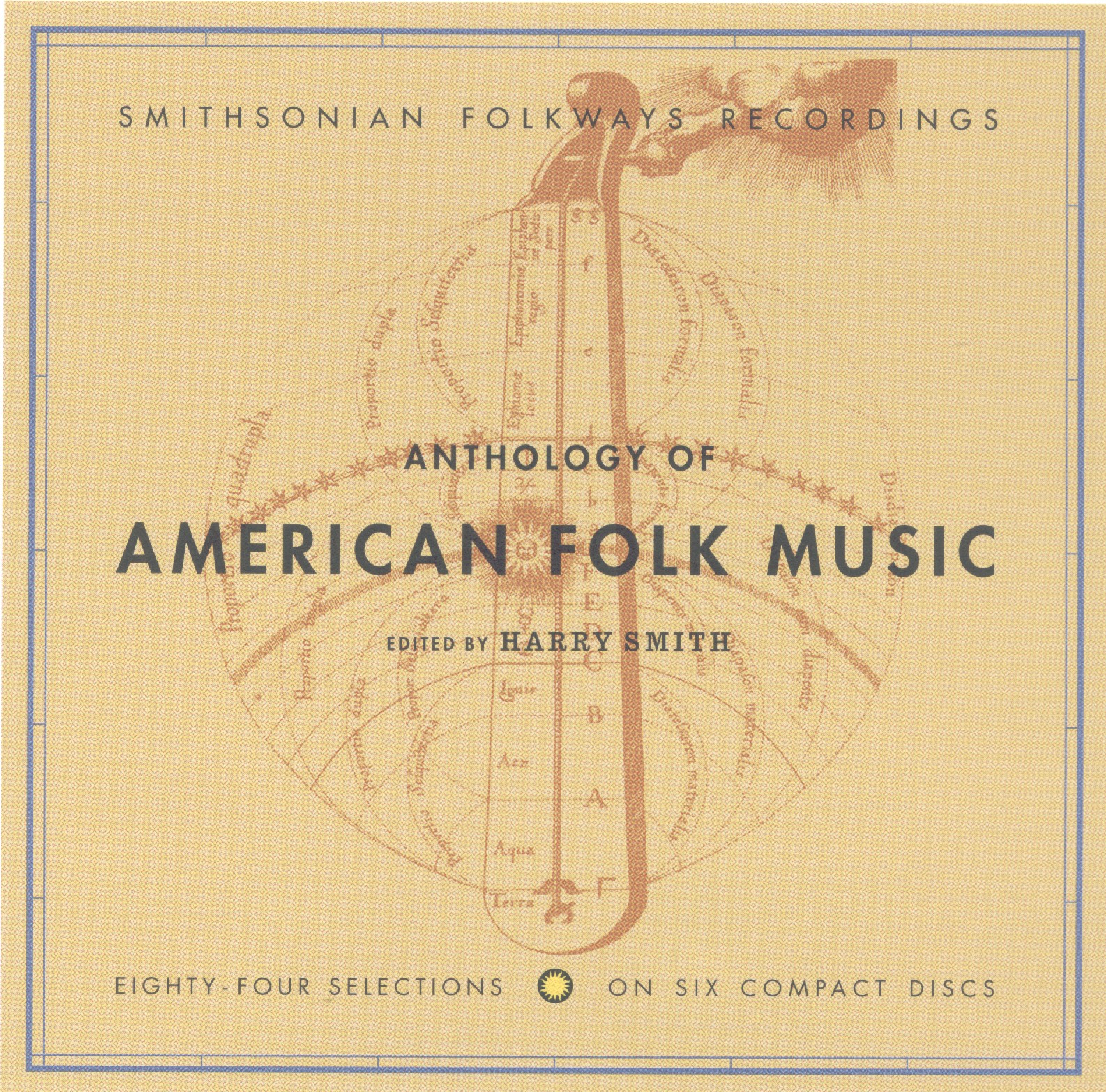
In the early 1950s, there began a revolution. It wasn’t marked with massacre or power struggle. Those outside it knew it existed, but barely, and only through stories of the Bohemian, Greenwich Village, and emerging stars like Bob Dylan, Joan Baez and Phil Ochs. It was a new American revolution, one in which musicians, critics, casual listeners, and even hipsters and some fashionistas began to look back in order to look forward. It was a folk revolution, and Harry Smith, then just 29 years old, was at its center.
Smith was, in many ways, a jack-of-all-trades. A filmmaker, ethnomusicologist, anthropologist, mystic and artist, he embodied 1960’s New York bohemianism. He lived with Ginsberg, rubbed elbows with Igliori and The Fugs, hung out at Hotel Chelsea, screened films at the San Francisco Museum of Art and, perhaps most importantly, amassed an astonishingly deep collection of early American 78 rpm records. Many of these records were collected to form The Smithsonian Anthology of Folk Music, a six-LP box set that stands not only as a valuable document of the development of American music, but also as one of the most influential compilations ever released.
The collection, released in 1952, is comprised of 84 sides recorded sometime during 1927-1932 (Smith notes his reasoning for this timeframe as “1927, when electronic recording made possible accurate music reproduction, and 1932, when the Depression halted folk music sales,”) and divided into three parts, each with two records of stylistically linked material: Ballads, Social Music, and Songs. Ballads collects songs that recount a particular time or event and loosely tells a historical narrative. The first LP of Social Music collects dance songs and party music, typically performed, as one can imagine, at community gatherings. The second LP features pieces centering on religion and spirituality and Songs collects those in between, detailing everyday life, relationships, activity, etc. Genres range from Cajun to country to delta blues, generally running the gamut of popular, regional American music of the time.
Smith oversaw every aspect of the box’s production. He wrote and crafted the liner notes himself, which are nearly as famous on their own, using a style of collage later adopted by post-modernist artists. Always the eccentric, Smith sometimes provided editorialized summations of songs in cryptically poetic, journalistic expressions. For “King Kong Kitchie Kitchie Ki-Me-O” by Chubby Parker, a song in which a frog marries and mouse, later sampled by Mickey Avalon for his song “What Do You Say”, Smith penned the following: “Zoologic Miscegeny Achieved Mouse Frog Nuptuals [sic], Relatives Approve.” Each volume in the collection features the same cover art, a “celestial monochord”, but printed in its own unique color: green, blue and red. These, Smith asserted, were to represent the essential alchemical elements, Air, Water and Fire, and were to be in harmony with the “celestial monochord”, another alchemical reference, taken from an early treatise by the alchemist Robert Fludd. It was later replaced by a photo of a farmer in response to the politically charged atmosphere of the culture at which the collection was aimed for fear that its mystic angle might prove heavily divisive.
But the collection was anything but divisive. Its track listing reads like an all-star revue. It introduced uninitiated listeners to Blind Lemon Jefferson, The Carter Family, Mississippi John Hurt, Furry Lewis, Charlie Patton, Blind Willie Johnson, Gus Cannon and Cannon’s Jug Stompers, Dock Boggs, Sleepy John Estes and a host other artists. Its sounds graced the ears of Bob Dylan, Joan Baez, Dave Van Ronk and all the players in the New York folk scene, even Ginsberg, fellow poets, The Grateful Dead in San Francisco, and all those with an ear to the ground. Ronk recalls, “we all knew every word of every song on it, including the ones we hated.” Instantly, it was heralded as a driving force behind the folk movement and all efforts of musical resurrection, inspiring Newport Folk Festival to include Mississippi John Hurt and Dock Boggs on the roster of their next festival. Overnight, forgotten stars once again ascended and were flown to New England, Europe, all over the world, anxious and engorged with folk fever.
It later seduced John Fahey, Elvis Costello and infinite others, the entrancing “talismanic aura” driving every listener under its spell to obsessive love and reverence. It is #276 on Rolling Stone’s 500 Greatest Albums of All-time. Required listening for any American music lover, Smith and his Anthology are American treasures, of the past but not forgotten, to be held closely and affectionately, with curiosity and desire, and appreciated not as antiques but as indispensible, undying articles of America.
Written by Ben Brundage
Show Announcement: Zola Jesus – Contemporary Arts Center (Cincinnati)

One week from today Zola Jesus will be performing at the Contemporary Arts Center in Cincinnati. Zola Jesus is the stage name of Nika Danilova, a 22-year-old Wisconsinite with Russian heritage who released her third studio album Conatus in late 2011. A solo act that sometimes plays her live shows with a backing band, her music is a hauntingly beautiful blend of rich synths and emotional, dark vocals that combine to bring a unique listening experience that feels like a mixture of Goth, opera, and minimalistic pop music. In a conversation with Interview Magazine, Nika describes her brand of sound philosophically saying, “Everything I do is a reflection of the duality within me. Musically, I really love things that are very synthetic and unnatural. And I also like the organic and human… the intrinsic, I guess. I always try to reconcile the dichotomy between the two and make it into something that is unique.”
The show is next Monday evening (2-20-12) at the Contemporary Arts Center in downtown Cincinnati. Buy Tickets for $13. Being at the CAC, the performance should have an added artistic visual element versus your normal concert venue experience that is sure to make this a memorable evening. Below you can check out a live performance of Zola Jesus performing “Poor Animal” courtesy of Seattle’s KEXP radio. Hope to see you there Cincinnati.
Connect with Zola Jesus via Facebook | Twitter
Written by Greg Dahman
 Thought on Tracks