


Album Review: Smoke Dza ‘Rugby Thompson’

When I listen to music, I prefer to listen to albums. A good, varied playlist is great, especially when you hang out with people with far ranging musical palates, but there’s nothing like an artist, or a group of artists, having a vision for an album and seeing it through. While hip hop as a whole has gravitated more towards singles in recent years, the hip hop album is back in 2012. LP’s like Ka’s Grief Pedigree, billy woods’ History Will Absolve Me, and Nacho Picasso’s Exalted are powerful and cohesive artistic statements that have forced me to make time to listen to them over and over again. Smoke Dza’s Rugby Thompson is another one of those albums. I’ve been aware of Smoke Dza for a minute, and while his laid back flow and minimalist style hasn’t really wowed me in the past, the self-dubbed “Kushed God” has come into his own on Rugby Thompson. Assisted greatly by NYC producer of the moment Harry Fraud, who produced the album front to back, Rugby Thompson is the album Dza was born to make.
The album title is a play on words involving Smoke Dza’s love for Polo “Rugby” shirts and Steve Buscemi’s win-at-all-costs Boardwalk Empire character Nucky Thompson. On most of his previous projects Dza has been content to stay in the ‘weed rapper’ lane, and while there are still plenty of reefer references throughout the album, Dza comes with a different perspective on Rugby Thompson. He focuses on survival and success through the lens of his drug hustling past and music hustling present, complete with a more rugged style to match Harry Fraud’s raw production. Dza starts out the album with possibly the two finest solo songs he’s ever made in “Rugby Thompson” and “New Jack”. The slow, smoky groove on the title track allows Dza to display his great stream-of-consciousness wordplay “He only pick up when the money’s calling him”, while “New Jack” is a stylistic statement of arrival over the type of hard hitting beat that’s quickly making Harry Fraud a household name. Dza rhymes- “Bitch I’m way iller than your boyfriend/ plus I make more money, you think he cool cuz he ball overseas?/ Shit I ball overseas too, I’m in the game, he won’t never see the league true”. These types of lines show the confidence that touring the world with some of hip hop’s brightest young stars has given to Smoke Dza, allowing him to truly embrace rap as a career.
I first heard Smoke Dza through his work with New Orleans rapper Curren$y and his “Jet Life” crew, of which Dza is practically an honorary member. Curren$y, the current crown prince of weed rap, recently released his major label debut The Stoned Immaculate and lends a stellar verse to the players’ anthem “Baleedat”, making it one of the album’s standout cuts. While Smoke Dza owes a lot of his success to his affiliation with Curren$y, Curren$y’s recent output suggests he could learn a thing or two from Dza about quality control. The Stoned Immaculate falls victim to a lot of the common pitfalls of hip hop albums that Rugby Thompson avoids. Loaded with random guests and inconsistent production, Curren$y’s still solid album shows why making a good major label album can be a tricky proposition. Its singles based format will undoubtedly bring Curren$y a lot of new fans, but as a stand-alone album, it doesn’t work nearly as well as his previous ventures, and Dza and Harry Fraud’s tightly crafted effort makes the disparity even more clear.
Smoke Dza’s greatest strengths as an artist are his ear for beats, his ability to seek out high quality collaborators, and his ability to adapt his style to create seamless collaborations. On Rugby Thompson everyone comes with their A-game, making it the rare hip hop album where every guest is a welcome addition. Dza enlists west coast rhymers Domo Genesis and Schoolboy Q on the braggadocious “Ashtray”, where Q’s choppy flow in particular demonstrates why he’s one of the most sought after young talents in the game. Smoke Dza’s verse makes clear that while he doesn’t sell drugs anymore, it’s a legitimate part of his past and not something he plays up like so many run-of-the-mill trap rappers. Hustling may have been a necessity for Dza at one point in time, but he sounds comfortable trading that life for his new hustle, music.
Not only does Smoke Dza work with MC’s from all over the country, he also works with MC’s from all different age brackets. New York’s younger generation shows up through A.$.A.P. Twelvyy and Action Bronson’s appearances on “Game 7” and “Turnbuckle” respectively. Twelvyy contributes a slurred chorus and a standout coming-of-age verse to “Game 7” while Bronson and Dza trade visual tag-team verses on “Turnbuckle’s” shimmering reggae influenced soundscape. NY’s older generation is represented through appearances by Boot Camp Click legend Sean Price and fellow Polo aficionado Thirstin Howl III.
It seems as if Smoke Dza made all the right decisions in making Rugby Thompson, but tapping Harry Fraud to produce the entire album was undoubtedly his best one. Fraud has built a buzz through his work with Bad Boy’s French Montana and is now working with everyone from Action Bronson to Rick Ross. A Brooklyn native, Harry Fraud grew up with musician parents who helped foster his passion for making music. His unique use of various drums and drum patterns is probably his greatest strength as a producer, but his eclectic sample choices and subtle layering allow him to tailor his tracks to the artists that he works with. His constantly evolving style incorporates chopped and screwed choruses on “Ashtray” and “Rivermonts”, layered and shifting samples on “Kenny Powers”, and even a jazzy golden beat on “Playground Legend”. Rugby Thompson is one of those albums where the sum result is greater than the individual parts. Smoke Dza may never be considered an all-world MC, but with the help of Harry Fraud and several friends he has created an album that is quite simply one of the best albums I’ve heard this year. Grab your copy of the album.
Connect with Smoke Dza via Facebook | Twitter
Written by John Bugbee
Album Review: The Walkmen ‘Heaven’
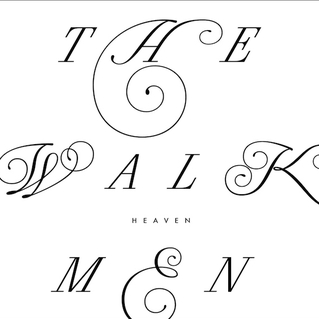
We have all heard the saying that with age comes responsibility. I quickly realized that once the four-year party that owns the moniker of college came to an end, a growing stack of accountability followed. Job deadlines, bill payments, and serious relationships promptly became the norm while days dedicated to vicious drinking sessions slowly fell by the wayside. If these immature days do pop up they are followed by a hangover so bad that you actually consider never drinking again. The hangovers continue to get worse and the false promises continue to grow. While nothing that I just depicted comes across as enjoyable, I find a continued satisfaction with growing up because there is a silver lining that comes with experience. With each e-bill transaction I make or each goal I hit at work I feel like I am gaining maturity and this is not necessarily a bad thing. With maturity comes polish and with this shine offers anyone in their mid to late 20s the ability to be taken a little more seriously than the days of doing beer bongs in the bathroom. This self-proclamation for the acceptance of time passing is not meant to promote my deep feelings, but more of an opportunity to tie these thoughts with a band. Once a rugged, less-accessible indie rock band, The Walkmen have embraced maturity and display their grown up side with their recent release Heaven.
My initial exposure to The Walkmen came in 2004 when they opened up for The Strokes in Indianapolis during the Room on Fire tour. They had just released their second studio album Bows + Arrows and began to generate a lot of buzz with songs like “The Rat”. I remember thinking little of their live performance. I tried to grasp their album because they were opening up for my favorite band in the world, but it refused to stick. As a listener I stood on a parallel line with The Walkmen’s musical progression. Introduce Bows + Arrows to me at the age of 27 and it would be the front-runner for album of the year. It was like giving a toddler a sip of beer. I was being given a taste of something that I just was too immature to realize how incredible it would turn out to become.
The Walkmen have released four other records in an eight-year span since my introduction in 2004. Their two-year life cycle release schedule has allowed me to stay engaged with The Walkmen, while identifying their uncanny ability to progress as a band. Before their 2010 release of Lisbon, they were just another band to me. That was the record that really grabbed my attention. This was a band that was for me all along and Lisbon gave me the opportunity to look back at the evolution. Looking back, I find that each two-year term has allowed The Walkmen to add an additional layer to their music and continue to grow as a band. The release of Heaven highlights their growth through experience and the wisdom that comes with age.
Before the listener hits play on Heaven, one will quickly identify the maturity that I mention in this post. Photos of band members and their children line the inside and back covers of Heaven. After several dozen spins, these photographs make all the sense in the world. Children force maturity. It is my best assumption that The Walkmen were able to make Heaven shine by transmitting this maturity in their music. This record is their tightest and most advanced. It signifies their bond as this record was recorded in three separate cities. They display the ability to work remotely while being effective, the ultimate sign of a group of professionals.
The Walkmen offer their best songwriting to date, while exploring the opportunity to tie it together with moments of musical simplicity. Opening track, “We Can’t Be Beat” begins with simple finger picking, lead-singer Hamilton Leithauser’s voice and supporting vocals. This song draws listeners to not only to Leithauser’s beautiful voice, but also introduces new listeners to the synergy that comes after 10 years of experience. The line, “We’ll never leave, we can’t be beat” underscores the confidence that only comes with experience. This line serves as the opening remarks of Heaven where it almost seems as if Leithauser is challenging the listener to either take it or leave it.
The next opportunity for the listener to identify The Walkmen’s acceptance of time is in song “Heartbreaker”. Here, Leithauser belts out, “These are the good years, ahh the best we’ll ever know, these golden light-years”, which plays to the “yeah we are old and have kids, but we can still do it” card. This song offers the classic delivery that we have come to know The Walkmen by, but offers it in a more polished tone. “Heartbraker” serves as a cleaner, more accessible version of earlier material from The Walkmen.
The exclamation point of this record is the first single and title track “Heaven”. Opening lines, “Our children will always hear romantic tales of distant years, our guilty age may come and go, our crooked dreams will always glow” offers listeners a quick summary of what believe The Walkmen are trying to inform the listener during this entire record. Time provides certain ripeness to life, while offering the ability to quickly glance back at the past. It is these types of visions that The Walkmen are able to paint throughout this record that verify to me that they have not only grown as a band, but many of us have as listeners. A mutual musical maturation where both sides are able to progress together even if it comes with a few gray hairs.
With each successive spin of Heaven, I begin to consider the importance of what it means to grow up. While diapers are changed more often than guitar strings these days, The Walkmen have somehow found more time for detail. I have progressed as a listener, it is my hope that I can find success in my own personal maturation as the days continue to fly by. Maybe I can start now by putting a limit on how much I am going to drink this weekend…maybe.
Connect with The Walkmen via Facebook | Twitter | Fat Possum
Written by Brett McGrath
Album Review: Violens ‘True’

Jacob Graham of The Drums was quoted to saying “If reverb didn’t exist, we wouldn’t have bothered trying to start a band.” There’s something about this style that has always had a therapeutic effect for anyone that dives headfirst into it. The word itself, reverberation, implies the persistence of sound after the original sound is produced. In it’s truest essence, it is the ability of sound to continually fill a space. And perhaps that what it is really doing; filling not only the empty spaces in a room but also the empty spaces inside the listener. Whether it is insecurity in the present, a longing for the past, or uncertain thinking about the future, the root cause is always that something is missing. And it’s different for everyone. There is no rating for personal tragedy and feelings between people. Heartbreak is the same, no matter the cause. And perhaps that’s why the music is so compelling and rewarding, the fact that when you drown in the sound, you know deep down that you are connected to someone else doing the exact same thing. Loneliness is only absolute if you lose your ability to think about others.
I believe in connectedness. Friendships and relationships are decided far before a first meeting takes place. But I also believe in choice. Life may put you in the same room as someone, but ultimately, action is required to push that connectedness into whatever it is meant to become. So how is it that these are my thoughts at the end of a holiday weekend, when the majority of us are hungover and sun burnt? I’m not really sure to be honest; sometimes I guess I just think about things. The only thing I know for sure is I’ve been listening to True, Violens’ follow up to 2010’s Amoral, for the past few hours.
A heavy dose of dreamy reverb along with a mix in of garage grungy undertones, the album strikes a cord with my emotional core in just the right way. From the first wavy guitar chords on opening track “Totally True”, the album has an inviting sound that retains balance throughout. The opening track lets the sound tell the meaning, offering a simple chorus that doesn’t need any more words. “True. I want to know that you’re true.”
The first quarter of the album, which includes tracks “Der Microarc”, “When to Let Go” and “Sariza Spring”, all display the easy listening style perfected on the opener. They flow seamlessly from one to the next, so much so that you might not even notice them changing. Then on track 5, “Every Melting Degree”, a garage/grunge rock style is implemented as an undertow to the wave of echoed reverb. This aggressive guitar carries through the next few tracks, “Unfolding Black Wings” and “All Night Low”. While no longer light and airy, this change of pace works and is perfectly placed in the middle of the 12-track album.
But perhaps the most impressively crafted song on the album is the second to last track entitled “Through the Window”. Speaking so much with hardly a change in tone or beat and ending just as quickly as it starts with the music literally dropping off, it represents this album in a nutshell. True is not an album of anthems or lead singles. It’s an album of yin and yang. Balance and wholeness. Thoughtfulness and melancholia. And it needs to get into your rotation sooner than later. Grab your copy from Slumberland Records, and listen to “Through the Window” below.
Connect with Violens via Facebook | Twitter
Written by Greg Dahman
 Thought on Tracks