


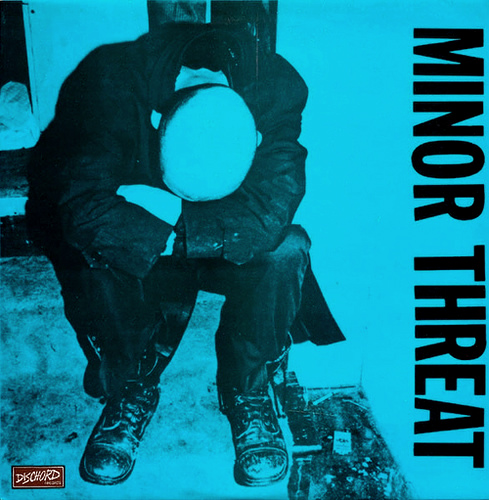
In The Dust #19: Minor Threat ‘Complete Discography’
Once a week In The Dust rolls up its sleeves and digs to the back of the rack to find that record, the one you never knew you always wanted, the one that’s lost but not forgotten.
Editor’s Note:
Check out our Spotify playlist, In the Dust 19: Minor Threat for a sampling of the tracks discussed below.
Hardcore. It’s fast, dirty, loud, and aptly hard to its core. For many, it’s an acquired taste, and in certain cases admittedly difficult to discern one band from the next without a firm knowledge of its intricacies or locales or incestuous past, but Minor Threat is one band, however short-lived, that transcended the social understanding, or even social stigma, of hardcore, leaving a shoeprint much larger than its foot, and that of many of its contemporaries.
The much-maligned hardcore and its aggressively independent, no frills, no airs, DIY aesthetic is generally at odds with the reportage style of this piece from week to week, so let us meet halfway and begin by saying:
I think Minor Threat is fucking great. So fuck you.
Founded by Ian MacKaye and Jeff Nelson in 1980, Minor Threat is a cornerstone of the world-renowned D.C. hardcore scene. Along with contemporaries like Bad Brains and California hardcore band Black Flag, fronted by D.C. native and D.C. scene veteran Henry Rollins, Minor Threat helped pave the way for many American punk and hardcore of the 80’s and 90s, as well as grungers like Nirvana and Pearl Jam, the significantly funkier side of the Red Hot Chili Peppers, unabashed Minor Threat disciples, and more. MacKaye and Nelson’s business ethics also inspired generations of musicians across genres by releasing all their material, and the material of countless other hardcore bands, on their own label, the now-famous Dischord Records.
Like all subcultures, hardcore began as a reactionary product of life on the fringe, disenfranchised and labeled as hopeless, but the spirit of hardcore itself is the contrary. It is a self-reliant, ambitious and propulsive group, appreciative of its position in the cultural context. In their short body of work, Minor Threat, perhaps of all hardcore bands, best embodies this. Over the 26 tracks and 47 minutes of their Complete Discography, released, per usual, on their own label, Dischord, messages of hope, valorous struggle, independence, indignation, pride and self-acceptance are hurled at you with frightening and exhilarating velocity, one one-minute song at a time. Functioning successfully as a single album with a cohesive narrative, the Complete Discography, tracked in roughly chronological order, immediately establishes these themes and continues to build on them, as the band continues to record and evolve, until they are rendered as complex and complete manifestos of a microcosm speaking for a nation as a whole.
The album’s first track, “Filler”, is anything but. It begins with a triumphant crunch of heavily distorted guitar, then the bass, deep, commanding, ominous, and the drums, fully automatic, firing with pointed precision. MacKaye, the groups vocalist, who later went on to form the comparably iconic band, Fugazi, finally enters with a scathing, self-insisting critique of conformity, Religion and love, what he asserts is equally as opiated and destructive.
What happened to you? / You’re not the same / Something in your head / Made a violent change / It’s in your head / Filler / You call it religion / You’re full of shit / Was she really worth it? / She cost you your life / You’ll never leave her side / She’s gonna be your wife / You call it romance / You’re full of shit / Your brain is clay / What’s going on? / You picked up a bible / And now you’re gone / You call it religion / You’re full of shit / Filler
This is not a reaction to change itself but rather the change of one’s ideals to what is seen as a false ideology, the termination of the effort to conduct one’s self as a reactionary agent and instead give in to join the other side, the easy life, prepackaged for the masses by which one was previously marginalized.
This strict aversion to outside philosophy is reinforced by what, in many ways, is Minor Threat’s most influential cut, the album’s fourth track, “Straight Edge”. Despite its svelte 0:45, “Straight Edge” is responsible for starting the “straight edge” movement, and solidifying Minor Threat, whose lifestyle served as the model, as its progenitors. The core tenants of the movement are a simple, logical reaction to the excesses of punk music: no alcohol, tobacco, or recreational drugs, and in many cases no promiscuous sex. Minor Threat adhered closely to these tenants, detailing those particular to drugs use in “Straight Edge”:
I’m a person just like you / But I’ve got better things to do / Than sit around and fuck my head / Hang out with the living dead / Snort white shit up my nose / Pass out at the shows / I don’t even think about speed / That’s something I just don’t need / I’ve got the straight edge / I’m a person just like you / But I’ve got better things to do / Than sit around and smoke dope / ‘Cause I know I can cope / Laugh at the thought of eating ludes / Laugh at the thought of sniffing glue / Always gonna keep in touch / Never want to use a crutch / I’ve got the straight edge
As with all collections of outcasts labeled as a subculture, there are basic unifying factors. For hardcore, being straight edge quickly became one, expanding from its position on drugs and alcohol to address sexual practices, dietary habits, animal rights, politics and medicine.
Beyond being a polarizing, genre-molding, cultural icon, Minor Threat is, in essence, a damn good band composed of technically proficient, but most importantly inventive and stylistically sound musicians. Their cover of The Monkees’ “Steppin’ Stone” is a testament to that.
The choice of “Steppin’ Stone” might initially seem an odd one, but the song’s message fits perfectly into the ideals of the hardcore community and the message of the band itself: moderation, honesty, respect (if earned) and independence.
You’re trying to make your mark in society / Using all the tricks that you used on me / You’re reading all those high fashion magazines / The clothes you’re wearin’ girl are causing public scenes / I said / I’m not your stepping stone
Their reimagining of The Monkees’ original is mark of an intelligent band making an unexpected but deceptively appropriate choice, and it results in one of the best tracks of their career, sonically, iconically and musically. Watch a live video for “Steppin’ Stone” below.
A brilliant centerpiece to their Complete Discography, “Steppin’ Stone” is the perfect introduction to the perfect band for those who “hate hardcore”, like I did, until I fell in love with Minor Threat, and by association the pieces of hardcore, and my burgeoning understanding of and eventual love for it, fell into place.
I used to scoff at hardcore. Now I scoff back, but I still remember what it’s like on the other side. I look back on it not as a member of the hardcore community, but in the same sad way many look upon those to whom they fail to be understood: guarded, but with empathy, self-confidence and an extended arm.
To be sure, hardcore not for everyone, but it’s also not what you think. Open your ears. Eat your cultural vegetables. Like the straight edge, you might even become a vegetarian.
And if you still just fucking hate it:
We’re just / A minor threat
–
You tell me that I make no difference / At least I’m fuckin’ trying / What the fuck have you done?
-Minor Threat, “Minor Threat” & “In My Eyes”
Written by Ben Brundage
In the Dust #18: Lee “Scratch” Perry and His Best from The Black Ark
Once a week In The Dust rolls up its sleeves and digs to the back of the rack to find that record, the one you never knew you always wanted, the one that’s lost but not forgotten.
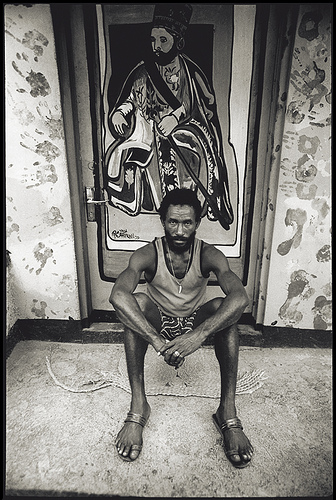
In honor of the 18th edition, a number that in Western culture signifies rebellion, independence, and the legal recognition of one’s voice, and its subject, a notorious iconoclast and viscerally subversive revolutionary, let us deviate from the usual formula.
I want to talk about Lee “Scratch” Perry, and I want to do it my way. I don’t want to refer to myself as the author, and I want to include a minimal amount of unbiased reportage, because as anyone who is familiar with Perry will tell you, he does what he wants, when he wants, how he wants. Damn everyone. Damn everything.
So I’m going to tell you, in my words, about the man, a legendary reggae artist and producer, his role in pioneering dub music, and my favorite cuts to ever emerge from The Black Ark.
Let me start by saying Lee “Scratch” Perry was, and is, batshit crazy. Refer to my blurb from 2011’s best reissues post for his album The Return of Pipecock Jackxon, but this isn’t really about his insanity, personal at least, although it is incredibly difficult to separate it.
He was born Rainford Hugh Perry in Kendal, Jamaica in 1936. When Perry was in his twenties, he began selling records for Clement Coxsone Dodd’s sound system.
This might require some translating. In Jamaica, music is not only sold through the likes of our traditional record stores, but through sound systems, rolling carts or cars equipped with turntables, power supplies, and an immense, jury-rigged wall of speakers designed to attend, or begin, street parties where the records played can then be sold. The record sellers of these sound systems are precursors to “selectors” or “controllers”, the reggae and dancehall equivalent to the radio or club DJ. The sound system itself is generally regarded as one of the most important elements in the development of Jamaican music, bringing a wild and seemingly ever-changing array of styles to the masses day-to-day.
So that is how Perry’s career in music began. As his relationship with Dodd developed, so did his job description. He became involved with Studio One, Dodd’s record label renown for its consistent generation of hit after hit. Perry slowly integrated himself into the recording process, rostering with Studio One, and ultimately cutting close to 30 sides. But Dodd and Perry, a unique mind, terribly stubborn and difficult to work with, soon began to chafe. Their personalities, as well as their expectations financially, did not mesh, a reoccurring problem that persists in many of Perry’s professional relationships to this day.
Perry jumped ship to join Joe Gibbs at Amalgamated Records but that didn’t last long either. Another financial dispute led Perry to subvert Gibbs and start his own Upsetter Records, an apt name that Perry would repurpose many times over.
Upsetter Records began as Perry’s vehicle for his own music and the cultivation of his own sound. The first Upsetter releases, 1968’s “People Funny Boy” and “I Am The Upsetter” were direct insults aimed at Gibbs, and proved not only effective, but also popular. “I Am The Upsetter” sold over 60,000 copies in Perry’s native Jamaica. Now known as “The Upsetter”, he and his studio band, named (guess what?) The Upsetters, would proceed to put out a string of extremely popular singles, in time signing with Trojan Records, a U.K. label, and using their distribution network to launch The Upsetters’ first full-length LP, Return of the Django, still one of their most highly regarded releases to date.
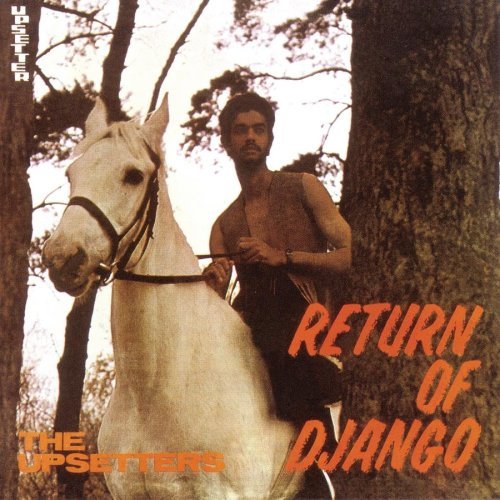
After the Django release, the label set it sights on outside artists, proceeding to record and release music by The Wailers and several early sides cut with the immortal Bob Marley. But The Wailers and Marley soon grew too big for Upsetter and left, signing to Island Records. Despite gloomy horizons brought on by the departure of the label’s biggest outside act, Perry pressed on, entering the most important and influential period of his career.
In 1973, he built the legendary Black Ark Studios. I get chills just thinking about it. No place in the history of reggae has ever sourced such mojo, with Treasure Isle with the indispensable King Tubby at the boards a close second.
Later recognized as a pioneer of dub for his experiments with Dodd and Gibbs in the early 60’s, Perry set out in The Ark to continue the very same free-spirited exploration of the boundaries of reggae, now with more control, very basic but personally selected equipment, and nothing but time and ganja.
His production palate expanded. His mixes became more experimental. Like King Tubby, Perry used the mixing board and external effects units, which due to budget and availability were very simple, as instruments, endlessly tweaking, and through what most critics refer to as astonishing, electronic sleight-of-hand creating from pre-recording tracks long, twisted and heady masterpieces, swathed in echo, reverb and punchy overdubbing, barely resembling any shred of the original. Using only a 4-track, Perry engineered remarkably dense musical landscapes that explored the definition of reggae and dub, rife with sounds previously unheard, concluding, in statement after landmark statement, that, perhaps, what people knew as reggae and dub was severely antiquated.
He buried microphones and banged on trees for bass drums. He surrounded drum kits with chicken wire. He famously sampled crying babies, bombs exploding, glass breaking and a multitude of animals, one of which, a cow, was not a cow at all, actually a saxophone played through a cardboard tube MacGyvered with tin foil. The old rules were exactly that: old, and no longer applicable, and Perry, in so many ways, began to invent his own. He blew ganja into running tape, sprayed it with blood, urine and alcohol, blessed his studio everyday with the customs of local magic and allowed candles and incense to burn onto everything, all in the name of The Black Ark:
I see the studio must be like a living thing, a life itself. The machine must be live and intelligent. Then I put my mind into the machine and the machine perform reality. Invisible thought waves – you put them into the machine by sending them through the controls and the knobs or you jack it into the jack panel. The jack panel is the brain itself, so you got to patch up the brain and make the brain a living man, that the brain can take what you sending into it and live.
The Black Ark and its music made people stars. Junior Murvin, The Congos, Marley and The Wailers, Max Romeo, The Heptones, Augustus Pablo, Wings (yes, Paul McCartney’s Wings) and so many more cut tracks behind its dark doors.
But, in classic Perry style, he covered every surface of The Ark with unintelligible imagery and prose and proceeded to burn it down. Perry insisted that it was infested with “unclean spirits” (frequent unwanted patrons and visitors), and burnt the studio to cleanse himself of his sins.
Too much stress in Jamaica, all the time. Everybody want money, everybody want paid. Everyone got problem and want me to solve their problem. Nobody gave me anything, people just took everything. Everybody take this, and take that. So the atmosphere in the Black Ark studio was changing; it wasn’t like it used to be. Then I decided to make a sacrifice as the energy wasn’t good anymore.
There is some dispute about when the fire actually occurred. It was sometime between 1979-1983. Some say it was a construction accident. Others say it was to avoid greedy gangsters getting a cut, but no matter how or when the studio actually burnt down, its destruction ended the most important creative period in the history of reggae and dub music.
But while The Ark is dead, its music survives, and thank God, for it is some of the most addictive, impressive, and delightfully insane music there is.
Ben’s Top 10
These are 10 just ten examples of the genius marriage that was Perry and his Black Ark. Listen to Ben’s picks on this Spotify playlist: In the Dust: Top 10 Songs from the Black Ark
Bob Marley and The Wailers – Small Axe
This song is all about tone. Perry deftly renders this song into a soft, rounded transcendence. Marley and The Wailers do the rest.
Bob Marley and The Wailers – Duppy Conqueror
“Bow. Bow. Ba-Bow. Bow-Ba-Bow-Bow.”
Yes, me friend.
The Upsetters – Return of Django
Good God Almighty, the brass! This groove is so deep and funky I have to believe it was written for the soul purpose of dubbing, but that’s not to say that the original won’t rock every bone out of your body. Grab a really, really big glass of rum and dance with someone, anyone.
The Upsetters – People Funny Boy
The infamous baby: one particularly impressive example of Perry’s work with samples. Notice the baby seems to wail on beat, syncopating the rhythm, funking everything up into a sort of sly, groovy lean? That’s why he’s the master.
The Upsetters – I Am The Upsetter
The lead guitar, incessant but hardly obnoxious rim-shots, and Perry’s masterful vocal pattern all collide to establish a solid, cutting rocksteady beat that, for my dime, typifies the best qualities a top-notch reggae rhythm section can bring to a track.
Junior Murvin – Police and Thieves
Eli Cash, anyone? Maybe The Clash rings a bell? Big money says virtually everyone has already heard this song at least once, but for me a million times wouldn’t be enough. Junior Murvin’s voice is like a bubble bath, and the way Perry EQs and modulates the hi-hats on all of Murvin’s material is, as a drummer, what I will always hear when someone says “reggae”.
The Congos – Don’t Blame It On I
The best vocal group in the history of reggae. There. I said it. Listen to this song, go buy Heart of the Congos (also produced by Perry at Black Ark) and if you still don’t agree, come find me. Rob knows where I live.
Max Romeo – Public Enemy Number One
Max Romeo, perhaps more than any of these artists, is someone I wish could include at least ten times on his own. He isn’t as instantly infectious as the others on this list, but that’s not why I love him. His tracks are sleepers, burrowing ever-deeper, without attracting much, if any, attention, until they grow large enough to eclipse tracks you initially thought were obvious, eternal standouts. Often revolving around the subject of Satan and his influence on the Jamaican people, Romeo’s music establishes itself as some of the most substantial material to ever emerge from The Black Ark.
Augustus Pablo – Hot & Cold
Augustus Pablo is, to many, the king of roots reggae. Recording almost exclusively instrumental dubs, and pioneering the use of the melodica, Pablo’s mysterious and silky style exhibits an intense focus not often seen in the work of the characteristically loose roots period. And the Mayor of Portlandia loves him.
The Upsetters – Life Is Not Easy Dub
The only Upsetter dub on the list features the fake saxophone-cow. Exploring the cacophonous, unfathomably dense depths of Perry’s dub oeuvre is something one should wait to do until after fully digesting the singles.
You might just lose your mind. Or find it.
Written by Ben Brundage
In The Dust #17: Harry Smith’s ‘Anthology of American Folk Music’
Once a week In The Dust rolls up its sleeves and digs to the back of the rack to find that record, the one you never knew you always wanted, the one that’s lost but not forgotten.
In the early 1950s, there began a revolution. It wasn’t marked with massacre or power struggle. Those outside it knew it existed, but barely, and only through stories of the Bohemian, Greenwich Village, and emerging stars like Bob Dylan, Joan Baez and Phil Ochs. It was a new American revolution, one in which musicians, critics, casual listeners, and even hipsters and some fashionistas began to look back in order to look forward. It was a folk revolution, and Harry Smith, then just 29 years old, was at its center.
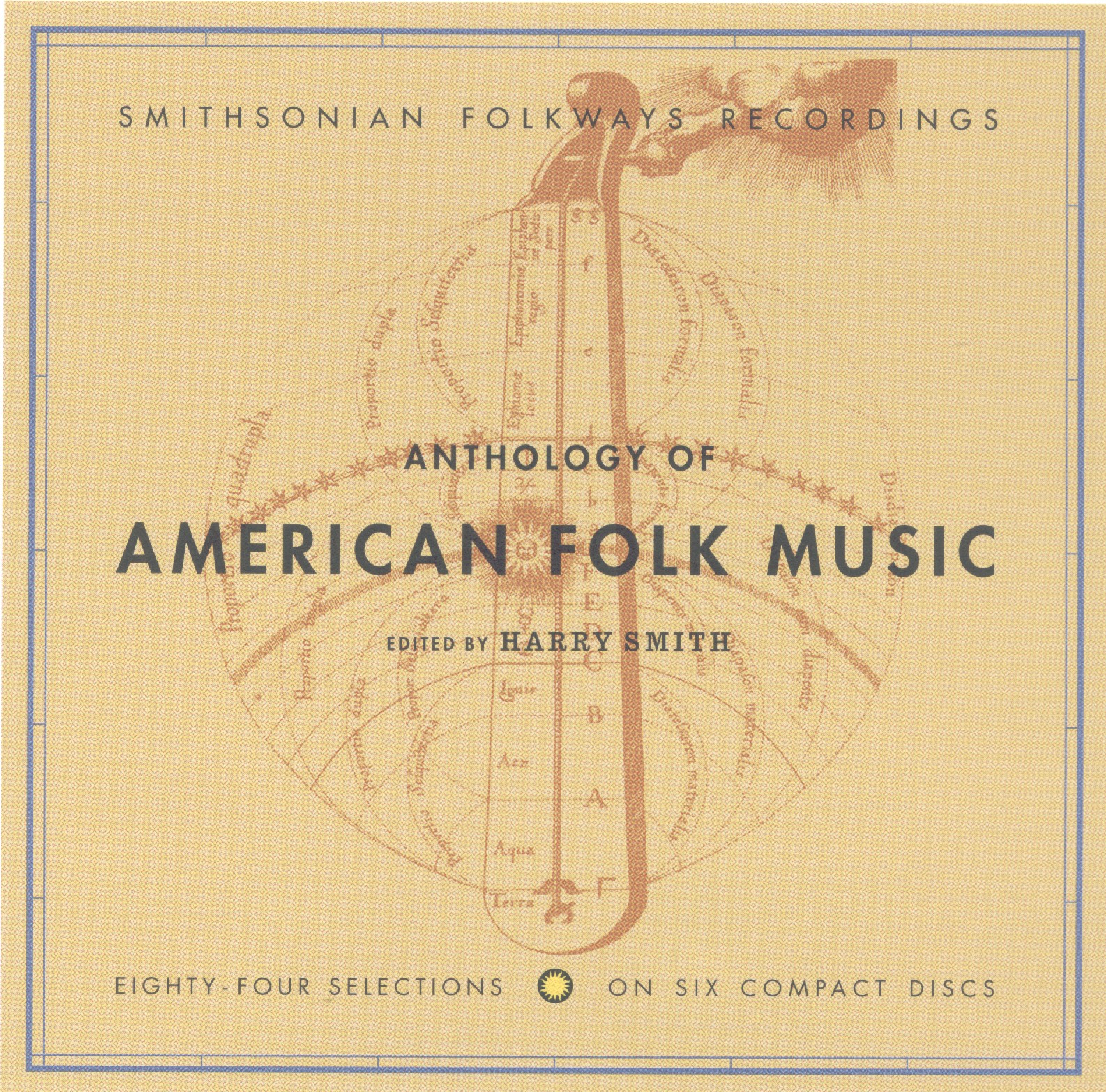
Smith was, in many ways, a jack-of-all-trades. A filmmaker, ethnomusicologist, anthropologist, mystic and artist, he embodied 1960’s New York bohemianism. He lived with Ginsberg, rubbed elbows with Igliori and The Fugs, hung out at Hotel Chelsea, screened films at the San Francisco Museum of Art and, perhaps most importantly, amassed an astonishingly deep collection of early American 78 rpm records. Many of these records were collected to form The Smithsonian Anthology of Folk Music, a six-LP box set that stands not only as a valuable document of the development of American music, but also as one of the most influential compilations ever released.
The collection, released in 1952, is comprised of 84 sides recorded sometime during 1927-1932 (Smith notes his reasoning for this timeframe as “1927, when electronic recording made possible accurate music reproduction, and 1932, when the Depression halted folk music sales,”) and divided into three parts, each with two records of stylistically linked material: Ballads, Social Music, and Songs. Ballads collects songs that recount a particular time or event and loosely tells a historical narrative. The first LP of Social Music collects dance songs and party music, typically performed, as one can imagine, at community gatherings. The second LP features pieces centering on religion and spirituality and Songs collects those in between, detailing everyday life, relationships, activity, etc. Genres range from Cajun to country to delta blues, generally running the gamut of popular, regional American music of the time.
Smith oversaw every aspect of the box’s production. He wrote and crafted the liner notes himself, which are nearly as famous on their own, using a style of collage later adopted by post-modernist artists. Always the eccentric, Smith sometimes provided editorialized summations of songs in cryptically poetic, journalistic expressions. For “King Kong Kitchie Kitchie Ki-Me-O” by Chubby Parker, a song in which a frog marries and mouse, later sampled by Mickey Avalon for his song “What Do You Say”, Smith penned the following: “Zoologic Miscegeny Achieved Mouse Frog Nuptuals [sic], Relatives Approve.” Each volume in the collection features the same cover art, a “celestial monochord”, but printed in its own unique color: green, blue and red. These, Smith asserted, were to represent the essential alchemical elements, Air, Water and Fire, and were to be in harmony with the “celestial monochord”, another alchemical reference, taken from an early treatise by the alchemist Robert Fludd. It was later replaced by a photo of a farmer in response to the politically charged atmosphere of the culture at which the collection was aimed for fear that its mystic angle might prove heavily divisive.
But the collection was anything but divisive. Its track listing reads like an all-star revue. It introduced uninitiated listeners to Blind Lemon Jefferson, The Carter Family, Mississippi John Hurt, Furry Lewis, Charlie Patton, Blind Willie Johnson, Gus Cannon and Cannon’s Jug Stompers, Dock Boggs, Sleepy John Estes and a host other artists. Its sounds graced the ears of Bob Dylan, Joan Baez, Dave Van Ronk and all the players in the New York folk scene, even Ginsberg, fellow poets, The Grateful Dead in San Francisco, and all those with an ear to the ground. Ronk recalls, “we all knew every word of every song on it, including the ones we hated.” Instantly, it was heralded as a driving force behind the folk movement and all efforts of musical resurrection, inspiring Newport Folk Festival to include Mississippi John Hurt and Dock Boggs on the roster of their next festival. Overnight, forgotten stars once again ascended and were flown to New England, Europe, all over the world, anxious and engorged with folk fever.
It later seduced John Fahey, Elvis Costello and infinite others, the entrancing “talismanic aura” driving every listener under its spell to obsessive love and reverence. It is #276 on Rolling Stone’s 500 Greatest Albums of All-time. Required listening for any American music lover, Smith and his Anthology are American treasures, of the past but not forgotten, to be held closely and affectionately, with curiosity and desire, and appreciated not as antiques but as indispensible, undying articles of America.
Written by Ben Brundage
 Thought on Tracks