


Album Review: Serengeti ‘Saal’
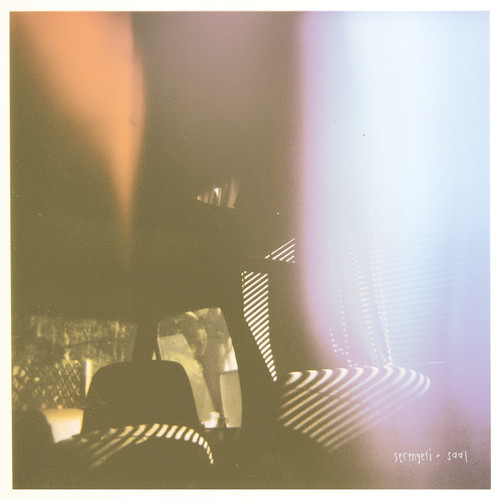
Given the minimal amount of traditional “rapping” on Serengeti’s new album Saal, his first with Atlanta label Graveface, it’s hard to classify it as a hip hop record. The only records I can think to compare it to are Geti’s last couple solo efforts Family & Friends and C.A.R., yet Saal is such a departure from the sound of those two albums that it’s really in a league of its own. Not that it’s considerably better than those albums, but something is different with this one. It feels like an album and a sound that he has been building towards while creating a new style of songwriting.
Saal was made in Germany with German producer Sicker Man. Serengeti has worked with some great producers recently, but he has never had beats that fit him quite as well as Sicker Man’s mad scientist like productions. Sicker Man uses a combination of guitars, cellos, synthesizers and a liberal amount of reverb and analog effects to create psychedelic soundscapes that enhance Serengeti’s expressive vocals. A handful of their collaborations that didn’t make the LP have surfaced as mp3’s and they are every bit as good as the eight songs that made the cut. The outstanding overall quality of every song the duo recorded has me hoping that Serengeti has more trips to Germany planned in the near future.
Many of the themes found in his last two albums (relationships, regret, change, acceptance) are present here, but Serengeti’s rhymes and especially his delivery seem more emotional and vulnerable than ever before. When Serengeti says “It’s great, it is…it is” self convincingly at the end of “Day by Day” it’s easy to sense the hesitation in his voice. Serengeti’s stream of consciousness storytelling style has always had strong, internal emotional content, but for someone that does “a lot of music that’s written in secret code,” Saal feels more revealing than anything he has done to this point. Serengeti’s comfort in his current style allowed him to truly put himself into these songs and exorcise some demons. His raw performance and ability to shift freely from rapping to talking to singing to mumbling and back to rapping help make Saal a defining work and potential classic.
The album’s beautiful closer “Erotic City” is perhaps the best example of his accomplishment. The song is a snapshot of someone “heading to LA on hope” like Geti did a few years ago to record his last few albums. The song captures a universal feeling of embarking on a new journey equally full of hope and fear. Whether the journey is fruitful or not doesn’t matter, the song encapsulates the in-the-moment emotions associated moving to a place like LA with your back against the wall perfectly. The way he sings “Erotic City” on the chorus and calmly speaks his verses over Sicker Man’s buzzing production, it sounds like he almost wishes he could recapture that time and feeling he once had about LA.
The preceding song “I Could Redo” features more heart-wrenching singing from Serengeti about a regretful night from a past relationship. It features my favorite line from the album, “I hid in your hidden traits.” Geti’s been through a lot and it’s the way he is able to analyze his past and his decisions in unique ways that makes his music so rewarding. His simple story of a boy’s karate being no match for an abusive guardian on “Karate” is the type of song that only Serengeti could make. It’s the same type of song that always leaves me questioning whether the song is about Geti or someone he knows. It’s never quite clear and that’s a big part of Serengeti’s appeal.
“Glassell Park” has become my favorite song of the bunch. A hazy production shifts over a simple bass line as Geti paints a picture of a bum as “the happiest man in Glassell Park” on the first verse and himself as the “happiest man” for the second. “Accomodating” is another creative song that puts a spotlight on a certain kind of person, the person that seems more concerned with putting others at ease than themselves. Geti asks them “What do you like to do?” and promises to “make you more complicated too”. Every song on Saal works great on the surface level while harboring added layers of depth for those willing to dig.
I have heard many people use words like bleak and sad to describe this record. While there are definitely depressing feelings expressed on Saal, that’s not the overarching vibe I get from the album. There is a subdued optimism about Serengeti throughout Saal that makes me feel he knows he’s finding more artistic comfort and freedom. Geti himself says on the song “Seasons” “I haven’t had the perfect time yet…I’m betting on myself again”. Despite all Serengeti’s been through, not only is he not giving up, he’s making the best music of his career. Pick up the album over at Graveface Records.
Connect with Serengeti via Facebook | Twitter
Written by John Bugbee
Album Review: Unknown Mortal Orchestra ‘II’
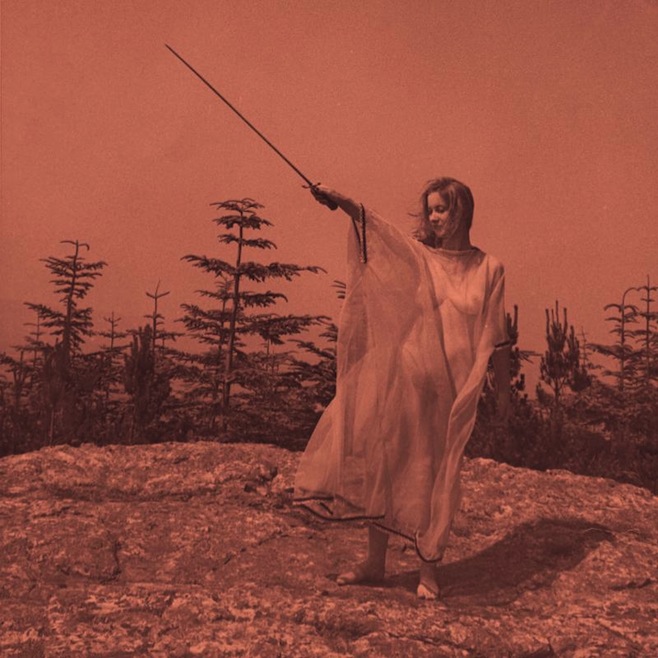
Unknown Mortal Orchestra waltzed on the national stage from anonymity in 2011 to release one of the year’s most critically acclaimed albums. As Scott McDonald wrote for Aquarium Drunkard at the time, “every sound falls right out of the sky.” In 2011, critics spent more time discussing the shroud of mystery that cloaked the Portland trio of Ruban Nielson, Jacob Portrait and Gregory Rogove than they did wrestling with the sounds that made the act so compelling. Those that addressed the album itself spoke mostly of its cohesive, hook-driven aesthetic and the band’s effective use of distortion and reverb to create a sound that was simultaneously fresh and nostalgic.
Fast forward a couple of years to the release of their second album II, and UMO is no longer a stranger. Critics will replace the “who are these guys?” storyline with a shallow narrative that revolves around UMO avoiding the dreaded sophomore slump and, against all odds, hitting back-to-back home runs. All of this is true, but fails to address the main point: UMO has enhanced and developed the blueprint laid out on the band’s self-titled LP to create an album deserving of the “instant classic” tag, based on the merits of the music alone.
II kicks off with “From the Sun” a track likely in the bag long before the Sandy Hook shootings that have sparked a discourse over gun safety and mental illness in recent weeks. Nevertheless, the song feels ripped from the headlines with Nielson crooning, “Isolation can put a gun in your hand / it can put a gun in your hand / it can put again in your hand / If you need to, you can get away from the sun / you can get away from the sun / you can get away from the sun / If you need to, you can get away from the sun / If you need to, you can throw away the only one” The guitar prickles and floats around a swampy march on rhythms. You don’t need a degree in English Lit. to infer the “sun” as light/hope and “the one” as the One, or God. It’s a distorted dream of a track that places the listener in the isolated, hopeless shoes of the dejected.
Though II lacks nothing, it’s similar to The Beatles’ Revolver in that it seemingly starts and finishes in the blink of an eye. UMO crams a broad range of styles and textures into 10 tracks that span just more than 40 minutes. It features the funkadelic backbone of “One At a Time,” the classic R&B of “So Good at Being in Trouble,” the electro-infused tangent of “Dawn” and the tongue-in-cheek frivolity of “Secret Xtians.” On II‘s first single “Swim and Sleep (Like A Shark)” Neilson returns to the Motzartesque guitar riffs that worked so effectively on “Jello and Juggernauts” from the debut.
For me, the action peaks on “No Need For A Leader,” the lead-off track to II‘s b-side. Portrait walks out one of the most irresistible bass lines in recent memory. Nielson’s vocals drip with echo, omnipresent yet never overbearing. He pairs them with a jangly, spaced-out riff on guitar that feels ripped from the less flashy nether-regions of a familiar but unnamable 1970s arena rock anthem. Somewhere near Portland, a seething Richard Swift is cursing Ophelia for giving away this song before he could write the follow-up to Walt Wolfman.
“Faded in the Morning” is arguably the closest that UMO comes to recreating a piece of the debut. Nielson’s voice bounces, in lockstep with an understated melody on guitar. It’s reminiscent of “Ffunny Ffriends,” but the production is so much crisper – the vision more focused. UMO has taken a giant leap forward on II while managing to remain true to the band’s initial sound.
UMO teamed with Bloomington, IN label Jagjaguwar for the release of II. Having recently achieved gold status for Bon Iver’s For Emma, Forever Ago and self-titled LPs, Jagjaguwar has the street cred of an indie label with the distribution and experience to handle a major release. This appears a necessary step for UMO, given the radio-ready feel of tracks like “One At a Time.” II has the accessibility and addictive hooks to attract a wider, younger audience with the depth to appease even the fussiest critics. McDonald was right, it does feel like these songs are falling out of the sky. This time around, it has nothing to do with the anonymity of those responsible and everything to do with the strength of the work they just laid down.
Connect with Unknown Mortal Orchestra via Facebook | Twitter
Written by Rob Peoni
 Thought on Tracks
Spotlight: Musical Family Tree “EP in a Weekend”
The music blogosphere is a saturated space. This should not come as a shocking revelation. Most of us are familiar with the concept of “six degrees of separation,” which argues that the entire planet’s population can be connected by no more than six personal relationships. These days, it seems that we are all one degree of separation from the nearest music blog. There are benefits and drawbacks to such an over-crowded space, but that discussion is for a different day. One indisputable point is that innovation is an endangered species in a market like this.
As Andy from the here-today, gone-tomorrow music blog Tympanogram argued in his most recent farewell post: unless you’re Daytrotter, you’re not doing anything new. As music writers, we often wax poetic about how musicians have explored every inch of the aural landscape and that opportunity for artistic trailblazing is an increasingly futile endeavor. The same sentiment could just as easily be applied to music blogging, where writers work within the same tired templates to churn out content that proves eerily similar to thousands of like-minded posts across the web.
I write all of this to preface my excitement over a new feature on the Indianapolis music blog / online archive Musical Family Tree (MFT). The site recently premiered the third installment of its EP in a Weekend series. The series functions like this: MFT selects a musician who has caught their attention and challenges them to put together a band with two other members of their choice. Before the band ever plays a single note together, MFT sets them up with a studio/engineer and gives them all one task: write and record an entire EP in one weekend (Friday – Sunday.) Upon completion, MFT features the material in an accompanying blog post and makes all of the tracks available for free download.
MFT, by nature, already has a boat load of content that you simply can’t find anywhere else on the internet. The site covers Indiana musicians exclusively. This local focus, coupled with the opportunity for musicians to upload their own music for free, makes the site unique. However, the EP in a Weekend format opens the door to original work that would have never otherwise existed without the support of the site. Collaboration is the impetus for the series, which aims to strengthen bonds across a tight-knit community and create new ones where they might not have existed previously.
Aside from Weathervane Music’s Shaking Through series, which documents the creation of a single song over the course of two days, I can’t think of any other sites that foster the creation of truly original material. (Feel free to prove me wrong in the comment box beneath the post.) However, MFT goes beyond Shaking Through in a couple of ways. One, it’s an EP not a single track. Two, the connections that are made during EP in a Weekend exist within the confines of a single music scene, therefore creating the possibility for future collaboration. It’s a terrific format and one that deserves more attention.
Connect with Musical Family Tree via Facebook | Twitter
Written by Rob Peoni*
*In the interest of full-disclosure, I recently began working with Musical Family Tree as a contributing writer and intern. However, the “EP in a Weekend” concept was in place prior to my arrival, and I have yet to participate in any capacity, so my views are still relatively unbiased.