


Album Review: Here We Go Magic ‘A Different Ship’
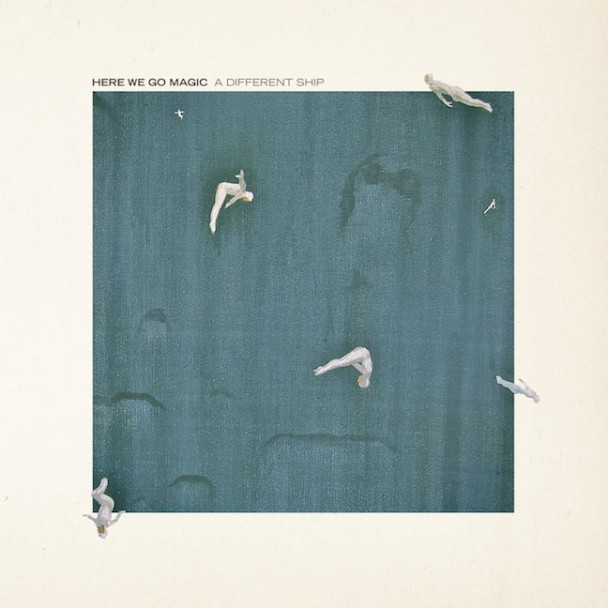
A Different Ship begins with a building confluence of polyrhythms, found sound, and tense atmosphere. Here We Go Magic calls the listener to attention before releasing into a fluttering, acoustic-driven bounce. With that, the listener is off on a road trip with one of the year’s best albums. Along the journey, Brooklyn-based Here We Go Magic charts a course that is both cohesive and explorative. The band offers listeners a complete range of emotion in a release that avoids redundancy while maintaining its identity.
Here We Go Magic magnificently embraces influences without becoming defined by them, flirting for a while before moving on to the next. “Make Up Your Mind” is a dead ringer for Phish’s “Back on the Train” with the country blues twang pulled from the guitar lick. Elsewhere, “How Do I Know” instrumentally and energetically mirrors The Feelies 2005 single “Let Go.” On the title track and “Over the Ocean”, I’m reminded of Sting when I hear lead singer Luke Temple. I am typically reluctant to make these types of comparisons between artists. They aren’t meant to reduce Here We Go Magic’s work to mimicry. Rather, my hope is to illustrate that this release has put their work in the conversation with some noteworthy artists, not simply contemporaries.
Longtime Radiohead collaborator Nigel Godrich produced A Different Ship. He did an excellent job of remaining in the background on this release. Flourishes of textures and atmosphere add richness without distracting from the main attraction. If Godrich’s presence can be felt, it’s in the seriousness and focus that Here We Go Magic appears to have brought to the release. A Different Ship coheres in a way that underscores the band’s significant growth since the release of Pigeons in 2010.
Here We Go Magic transitions nicely throughout this album, sounding contemplative one moment and danceable the next, without ever feeling lost or misguided. New York Times critic Jon Pareles wrote that, “Here We Go Magic loves the way a pattern promises the stability and control that Mr. Temple’s lyrics are never sure of.” This proves an accurate assessment. The songs are so tightly constructed that they allow Temple to write more abstractly.
The casual confidence that Here We Go Magic displays on A Different Ship may be the album’s greatest strength. Like all of the best bands, they make their art look effortless. Of course, it would be easy to exude confidence with Godrich in your corner. A Different Ship is another example of preparation and talent leading to genuine innovation. Pick up your copy of the release from Secretly Canadian.
Connect with Here We Go Magic via Facebook | Twitter
Written by Rob Peoni
Album Review: billy woods ‘History Will Absolve Me’
When I first heard billy woods’ music in 2005, the hip hop music scene was in a strange place. A diverse independent boom that peaked in 2000 was all but over. Even my favorite rapper at the time, MF DOOM, began to slip and had me questioning the future of the genre. A large part of DOOM’s appeal was his detached perspective, choosing to only rhyme in the third person. This was a calculated decision, as was the decision to wear a mask and assume multiple characters across his various projects. With DOOM becoming less and less prolific and my ears turning more and more to other genres to find new music, billy woods threw me a life raft. Impressed by his choppy, authoritative verses on Backwoodz Studioz’ Terror Firma project, I quickly acquired his two previously released solo albums and was blown away by his writing ability and unique style on the mic.
It seemed that billy learned a lesson or two from DOOM, also choosing to hide his face and often rhyming in the third person. However, billy didn’t invent characters in the same way that DOOM did. Instead, he chose to create individual concept tracks where he rhymes from any number of perspectives to give listeners a feel for walking in another’s shoes. While woods’ raps are more content driven and DOOM’s more flow driven, they both have a penchant for rhymes and phrasing that is in many ways more similar to great poets and authors than it is to their contemporaries.
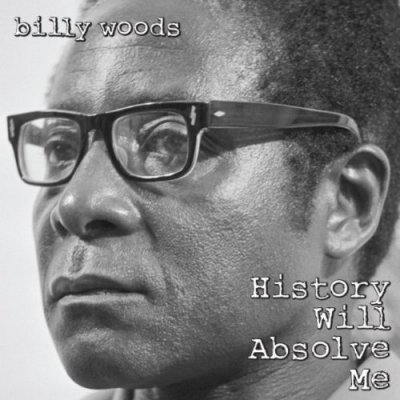
DOOM and woods had more than that in common though. Both of their fathers were Zimbabwean and both of their mothers were from the West Indies. I believe this helped cultivate their outsider perspectives on not just the rap game, but on America and the world in general. After being born in Washington, D.C., woods’ family moved back to Zimbabwe to participate in the Zimbabwean revolutionary struggle. This struggle ended white supremacy in the country and led to a socialist regime headed by Robert Mugabe. The same Robert Mugabe who appears on the cover of History Will Absolve Me (woods wants to make clear though that the cover is not necessarily a pro-Mugabe statement). He moved back to DC (by way of Jamaica) as a youth, but his time in Zimbabwe, as well as his family’s history there, would have a huge impact on woods’ music and his artistic perspective.
Not long after I started listening to billy’s music, he announced he would be forming a group known as the Super Chron Flight Brothers with fellow MC Priviledge. The Flight Bros. released 3 albums and several mixtapes during a prolific 4 year run, but shortly before their final album Cape Verde was released in 2010, Priviledge left the group, leaving billy as a solo artist. While the Super Chron albums were very good, billy was the clear star of the group and they left me yearning for more woods solo material. As soon as the breakup was announced, I realized my desire for another billy woods solo album would soon be fulfilled. Less than two years later, History Will Absolve Me has arrived, and it does not disappoint.
The album’s first single “Body Of Work” features a plodding, atmospheric beat from Willie Green and strong verses from Masai Bey and Roc Marciano, but it’s woods’ album-defining closing verse that steals the show. Ownership is a major theme on the album and his Zimbabwean tale of a white ruling class farmer who loses his life and his land because of the sins of his fathers is a chilling example of how fickle a concept ownership is. Woods raps “Is it really stealing when you robbing from robbers?” commenting on the way even murder can seem just when you look at things through a historical perspective.
On “DMCA” he speaks on the concept of ownership in the digital age and its role in the history of America- “We only here ‘cause some crackers aint wanna pay tax, on they Earl Grey / but see nothing wrong with owning slaves / So fuck a sample, I don’t gots to pay, when I take your shit, that’s the American Way / Downpour torrential. Torrents have your whole album and the instrumentals / It’s like writing a fucking novel in pencil”. He goes even deeper into the original American’s concept of ownership on “The Man Who Would Be King”, painting an unflattering picture of a conquistador – “walk like Quetzalcoatl among the conquered, Dick hard / Put myself in the stars, his woman in the dirt / Face down, ass up / Doing God’s work”.
While most rappers who attempt covering these types of topics come off as preachy and didactic, woods instead chooses to pinpoint the worst aspects of all sides and rip them to shreds. On “Sour Grapes”, he assumes the perspective of a gluttonous 1%’er mixing fine dining metaphors with sharp implied criticisms- “I’m your boss’ boss, did it my way / Hit the highway to rob, some took a loss, and came hat in hand / eying a seat at the table but I let ‘em stand, Selfish / Butter poached shellfish, the charred flesh of the helpless / Scoop marrow from bone / I can only imagine those loans have grown”. His historical perspective allows him to form realistic opinions on the future and on the modern human condition, similar to writers like Phillip K. Dick and Kurt Vonnegut. On “Sour Grapes” he also predicts that “student debt the next ship to sink like that subprime shit did” and on “Human Resources” he describes the existential plight of man- “Only problem with being your own god is you still gotta die”.
Woods’ artistic range goes far beyond historical deconstruction though. The 2nd verses on “Crocodile Tears” and “Pompeii” tell two common, but different, tales of inner city self-destruction. On “Crocodile Tears” billy illustrates how easily a kid from the hood with a seemingly bright future can fall victim to the traps of the same hood at the first sign of outside adversity. The “Pompeii” verse examines how quickly a small hustle can snowball into a dangerous operation, especially once more people (and variables) are brought into the mix. At the end of the verse he puts death, and the crabs-in-a-barrel theory, into perspective- “At the funeral, your team pour some liquor, then commence to plottin’ & plannin’ / Divide your re-up before the first shovel full of dirt landin’”. While woods seems to take these individuals to task for their actions, he does it in a way that shows he can understand their perspectives.
Throughout woods’ discography he has found ways to offer glimpses of his personal life as well, however fragmented. Billy recalls being labeled an outsider among his own race upon moving back to America for the seventh grade on “Freedman’s Bureau”, “They dark as Chris Tucker calling me a spear chucker? / Kid, they really mindfucked ya” and talks about the advantage of hindsight on the emotional album closer “The Wake”, “I could go back, tell myself everything I know / But me at twenty-three would probably shrug a shoulder, put stoge to fire like you’re preaching to the choir”. The Man Mantis produced single “Blue Dream” featuring singer L’Wren, is about the end of a long term relationship and is as personally revealing as any song woods has made.
With a run time of 1 hour and a track list featuring 18 songs (no skits), History Will Absolve Me is a substantial album. All of the guests hit their marks (especially Elucid and his visual breakdown of how police profiling and abuse of power lead to systematic violence on “Freedman’s Bureau”), but none manage to steal billy woods’ thunder. Backwoodz Studioz’ in-house producer/engineer Willie Green contributes eight tracks that serve as excellent examples of why he’s becoming my favorite beat-maker around. Sound quality has been a common complaint on previous Backwoodz releases and Green makes sure that’s not the case on History Will Absolve Me. Up-and-coming producers AM Breakups and Marmaduke also contribute several standout tracks.
Billy woods is a true artist whose work will live on and be analyzed long after he’s left this world. In a genre of music often viewed as disposable, materialistic, and violent, he seems determined to prove that hip hop’s criticisms don’t define it. Although he doesn’t speak much on rap as art form, he does offer this biting criticism of the dumbed down major label culture on the A.M. Breakups banger “Duck Hunt”- “Rap like simpleton, see new tax bracket/ so called goons, turns out they schools was magnet”. DJ Addikt closes the album by scratching this soulful vocal sample at the end of “The Wake”- “This music is so much bigger than me”. The most refreshing thing about billy woods’ music is that in this era of individualism, it’s rarely about him. The crux of his appeal as an artist is that he doesn’t tell you what to think, he simply wants to make you think. Cop History Will Absolve Me on iTunes or a deluxe version with a T-Shirt and an autographed lyric booklet at Backwoodz Studioz.
Connect with billy woods via Facebook
Written by John Bugbee
 Thought on Tracks
J. Tillman Responds to PASTE’S Coverage of Letterman Performance
Social media can often serve as a time-consuming stream of distractions, but occasionally it offers up a bit of dialogue that reminds us why it is we pay attention. For me, one of those moments occurred yesterday when former Fleet Foxes drummer J. Tillman took to Twitter in response to PASTE’s post on his Letterman performance.
Tuesday night brought Tillman’s television debut of his new Father John Misty project. The band’s debut album Fear Fun was released by Sub Pop that same day. Watch a video of Father John Misty’s Letterman performance below of the track “Only Son of the Ladies Man” below. As expected, all of the major music blogs fell quickly in line with posts on the footage the following morning, offering minimal context. Later in the day, Tillman took to Twitter for a brief rant on his distaste for PASTE and the current state of music writing in general.
At this point, PASTE’s Multimedia Editor Max Blau interjected in hopes of some clarification. Side note: Blau is a great follow on twitter, and in general seems to have a level head on his shoulders. I was impressed with his attempt to open a dialogue in an effort to more clearly understand the source of Tillman’s backlash. Many editors would have been tempted to ignore the situation in the hope that it disappear quietly.
Music, and the coverage of it, is in a strange place at present. The internet has fragmented the way that we discover new artists and sounds. This subsequently provides anyone with a modem the opportunity to turn critic. This leads to a rat race where blogs are constantly competing to post the latest video or release first. The rush to the front of the pack often results in rushed writing that offers little information. These issues are addressed, rather eloquently, by the recently defunct Louisville blog The Decibel Tolls in their post “The Problem With Blogs.”
Unfortunately, this current arrangement is unlikely to change any time soon. In order to compete for traffic, the rat race will inevitably continue. Search engines and social media platforms are growing increasingly adept at discerning which content is being shared. In theory, this should allow the cream to rise to the top. However, the vast majority of readers are not seeking out phenomenal writing. Instead, they are competing with their peers to break the new “hot video” first and the vicious cycle continues. Therefore, the blogging behemoths will continue to post mediocrity so long as traffic is the end objective. Tillman spoke for a lot of us when he tweeted the following.
Written by Rob Peoni