


Album Review: Matthew E. White ‘Big Inner’

What would a Periodic Table of Elements for soul and R&B look like? What essential components are necessary to create the genre? These seem to be the questions with which Richmond, Virginia’s Matthew E. White wrestled while laying down the vision for his debut LP Big Inner. In his review, Hank from We Listen For You talks about White’s use of religion as a touchstone for the genre on the album’s 11-minute closer “Brazos.” I couldn’t agree more, but why stop there? The subjects of the LP’s seven tracks read like a thematic history of R&B: love, heartbreak, yearning, tragedy, patience, celebration and salvation are distilled down to their respective essences, standing like pillars upon which the entire genre’s existence is built. It’s as if White is saying, “This is soul in its most prosaic form. The stories and characters are all superfluous.”
At the turn of the century, R&B was undergoing a minimalistic renaissance spurred by artists like The White Stripes and The Black Keys. White employs a different kind of minimalism, both implied and literal, to achieve a similar end on Big Inner. His lyrics are reduced to mantras, almost entirely devoid of narrative of any kind. Musically, the tracks on Big Inner contain complex horn charts, strings and vocal arrangements, but the individual parts are all so understated that the work, taken as a whole, feels sparser than it really is.
Much has been made of the connection between White and Randy Newman. This is not without merit, as White has declared Newman a major influence. However, the genius of Newman’s early work lies in his ability to create grandiose concepts out of political irony. White steers clear of such topical discourse. Instead, the irony he conveys rests on his ability to make a 30-piece band sound so simplistic and focused. White has taken music with the scope and size of Newman’s film work, and boiled it down to resemble Sail Away or Good Old Boys.
Regardless of its inspiration, White has achieved a rare feat with Big Inner, releasing a Big Band soul record while avoiding the pitfalls of the genre’s clichés. He pulled this off by deconstructing minimalism not R&B. In doing so, White has brought the genre’s tenets to the forefront and whittled them down to their cores for all to see. Whether the model he has constructed at his new label Spacebomb Records is financially sustainable is a different post for a different day. For now, let us all give a resounding thanks that whatever happens, we’ll always have Big Inner. Listen to “One of these Days” and “Big Love” below.
Connect with Matthew E. White via Facebook
Written by Rob Peoni
Album Review: The Amazing ‘Gentle Stream’
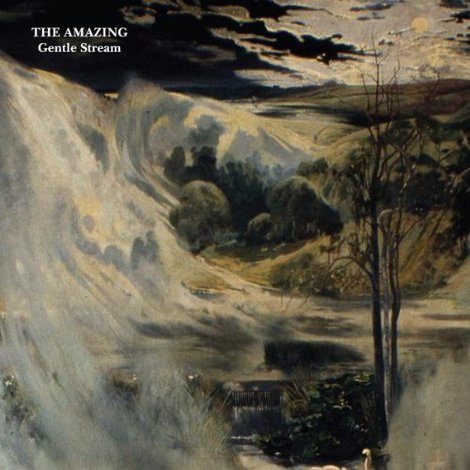
Today marks the release of the debut US album from the auspiciously titled Swedish rock outfit The Amazing. Gentle Stream arrives on the back of the band’s 2009 self-titled debut and 2010 six-track EP Wait for a Light to Come. The Amazing’s new effort is a polished, psychedelic blend of several decades worth of pop, rock and British folk ran through a modern filter. The band is looking to make a splash as it embarks upon its first US tour in support of Tame Impala. The size of that splash will be determined over the next few weeks.
Gentle Stream will likely be pigeon-holed by its Laurel Canyon influences, a label so wrought with overuse that it has nearly lost all meaning. Laurel Canyon is a reference to “the slightly seedy, camp-like neighborhood of serpentine one-lane roads, precipitous hills, fragrant eucalyptus trees, and softly crumbling bungalows set down improbably in the middle of Los Angeles,” described in detail in Michael Walker’s book. The area played home to some of the late 60s and early 70s counterculture’s biggest rock acts: CSNY, Nico, Joni Mitchell and others.
My problem with the Laurel Canyon reference is that it serves as a comparison of scenes not genres of music. For instance, Gentle Stream certainly touches on elements of David Crosby’s blues-heavy, spaced-out ballads on the album’s title track and “Dogs.” However, I would argue that the influence of Scottish indie pop popularized by Belle & Sebastian and adopted more recently by acts like Stornoway, is equally pervasive. By the same token, The Amazing’s “Flashlight” is drenched in the dulcet, mellifluous sensibilities of Nick Drake’s Five Leaves Left. This album proves too broad to confine to a single neighborhood.
A frequent knock on indie rock stems from the culture’s obsession with discovering “the next” great band. This serves as the impetus for churning out a bunch of acts before they’re ready. Buzz around a band often builds and fades before a project is ever given the chance to cut its teeth and mature. The Amazing has already reached a certain level of maturity. Guitarist Reine Fiske spent nearly a decade working in the Swedish psych-rock outfit Dungen, before joining songwriter Christoffer Gunrup to form the foundation of The Amazing. This is not any member’s first rodeo. Such experience is necessary when creating an album like Gentle Stream – an ambitious, sprawling release that achieves an astonishing balance and clarity in its production.
The polished nature of Gentle Stream is a double-edged sword, coupled with The Amazing’s decision to brandish their influences, the album runs the risk of being described as “accessible.” Or, as music writer Erik Burg recently dubbed it via Twitter, the “kiss of death.” However, accessibility should not be a universally terrible thing. Music is a borrowed art, and very few – if any – bands are working on the fringe to create truly original material. As for The Amazing, if there is any constructive criticism to be found here, it’s simply that the band has a bit of work to do before it creates a sound that’s inherently its own, rather than an amalgamation of influences.
In short, it’s uncertain whether The Amazing will fit the aesthetic of the indie blogosphere’s definition of “the next big thing.” Regardless, Gentle Stream is a successful effort that a wide cross-section of listeners should find relatable. More than that, it’s damn good music. The Amazing is set to play a string of US tour dates in support of Tame Impala. With the recent success of Lonerism, The Amazing should have ample opportunity to convince some large crowds that, they too, are a rock n’ roll import worthy of attention. Listen and download the title track and “Flashlight” below.
Connect with The Amazing via Facebook
Written by Rob Peoni
Track: Jeff Buckley “I Shall Be Released” (WFMU)
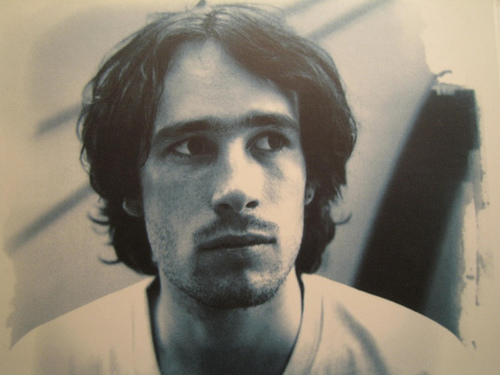
During my freshman year of college, I was trolling the virus prone and often improperly labeled file sharing service Kazaa, and stumbled upon a batch of Jeff Buckley downloads. Included in the bunch was a 1992 recording of WFMU‘s “The Music Faucet” that featured a phoned-in rendition of Bob Dylan’s oft-covered “I Shall Be Released.” Given the hackneyed song selection and gimmicky nature of singing from the phone, all signs pointed toward disaster. However, this is Jeff Buckley we’re talking about. An artist that covered Dylan as well as anybody. For evidence, check out the incomparable live compilation Live at Siné. There, he demolishes classics “Just Like A Woman”, “If You See Her, Say Hello”, “Dink’s Song” and the aforementioned “I Shall Be Released“, reforming them into fluid, perfectly toned electric guitar sketches. Buckley’s WFMU take adheres relatively closely to the original, calling to mind the grandiose send-off on The Last Waltz. Buckley is effervescent by the end of the song, clearly taken with the performance. Even his impromptu harp solo is pulled off without a hitch, taking on the aesthetic of an early blues field recording through the telephone wires. Listen to an uncut version of the recording, featuring a lengthy – albeit fun – introduction via Soundcloud or a shortened version focusing on the song via YouTube.
Written by Rob Peoni
 Thought on Tracks