


Five Essential Halloween Albums

Sure, Halloween is a bonanza for kids and dentists, but any self-respecting, debaucherous adult holds the holiday in high regard as well. It comes with a requisite “get out of jail free” card for any and all misbehavior. Imbibing is encouraged. Scantily clad females – a must. Most of this is conducted behind closed doors, where privacy further encourages our willingness to indulge.
As we all know, music is an essential lubricant to any successful house party. So, what to play at said masquerade ball? Just how many times can Thriller and the theme from Ghostbusters be repeated? The Halloween playlist must be sufficiently weird to fit the occasion, yet relatable enough to prevent alienating the 30 year-old who spent the afternoon squeezing into her high school cheerleading outfit. Below, you will find five LP’s guaranteed to liven up your next ghoul fest.
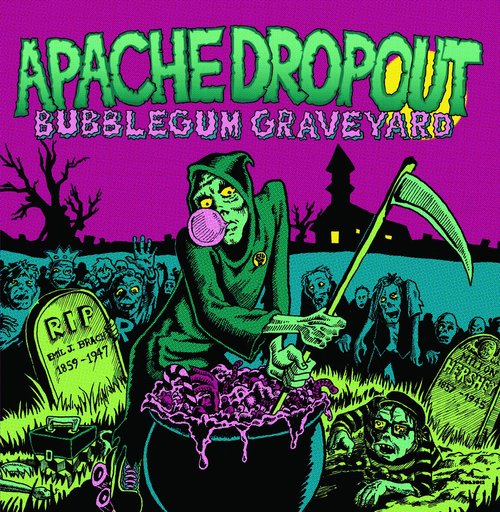
Apache Dropout – Bubblegum Graveyard (InSound)
Bloomington, IN’s Apache Dropout’s debut LP was built for Halloween, complete with cover art depicting the Grim Reaper stirring a cauldron of Big League Chew with the handle of his sickle. It deals directly with the subject at hand, without devolving into predictability. Did I mention that this album kicks ass? The release is a front-runner for my favorite Indiana album of the year. Classic, psychedelic garage rock of the highest order. Listen to the lead single “Candy Bar” below, and raise your street cred with party-guests by spinning one of the year’s under-appreciated gems.
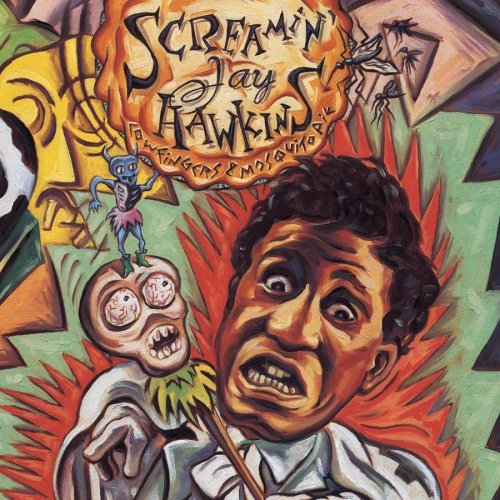
Screamin’ Jay Hawkins – Cow Fingers & Mosquito Pie (Amazon)
Our own Ben Brundage covered the weird and wild world of Screamin’ Jay Hawkins in his 13th installment of In the Dust. Screamin’ Jay is a character for whom Halloween is a daily event. The man wore a cape and face paint year-round. Cow Fingers & Mosquito Pie is a compilation, so its inclusion here is a bit of a fudging of the rules. The reality is that the entirety of Hawkins’ career is fit for Halloween. The theatricality, the bizarre growls, the costumes – all of it. The material on Cow Fingers & Mosquito Pie is all mid-50s material from his time at Okeh Records. Here, Hawkins’ vocal prowess at its peak. By the 70s he had devolved into little more than a talented lounge act spewing out novelty songs and recycled R&B classics. Listen to “I Put A Spell on You” below:
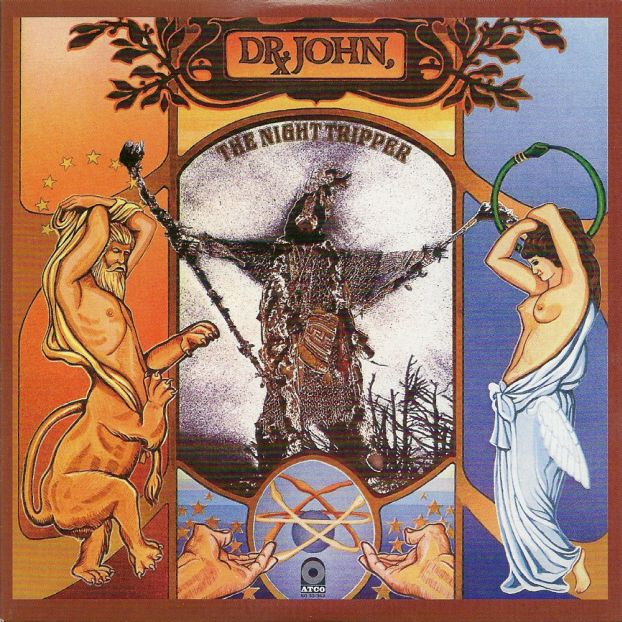
Dr. John – The Sun, Moon & Herbs (discogs)
Fellow New Orleans native, Mac Rebennack serves as an obvious transition from Screamin’ Jay. Better known by the moniker Dr. John, he too had a flare for the theatrical and top notch R&B. His 1971 release The Sun, Moon & Herbs was heralded by Rolling Stone as a return to the good doctor’s Crescent City roots. Steeped in voodoo and shamanistic overtones, there is no shortage of spooky, spiritualistic moments here. From the hardly audible mumbles of an infant on “Craney Crow” to the foghorn bellow of the tuba at the outset of “Zu Zu Manou”, this LP is haunting.
Oddly enough The Sun, Moon & Herbs was cut during a brief residency in London and featured a mammoth cast of veritable legends sitting in on the sessions. Clapton on slide guitar. The Memphis Horns. Hell, Mick Jagger even showed up to lay down some backing vocals. Maybe it was the talent in the room. Maybe the distance between Dr. John and his hometown created just the right amount of longing to crystallize the artist’s thinking. Whatever the case, this album is worth a spin.
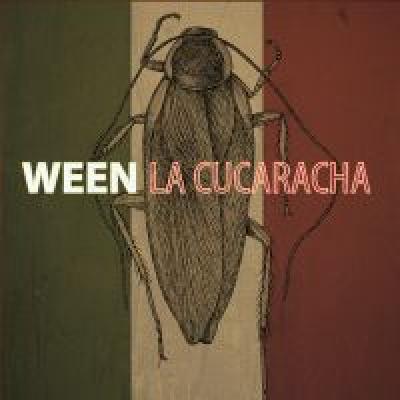
Next, we turn to the granddaddies of nerd rock – Ween. The recently defunct brainchild of Aaron “Gene Ween” Freeman and Mickey “Dean Ween” Melchiondo began as a collaboration between two grade school pals. Diehard fans will inevitably point to earlier material as both weirder and higher quality, but the band’s 2007 release La Cucaracha is one helluva party record. It’s all over the place: Spanished-tinged horns on album opener “Fiesta”, the absurdist, rockabilly knee-slapper “Learnin’ to Love”, falsetto lounge singing on “Object” – it’s all here. La Cucaracha doesn’t deal directly with Halloween, but it’s weird enough to make the cut. It’s also my personal opinion that the album’s closer, “Your Party” should be played at the back end of every house party, ever.
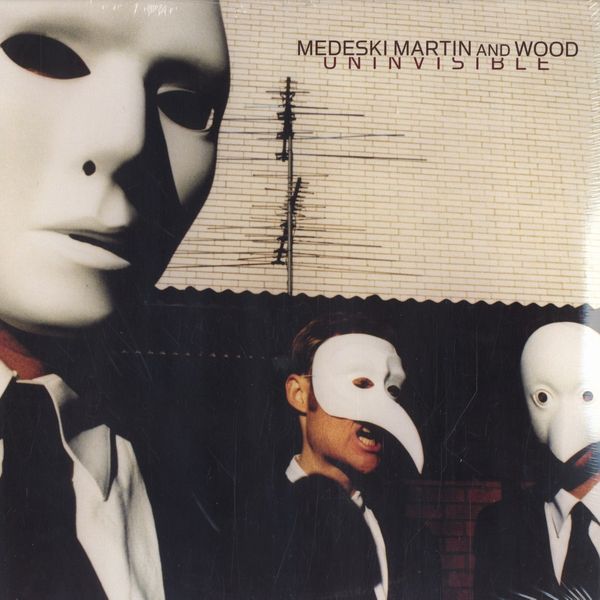
Medeski, Martin & Wood – Uninvisible (Amazon)
I’m a big fan of instrumental music at house parties. It tends to recede into the background in the way great party music should. It prevents the over-served from shouting along, while providing a sufficient backbeat to keep them awake. Unfortunately, the attention span for jazz standards isn’t what it used to be. Fortunately, Medeski, Martin & Wood has two decades worth of quality, fresh material to draw from. The band’s 2002 release Combustication serves as good a starting point as any. A sinister air tends to bluster throughout the tracks of this LP. Pitchfork’s Rob Mitchum broke down MMW’s style accurately: “Violating traditional jazz recording laws, MMW used overdubbing (gasp!) and post-production editing (well I never!) to make an increasingly spacey roar that rarely came unglued from their characteristically tight, deep groove.” Though the band’s decision to tour alongside jam bands and its tendency toward hip-hopesque production earns the revile of serious jazz fans, the songs will be met with eager nods of approval from masked revelers.
Written by Rob Peoni
Track: Talk Talk “After the Flood”
Most of last night was spent camped in front of my computer as updates of the havoc Hurricane Sandy wreaked upon the East Coast flooded my news feed from every conceivable angle. Failed backup generators at NYU’s hospital. Blown transformers on 14th Street. Walls of water rollicked through the ongoing construction site at ground zero. Powerful images of lower Manhattan sheathed in darkness.
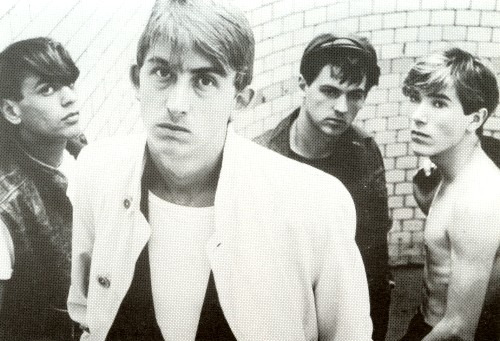
As I’m prone to do on momentous occasions – or occasions of any kind really – I found myself in search of a soundtrack. After a bit of rummaging, I settled on Laughing Stock, the brooding, farewell masterpiece from British post-rock pioneers Talk Talk. Released in 1991, the album resides at a gorgeous intersection of avant garde jazz and art rock, completing the band’s metamorphosis from its synth pop origins a decade earlier. Laughing Stock has a pervasive placidity that seemed to resonate with the opaque images coming from New York.
The nearly 10-minute “After the Flood” sits at the center of this six-track release. The song begins at a slow amble, eventually building around the dampened vocals of lead singer Mark Hollis. A crescendo of distorted feedback from the synthesizer creates a visceral tension in the middle of the song. Just when it begins to feel as if the track is going to collapse from the pressure, the synth recedes and the interplay between Hollis and the keys returns to bring it home.
Laughing Stock received a full vinyl reissue from Ba Da Bing! Records in October of 2011. In the two decades since its initial release, Talk Talk has remained a source of inspiration for a broad cross-section of musicians. Austin, TX’s Shearwater and fellow Brits Wild Beasts are two disciples whose recent work comes to mind. However, Talk Talk has been covered by everyone from Weezer to No Doubt. Their influence is limited by neither time nor genre. Listen to “After the Flood” below.
Written by Rob Peoni
 Thought on Tracks
Five Election Day Anthems
November 6, 2012 marks election day in these United States. Citizens are asked to leave their couches for a few minutes to exercise a privilege for which many anti-tax colonists once gave their lives. As we know, music can be a powerful medium for conveying political messages, uniting a group around a cause and mobilizing an electorate. So for election day 2012 I decided to shine a light on five songs that have impacted political discourse. This is not a definitive political playlist, but one worthy of your listen nonetheless.
David Hasselhoff – “Looking for Freedom“
Once again, Ronald Reagan receives a boat load of credit where it simply is not due. You may have thought The Great Communicator’s famous line, “Mr. Gorbachev, tear down this wall!” inspired the masses to embrace democracy and put an end to the cold war. In fact, it was The Hoff. In 1989, David Hasselhoff performed his hit song “Looking For Freedom” atop the Berlin Wall. Let’s face it, Germans love The Hoff. And can you blame them? Who can resist democracy when its virtues are touted by a muscle-bound Baywatch hunk sporting a light-up leather jacket? It didn’t really matter that the song was about a rich kid’s struggle to release himself of the shackles of his father’s expectations. The wall didn’t stand a chance.
No matter which side of the political aisle your sentiments fall, chances are you’ve had a moment where you wanted to burn this mother down. In those moments of upheaval, punk rock seems the only sufficient auditory accompaniment. The Crass’s 1978 debut The Feeding of the 5000 proves as worthy a starting point as any. The British rockers laid down the foundation for anarcho-punk on their abrasive anthem “Do They Owe Us a Living?” If the 2012 presidential election is any indication, a government’s ability to provide its electorate with an opportunity for employment is a topic that continues to foster passionate debate.
Ben Sollee – “A Few Honest Words“
Written in 2008 as a response to the perceived secretiveness of the Bush administration, Louisville songwriter and cellist Ben Sollee struck a chord with “A Few Honest Words.” At the end of the day, this is all any electorate is looking for from its leaders. It’s a message that transcends party affiliation. As a result, Sollee has been making his rounds this election season, playing the song in advance of the vice presidential debate and a handful of other prominent political functions. Watch Sollee perform the song live at WFPK below.
Féla Kuti – “Coffin for Head of State“
In 1977, Féla Kuti and the Africa ’70 released Zombie, a scathing indictment of the tacticts of Nigeria’s military. The album infuriated Nigerian president Olusegun Obasanjo, resulting in a raid of Kuti’s Lagos compound. During the attack, Kuti’s mother was hurled from a window and killed. In response, Kuti delivered his mother’s coffin to the President’s residence the Dodan Barracks and wrote two songs: “Coffin for Head of State” and “Unknown Soldier.” All 22+ minutes of the former can be heard below.
Gil Scott-Heron – “The Revolution will not be Televised“
Yes it’s cliché. Yes it’s been played a million times. But damn it if Gil Scott-Heron’s “The Revolution will not be Televised” from his 1970 album Small Talk at 125th and Lenox isn’t one of the best political songs of all time. In the current age of Super PACs and corporate endorsements, Scott-Heron’s message that “The Revolution will not be brought to you by Xerox / In four parts without commercial interruptions” proves as poignant as ever.
Written by Rob Peoni