


In The Dust #10: Special Anniversary Edition – Looking Back on My 10
Once a week In The Dust rolls up its sleeves and digs to the back of the rack to find that record, the one you never knew you always wanted, the one that’s lost but not forgotten.
This week, for the 10th In The Dust, the author chooses to do something different, something special, something personal, and will, for this edition only, refer to himself as “I”.
This week, I will not be digging any crate or rack so much as I will be racking my mind and my memory to recall music with lasting impact, the records that shaped me, for better or worse, and the records that I will always remember. From classics to classy, astonishing to awful, I present this as a personal inventory, in chronological order from my earliest years to the age of thirteen, of the records, artists and songs tied by nostalgia, pride or love most strongly to me, the sounds that brought music and I together leading into my formative years and continue to serve as a base upon which my love for music, and much of my identity, is built.
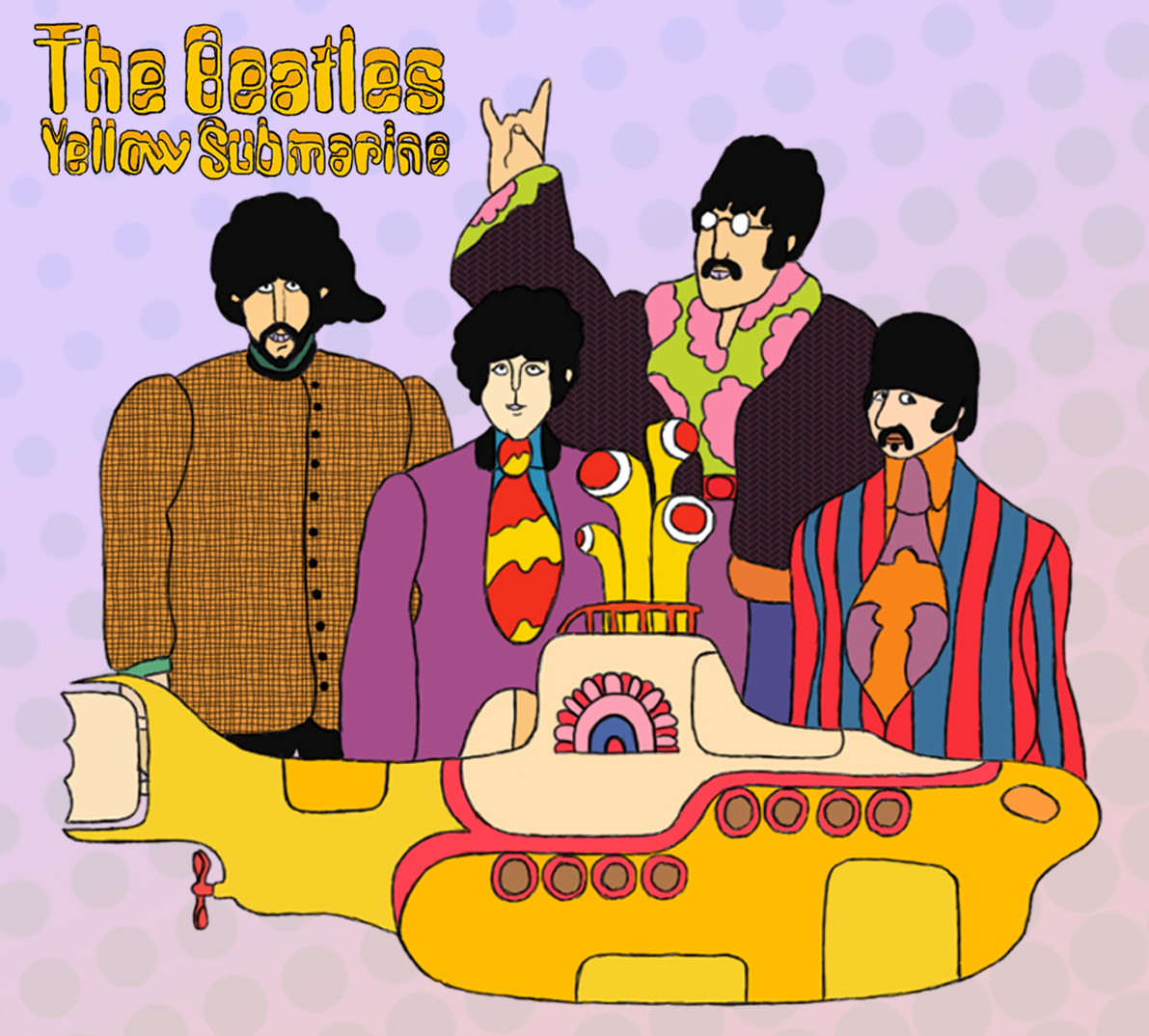
1. The Beatles – “Yellow submarine” (1966) & “Being for the Benefit of Mr. Kite!” (1967)
The Beatles were my first love. A few days ago, I put on my Mother’s mono copy of Revolver and there I was, back in the passenger seat of her aged, milk-chocolate brown Volkswagon Rabbit, breathing the light morning air and nodding to the rhythm as we drive down 54th street on the way to my school. “Yellow Submawine” (as I pronounced it), was a fixture of our morning drives, a song that I knew by number, and not by name, on disc 2 of The Beatles’ Anthology.
Also a fixture, and a number to me, was “Being for the Benefit of Mr. Kite!” A song that I found at once strange, fascinating and unsettling, I would think, “What is wrong with Mr. Kite? What is the benefit for? Is he unwell? Why if he was so sick, sick enough to warrant a benefit, would he perform his own tricks that evening?” I never found the answers to these questions, but not for lack of trying. I listened over and over to that song, losing myself in its mystical circus world, watching, in my mind’s eye, Mr. Kite defy ill health to perform the most dazzling tricks, at the most dazzling spectacle, the world has ever seen.
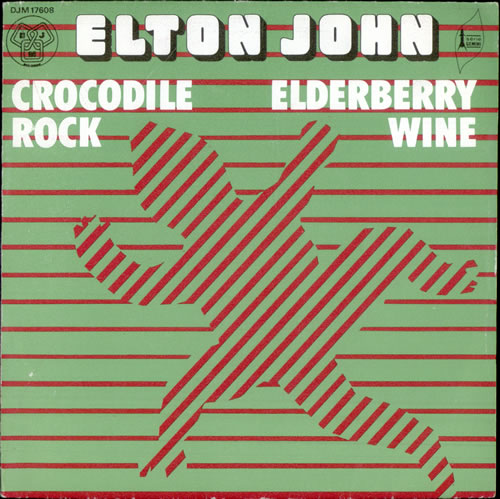
2. Elton John – “Crocodile Rock” (1972)
Elton John’s Greatest Hits, featuring “Crocodile Rock”, is the second record I ever bought for myself, after the original soundtrack to the television program “Where In the World Is Carmen San Diego?” recorded by Rockapella. For a very long time, I listened to “Crocodile Rock” every night before going to sleep, dreaming of a life much like the one John chronicles in the song, one of long days and nights with Suzie, her dresses tight, trying to squeeze in as much joy as we can, terrified of the day to come when rock would die, Suzie leaving with some foreign guy. Today, I finally have that “place of my own,” but I still pine for that “old, gold Chevy.”
3. Queen – “We Will Rock You” (1977) & Greatest Hits (1981)
This song replaced “Crocodile Rock” as my go-to, pre-bed must-listen. The pure power of Freddie Mercury’s voice, the two-ton Goliath Brian May and his guitar and the earth-shaking stomps! Oh, the stomps. When I pushed the play button, I would feel ten feet tall. I would forget about Suzie and dream of conquering the world. I would dream of rocking everyone, the same way Queen was rocking me, and I wanted to bang on everything. This grand feeling kept me awake most nights, but I didn’t care. After skipping straight to “We Will Rock You,” I would backpedal to the first track and enjoy the album in full, one that still stands as a magnificent collection and, for me, a flower on the tombstone of one of most charismatic and talented front men in history.
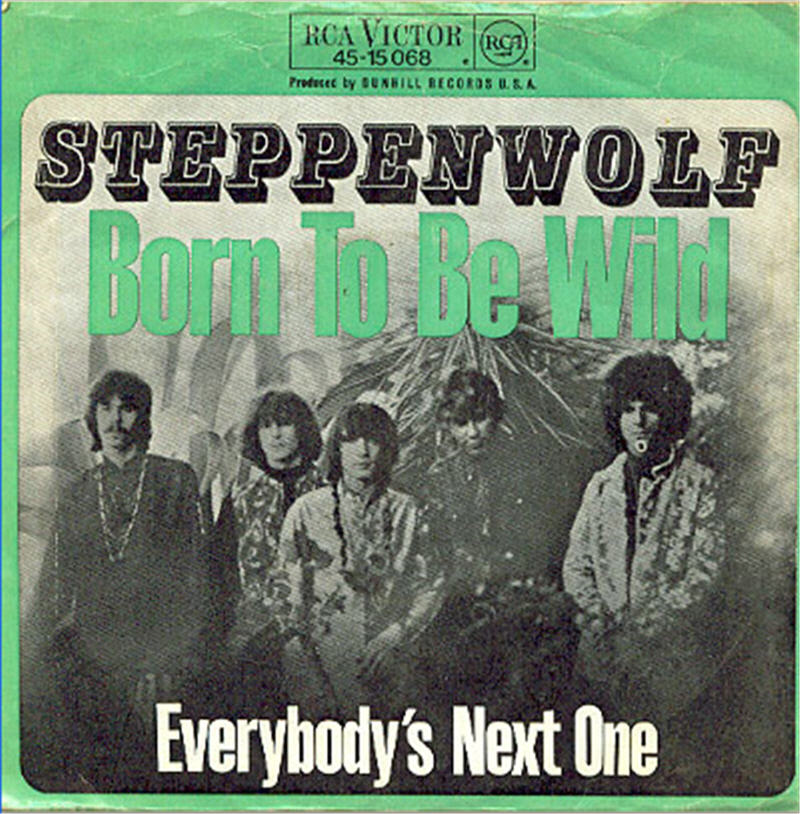
4. Steppenwolf – “Born to Be Wild” (1968) & “Magic Carpet Ride” (1968)
I first heard “Born to Be Wild” at an Indianapolis Ice game. I couldn’t believe it. It was like a spell or some kind of trance. I stood up and quite literally freaked out, or maybe more accurately, for the first time, rocked out. Not since Queen, then my favorite band, had I heard such power! That sound! It was not of my Earth as I knew it. It was pure rebellion, pure love, pure exaltation. I needed it. My parents bought me Steppenwolf Live and I went to a lot more Ice games. It is some time during this course, after receiving Steppenwolf Live, that I discovered “Magic Carpet Ride”. I had always been a very active dreamer. Once, while half-asleep, I was convinced that my Father was not a lawyer as he claimed, but in actuality a French cowboy. My imagination was fanciful, unyielding and enthusiastically encouraged. This song gave me a motto.
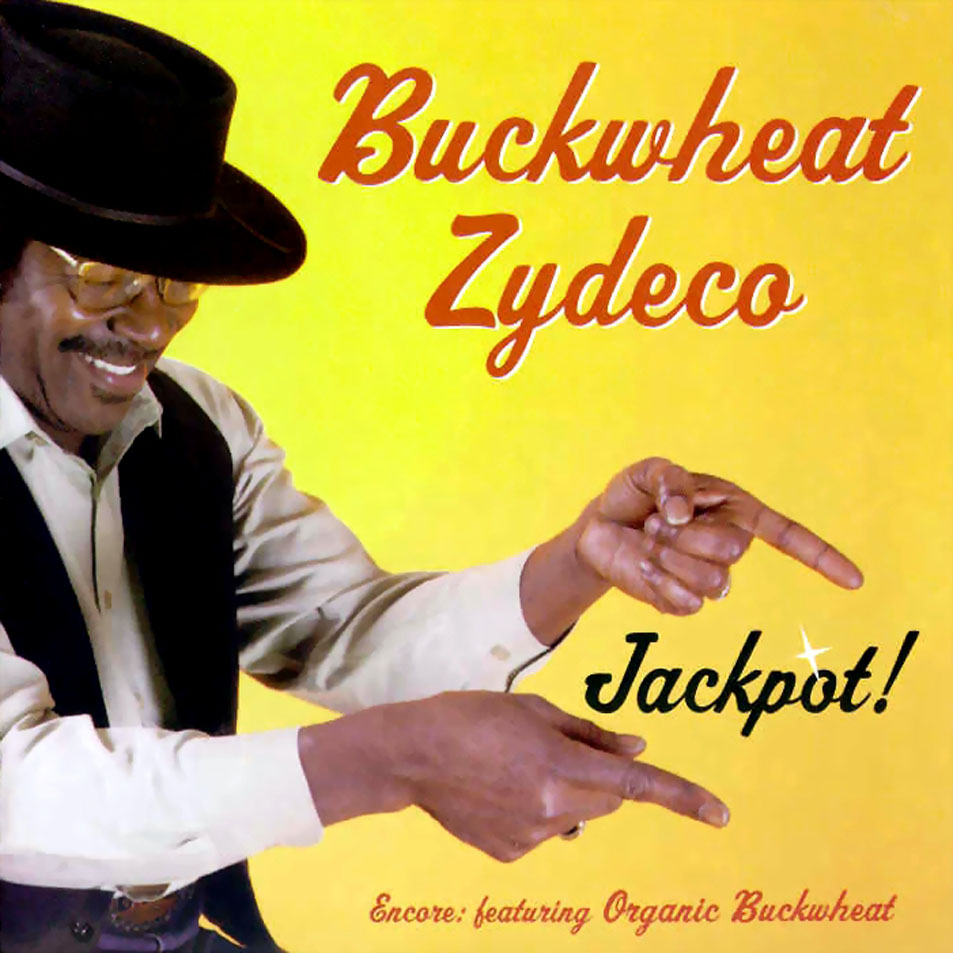
Weekends, as a child, always seemed like some magical time when everyone in the world was free to do as they chose, without limit. For my Father and I, this meant cruising in his silver 80’s Nissan Stanza Minivan, which we called “the ice box”, to the Busy Bee Donut Shop where I was the only one who could make the mean black lady smile, then driving to pretty much wherever the hell we wanted, which was often Ft. Ben and the eastern countryside beyond, the hardware store, and sometimes to the baseball diamond for catch. His car had a tape deck, and Buckwheat Zydeco was almost always in it. I would kick wildly, without economy of rhythm, to the unusual, crazy music, hopped up on maple donuts and chocolate milk. It seemed alien in all the best ways. It made me want to move and it fed my curiosity, a body-and-spirit communion that has permeated my life’s experience with music.
On these trips, the floor of his car was covered in old grungy tapes. One that always spoke to me was From The Mars Hotel by the Grateful Dead. It was beautiful. It was not until later that I would rediscover this record.
6. Dean Martin – “That’s Amore” (1953)
I can still hear my Father sing this song, his booming vibrato reverberating throughout the old, wooden halls of my family’s Tudor home, my Mother and I trading annoyed grunts, crossing our fingers white for him to stop. I always secretly loved this song, and Deano, but there’s no admitting it at that age, especially when appreciation for a great vocalist could be confused as appreciation for my Father’s vocals. So I would sit, in quiet, apparent displeasure, and strain through my Father’s voice to listen to who I thought was a drunken Italian womanizer sing more beautifully than I believed I had ever heard.
Later, I learned what Dean was really like, and I was doubly impressed.
Ughh. It still haunts me. Every Christmas, as a family, we would decorate our tree. My Mother, without fail, would have this playing before either my Father or I noticed. And once it was on, it was on. There was no taking it off or we would upset her. So much in the way my Mother and I struggled through “That’s Amore”, my Father and I would struggle through Mannheim Steamroller, and their God-awful synthesized holiday reverence. I can hear every note in my head. Still. It never goes away.
8. Aaron Neville – “Tell It Like It Is” (1967)
My first concert: The Neville Brothers. I remember it like it was yesterday. Butler. Starlight Amphitheatre. Beautiful night. I was so nervous. Crowds made me very uncomfortable when I was younger, as I was an only child, and so many people in one place just seemed unnatural. But as everyone settled into their seats and the Nevilles began to play, everything seemed right. Aaron astonished me.
The band struck into “Tell It Like It Is”. He looked like the guy you don’t want standing behind you in a prison shower, but he sang with such tenderness, attentive and devoted to every note, that he at once shrank in stature and grew to fill the theatre. He was a conduit for something, a vessel for a voice that was not human. In his rendition of this song, still one of my favorites to date, he was tapping deep into a well of emotion- sorrow, malaise and regret -so unfathomably deep, I could not comprehend fully what I saw, but I knew it was momentous. I knew I would never forget it.
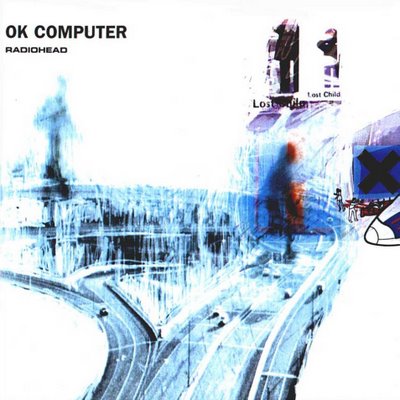
9. Radiohead – “Airbag” (1997)
Growing up, I often vacationed at my Grandparents’ in South Carolina. I enjoyed the beach, I suppose, but was never attached to it. I really could take it or leave it. I spent most of my time talking them or playing games or abusing their piano, a wonderful instrument that is still my favorite (melodious) sound-maker.
One year, I think I was 11; I was sitting in the room at their house in which I slept. Everyone was napping. I hated naps. I still hate naps. I was bored, but I had just joined BMG and received my 25 free CDs, one of which was OK Computer.
This record had only come out less than a year prior, but it was generating what I noticed was unprecedented buzz. I had been hearing so much about them, how they are primed to change rock and roll, and how this record is nothing short of a watershed. So it put it on.
I picked up drumming shortly before this trip. First it was the guitar, then the sleigh bells and bass. By the time Phil Selway’s programmed beat kicks in, I was gone, lost to Radiohead and to OK Computer and the weird world they have constructed. A large part of me is still there, wherever that is, perhaps through a small door in some far off corner of that bedroom, lulling in aural bliss, hoping it never has to leave.
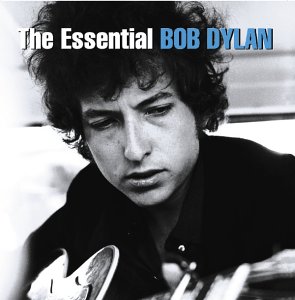
10. Bob Dylan – “You Ain’t Goin’ Nowhere” (1971 Version)
My man. My musical idol. My favorite artist of all-time. The moment I first sat down to listen to Bob Dylan is one I will remember vividly for the rest of my life.
I was in 8th Grade. We were staying after school to work on our 8th Grade musical, a tradition. We were to perform Bye Bye, Birdie. I was to be the drummer in the orchestra, as well as the diegetic high school marching band, and Dad #3 in the “Kids” number. I could care less about anything but the drumming. I got to play a drum set. A really nice one, a Pearl Masters, infinitely better than my own, and in front of a packed theatre full of people, many of whom were young girls. Why do guys start bands, after all?
I was very excited, and in music mode. I recently purchased the newest, double-disc version of Dylan’s Greatest Hits, The Essential Bob Dylan. I had heard so much from my parents about how I might hate his voice, how it’s weird, unpleasant and at best an acquired taste, but I should try it anyway. I put it on and in no exaggerated fashion my life was changed. He escorted me into a moment so intense and so deep I remember every detail, from what I was wearing to the exact seat in the exact row of the theatre, who was next to me and the time.
By the time I reached this track, I knew he was, and would always be, my favorite artist. I wanted to know everything about him. I wanted to see Gunga Din. I wouldn’t stop until I had heard everything, read everything, seen everything, known everything. I identified with him, his style, his words and his music so strongly that in many ways he has shaped everything that I am as a writer, as a musician and as a man.
To this day, every time I listen to him, I can see his photo on that album cover. I can see the Orchard School Auditorium, my disc man in my hands, the expression on Katie Cline’s face and her posture in the chair next to mine. It is a moment so completely etched into my memory, the fabric of my personality, that it and I are inseparable, as am I with the works of Bob Dylan.
When I asked my parents to help me in remembering this list, they tried but ultimately stopped. They concluded that music was always a very big part of my life and even as a young child I was in love, fanatical and devoted, in a very unique and special way, with that which I found to be beautiful. If I loved it then, in some distant center I love it now, and all I would have to do is feel that love to find it.
Today, I put on Revolver and I wrote this article.
Written by Ben Brundage. Check out Ben’s Tumblr.
In The Dust #9: Louis Armstrong and his All-Stars, ‘Louis Armstrong Plays W.C. Handy’
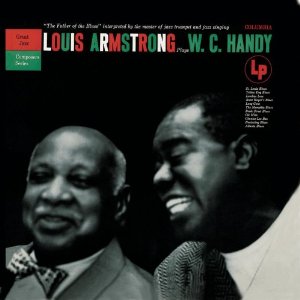
Once a week In The Dust rolls up its sleeves and digs to the back of the rack to find that record, the one you never knew you always wanted, the one that’s lost but not forgotten.
Pops plays “The Father of The Blues.” Could it get much better? The answer, immediately apparent in the first three seconds of the album’s opener, “St. Louis Blues”, is found in seven notes from Armstrong’s horn: no, no, absolutely not.
W.C. Handy is a name that has been tossed around a few times in the history of In The Dust. It happens to be a very important one, particularly when concerning the blues. Popularly referred to as “The Father of The Blues,” Handy is most well known not for inventing the blues, but inventing its modern form and building the archetypal framework for cross-genre interpretations of the blues and visa versa. He introduced blues scaling, color and form into jazz music, a marriage that has stood the test of time and grown to become nearly one. Because of this, it is no surprise that Armstrong would select Handy as his subject of interpretation. However, when concerning Armstrong’s own personal history and musical development, it is a tad curious.
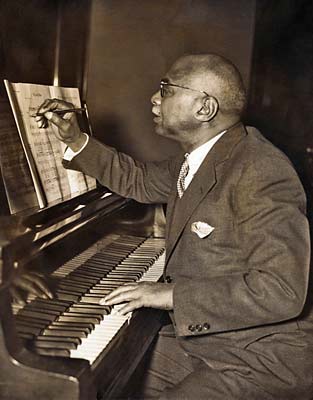
Armstrong grew up in a rough-and-tumble area of New Orleans known as “Back of the Town”. He attended a nearby boys’ school but did not last long. He dropped out at age eleven and joined a boys’ vocal quartet, but the unstructured, latchkey lifestyle led to trouble. Because of periodic delinquency, and firing a gun in a crowded square, Armstrong was sent to the New Orleans Home for Colored Waifs. It is here he learned how to play coronet, joining a military-style brass band with an emphasis on discipline and musicianship. Despite just learning the instrument, Armstrong quickly became bandleader, garnering considerable attention for his command of the instrument at such a young age. Armstrong graduated to playing in city brass bands and fell under the tutelage of the great Joe Oliver, better known as “King”, of King Oliver and his Creole Jazz Band.
Armstrong remembers Oliver thusly:
It was my ambition to play as he did. I still think that if it had not been for Joe Oliver, Jazz would not be what it is today. He was a creator in his own right.
Armstrong credits Oliver as a father figure, and the one who taught him nearly everything he knows, joining Oliver’s Creole Jazz Band in 1922, the hottest and most popular New Orleans’ jazz band of the time, and playing with him off and on for the rest of Oliver’s career.
It is interesting to note that only three years later, in 1925, after Armstrong had moved to New York, joined Fletcher Henderson’s band and switched from the coronet to the trumpet, he played on Bessie Smith’s rendition of Handy’s “St. Louis Blues,” a recording that become of the most popular of the 1920’s and garnered Handy, and Smith, widespread fame and considerable pay.
Armstrong continued to revisit Handy’s work for the remainder of his career, and in full on this collection. Perhaps for economic reasons, perhaps for reasons unbeknownst to the author, but, while Oliver’s influence is the one that dominates Armstrong’s sound, it is the work of Handy that dominates his oeuvre. This collection asserts that, maybe, it is because no one but Armstrong can play Handy so beautifully.
“St. Louis Blues,” the song that inspired the foxtrot, also known as “the jazzman’s Hamlet”, opens the record, beginning with a classically beautiful Armstrong fanfare that, despite the year of this album’s recording, 1954, seems right at home snaking over the undulating dance floor of Harlem’s famed Savoy Ballroom or Cotton Club. The tempo and color when compared to Handy’s 1912 recording is indicative of Armstrong’s recognition of the need to modernize, while retaining the song’s essence and an eye, always, on New Orleans, an impulse that followed him, more or less at times, throughout his career. In his horn and the thick, sultry vocals of Velma Middleton you smell the Pastis and taste the Sazerac as the mixture cascades down upon impossibly slowly, like molasses, until you are encompassed and saturated with joy.
“Yellow Dog Blues,” follows, a lazy-river blues that relieves the tension of the terrifically jubilant, 8:50, “St. Louis Blues,” and sets a deep, upright bass-heavy groove that shines a light on Armstrong’s beautifully quirky and remarkably infectious voice. Drunken horns laugh in the background, cracking blue jokes and downing bourbon with droll, harping clarinets as Armstrong issues references to classic blues lore of the “easy rider,” the “bole weevil”, the “cotton stalk” and even those immortal words W.C. Handy first heard at the Tutwiler Station, waiting for his train, on the infamous day he first heard the blues and the namesake of this song: “goin’ where The Southern cross The Dog”.
“Beale Street Blues,” a true slow-blues standout, opens with soft-lipped clarinets over a fat backbeat, Armstrong singing what is one of the author’s favorite lines in all of music, and, more importantly, the spirit of New Orleans: “You’ll see pretty browns / In beautiful gowns / You’ll see tailor-mades / and hand-me-downs / You’ll meet honest men / and pick-pockets skilled / You’ll find that business never closes / Till somebody gets killed.” Armstrong unrolls his trademark vibrato like a red carpet unfurling, flapping and bouncing past drunks, bums, slinking adulterers, and down a gas-lit promenade. “If Beale Street could talk,” he growls, “if Beale Street could talk / Married men would have to take their beds and walk / Except one or two, who never drink booze / And the blind man on the corner / Who sings the Beale Street Blues”. An image echoed in blues from Blind Willie McTell and a host of others to follows in Handy’s footsteps, “Beale Street Blues” is the familiar smell and the feel against your cheek of the cool side of the pillow on your first night back home after a long time away. Perhaps you have never been to Beale Street, or New Orleans, but this Beale Street, and the warm, bright and perpetually breathtaking solos of Armstrong, are there to greet you and assure you that you never really left.
Armstrong selects “Atlanta Blues (Make Me A Pallet On The Floor)” to close out the collection. The tempo, walking bass line and shuffling hi-hat of “Atlanta Blues” makes a sly, joker’s nod-and-wink to the emerging bebop movement before returning to the rapturous, Charleston-ing blues bounce of Armstrong’s New Orleans, “hot” jazz, Dixie sound. Featuring some of his most boisterous and emphatic solos, it is clear that this song, in classic New Orleans style, is Armstrong’s give-it-your-all send-off. “Just make me a pallet on the floor,” Armstrong repeatedly suggests, as playing like that would leave anyone bushed, and a pallet will suit his humble needs just fine.
And in grand style, Louis Armstrong and his All-Stars draw their tribute to W.C. Handy to a close, Armstrong repeating, “So please, just make me a pallet on the floor,” for once the listener has concluded the last track in this collection, is it not the end of their time together. The curious timbre and lovable theatricality of Armstrong’s voice, the amazement at his unparalleled virtuosity and his friendly, comforting persona will stay with you, as the most welcomed and celebrated houseguest, for some time.
This is a record not to be missed, with a place in every jazz or blues lover’s collection. Handy first appropriated the blues for jazz in 1912. Louis Armstrong, in 1954, re-appropriates Handy for everyone, and in gratitude, respect and pure love, we devote to them, and their brilliant careers, as much space as they should like.
Written by Ben Brundage. Check out Ben’s Tumblr Damned Fine Lion.
In The Dust #8: The Ronettes ‘Presenting the Fabulous Ronettes Featuring Veronica’
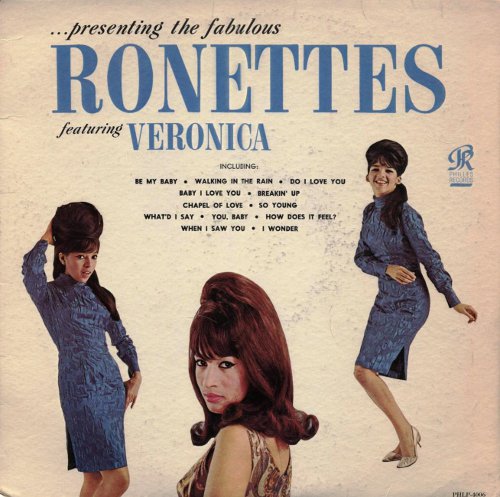
Once a week In The Dust rolls up its sleeves and digs to the back of the rack to find that record, the one you never knew you always wanted, the one that’s lost but not forgotten. (Listen via Spotify)
The Ronettes, despite the clear emphasis on lead singer Veronica Bennett (later Ronnie Spector), were, first and foremost, a family. Contrary to ideas that the group was put together via the traditional girl group cattle-call, Veronica Bennett, Estelle Bennett and their cousin, Nedra Talley, began singing together when they were merely children, performing numbers for friends and family at their grandmother’s house.
“By the time I was eight,” Ronnie Spector remembers, “I was already working up whole numbers for our family’s little weekend shows. Then Estelle would get up onstage and do a song, or she’d join Nedra or my [other] cousin Elaine and me in a number we’d worked out in three-part harmony.”
As the girls grew older, they became enamored of Frankie Lymon and the Teenagers and other popular groups of the day. The Bennett girls, with Talley and two other cousins, Diane and Elaine, took their grandmother’s sing-outs one step further and, with her help, formed a group, choreographing dance moves and orchestrating five-part harmonies to jukebox favorites, “Goodnight Sweetheart” and “Red Red Robin”. Inspired further by Frankie Lymon, they invited another cousin, Ira, a male, to join the group and signed up for Amateur Night at the Apollo Theatre in Harlem.
Billed to perform Frankie Lymon’s “Why Do Fools Fall In Love?” with Ira singing lead, they took the stage at the Apollo Theatre to a notoriously skeptical and antagonistic crowd. The band began to play and the first verse approached. Ira froze. Ronnie acted.
“I strutted out across the stage,” she remembers, “singing as loud as I could. When I finally heard a few hands of scattered applause, I sang even louder. That brought a little more applause, which was all I needed.”
After the tumultuous night at The Apollo, Elaine, Diane and Ira left the group. Veronica, Estelle and Nedra remained together under the moniker Ronnie and The Relatives. The group enrolled in vocal lessons and performed at local dances, parties, and formal occasions. It is as Ronnie and The Relatives that things began to happen for the three young girls from Spanish Harlem.
They played the right shows, shook the right hands and signed to Colpix Records, which lead to a regular set at the Peppermint Lounge in New York City, a feat considering that the girls were still underage. They disguised themselves to be “at least twenty-three” years old every night in order to shirk suspicion and ease their admittance.
During this period of masquerading at the Peppermint Club, the girls adopted the name the Ronettes, and when they decided to end their contract with Colpix Records due to lackluster sales and less than enthusiastic label support, they took the name with them.
Estelle called popular Record Producer Phil Spector, who granted them an audition. He admitted to seeing them perform several times prior and that he had been considerably impressed.
Midway through the group’s first audition for Spector, a rendition of their first Apollo amateur night performance of Lyman’s “Why Do Fools Fall In Love?”, Spector, who had been accompanying them on the piano, jumped from his seat in excitement. “That’s it! That’s it,” he screamed. “That’s the voice I’ve been looking for!” He, of course, was referring only to Ronnie.
He courted her as a solo act but Ronnie’s mother, daughter of their original mentor and tutor of age-defying make-up in their Peppermint Club days, refused, saying that they go together or not at all. Spector agreed and The Ronettes jumped ship at Colpix to join Phillies, Spector’s label, and set about making their first record, Presenting the Fabulous Ronettes Featuring Veronica, a record that, for reasons incomprehensible to the author, is criminally out-of-print and has never been issued on CD, despite holding a place in history as one of the most influential records ever produced and #427 on Rolling Stone’s Top 500 Records of All-Time.
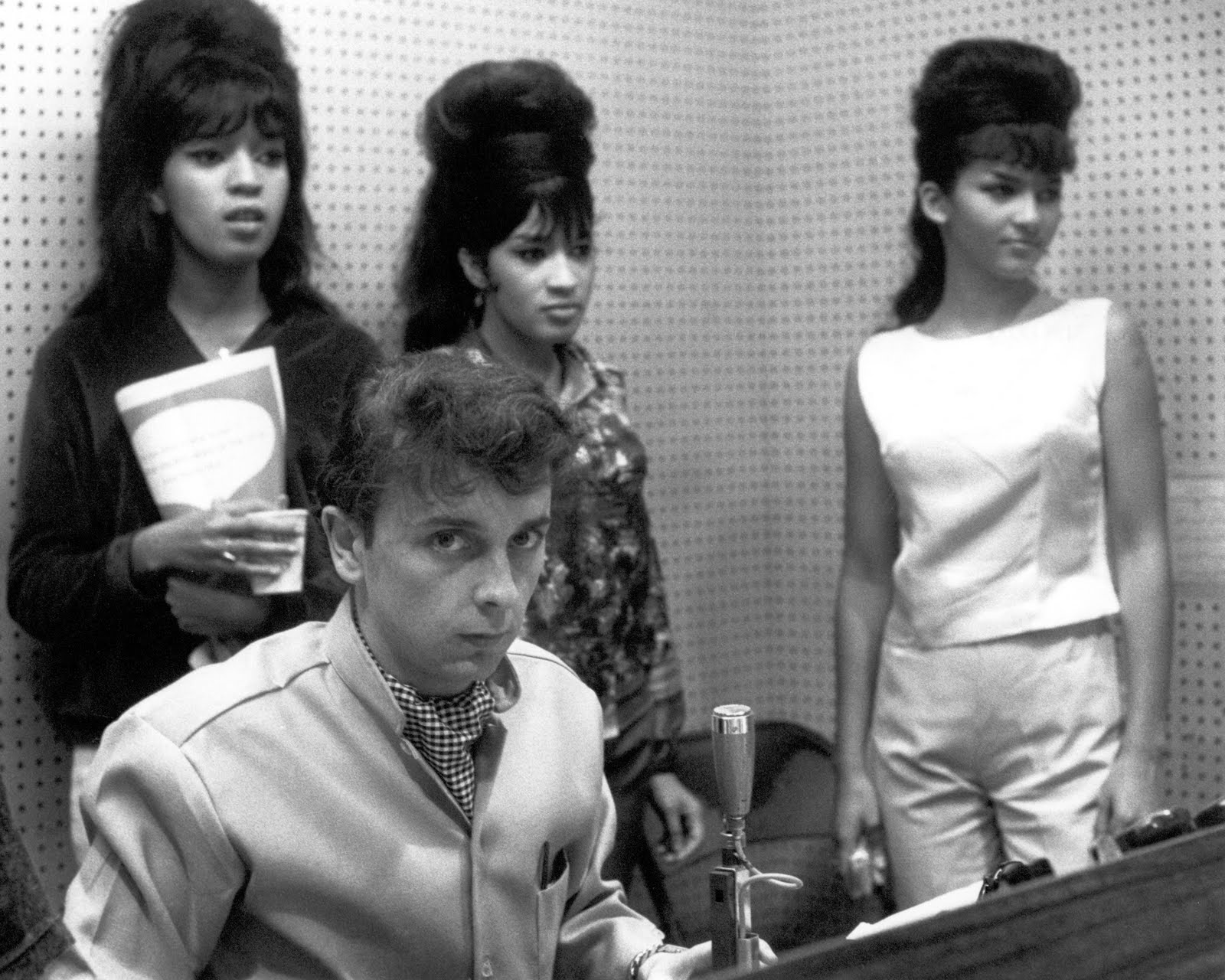
“Be My Baby” was the group’s first single. It went straight to the Top Ten, cresting at #2 on the Billboard Top 100. There was no denying it. The Ronettes had broken it wide open. The song’s effect was permeating. It garnered constant radio play. Brian Wilson recorded “Don’t Worry Baby,” as a tribute to it. It’s one of the most iconic intros in all of music. Bum. Ba-bum. Crack. Bum. Ba-Bum. Crack. And it comes on, a sonic assault so dense, so reverberant it can only be “The Wall of Sound”, a technique invented by Phil Spector specifically with AM radio and mono jukeboxes in mind, featuring four-to-five guitars playing the same part in unison, two basses doing the same, thickly layered percussion, occasionally strings and horns, often in numbers more akin to an orchestra, and all recorded in an echo chamber, plenty of reverb applied. Beneath the spicy Spanish Tinge of castanets and shakers, you hear it: that thick-but-airy, miles-deep sound, pushing upon your ears like a swift dive in the deep end, Ronnie Spector’s angelic, soul-affirming voice casting down to you like a leaden life preserver, floating slowly across the sky for just a moment before breaking the water’s surface, then sinking all the way down, through the mix, to you and facilitating your ascent into the bright, clean air above.
The group’s second single was “Baby, I Love You”. Due to a scheduling conflict, only Ronnie sings on the record, backed by Darlene Love and Cher, who was, believe it or not, a permanent backup singer for The Ronettes. Leon Russell, of Joe Cocker and Leon Russell and The Shelter People fame, a massively brilliant and underappreciated artist in his own right, guests on piano, which is featured prominently on the intro but soon is mostly lost to the Wall of Sound. Like “Be My Baby,” “Baby, I Love You,” is dense, nearly asphyxiating, but considerably more intricate rhythmically. Spector uses many more layers of percussion to cut through the mix like the ‘chuck, chuck’ of a train on its tracks, segmenting the sound, syncopating the strings and emphasizing the bass, providing a colorful, low and buoyant sound to support and lift Ronnie’s voice above its churning engine.
“Walking In The Rain,” is a haunting, Beach Boys-esque slow burn, which Ronnie issued gracefully in a single take. Its Grammy-winning special effects are instantly recognizable. A startling, artificial thunder-clap introduces the record and echoes over the canvas like the flank of a raincoat, carefully escorting the band, Nedra, Estelle, and later Ronnie to the center. Her poised, woeful cry matches perfectly the melancholy arrangement. One pictures her standing at a window, rained in on what would’ve otherwise been a beautiful Saturday out, wishing only to say ‘to hell with it’ and share a walk in the rain 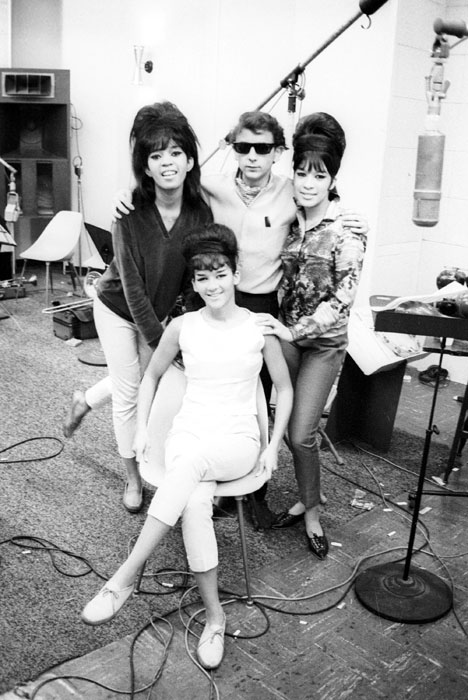 with her man, “wishing on the stars above and being so in love,” but she has no man, she cries. “Johnny, no, no he’ll never do,” and “Bobby, no, it isn’t him, too” because, unlike her, he’ll never love “walking in the rain,” she dreams, imagining the perfectly soaked suitor, compelling every man to get a little wet if that’s what it takes.
The standout of the record is not “Be My Baby,” although it is perhaps comparably famous. “Breakin’ Up” is a jaunty jolt of inspiration that strikes like a medicine ball to the stomach of one’s senses. The interplay of Ronnie’s beautiful, soaring lead lines and Nedra and Estelle’s undulating counterpoint makes for the most stirring, impressive vocal performance on the record. Full of the rubbery, bouncing quality present in the best McCartney, the rhythm of “Breakin’ Up”, reminiscent at times of a blues shuffle, with its simple quarter notes leading to two swung eighth notes and into periodic breaks, is addictive and masterfully crafted. Clocking in only at a trim 2:25, the constant counting and interspersed swing and rupture of the rhythm and gradual fade-out allows the song to appear to stretch, like counting every step in a short walk, making it seem more like a meal than a bite and lending just enough variation for perpetual replay appeal.
Ubiquitous classic, “Chapel of Love,” closes out Presenting the Fabulous Ronettes Featuring Veronica. Rhythmically it is every bit as impressive as “Breakin’ Up”, but for its collective complexity, rather than its basic structure. The arrangement of the auxiliary percussion (castanets, claves and tubular bells) when juxtaposed against the drum kit compounds the simple 4/4 rhythm and transforms it into a propulsive, shuffling forward roll, driving The Ronettes’ excessively square, unisonous and patient harmonic expressions onward and onward, effecting a feeling like that of a montage, as if they truly were heading to the chapel, as a family, fretting and fussing in joy, anxiety and anticipation in the minutes before the clear separation of two lives: a single girl and woman, and a married adult and wife, but coming to terms with the two and celebrating them together.
But unlike the ever-present nature of friends and family, Presenting the Fabulous Ronettes Featuring Veronica is almost a ghost. Nearly impossible to find as a cohesive, properly ordered collection, one could purchase a Ronettes greatest hits compilation, and there are many, but the author, at the behest of the simple purity of the music, implores you to at the very least assemble the tracks in their sequence, as in the method of Phil Spector’s Wall of Sound, and the sequencing of nearly every record, but not so with most greatest hits compilations, there is purpose in order, standing in perpetuity fundamental to the listener’s enjoyment.
The Ronettes broke up soon after Presenting the Fabulous Ronettes Featuring Veronica. They toured briefly with The Beatles, issuing a few singles and managing to record another slew of songs, but as most of us now know the true Phil Spector thanks to his 2009 murder conviction, it is no surprise that he, out of deep love for Ronnie and profound insanity, declined to release said songs, putting The Ronettes on indefinite hiatus for fear that, as a result of their popularity, they might outgrow him and Ronnie leave him. Despite the darkness that surrounds the fallout of this record, Presenting the Fabulous Ronettes Featuring Veronica is rife with the pure ecstasy of a frozen moment, a moment where family first made it, as one, and all was well. It is the kiss of familiar lips on the seal of the all-too-short career of one of the greatest girl groups, and one of the greatest musical families, ever to enliven wax.
Written by Ben Brundage. Check out Ben’s Tumblr Damned Fine Lion
 Thought on Tracks