


In the Dust #13: The Weird and Wild World of Screamin’ Jay Hawkins
Once a week In The Dust rolls up its sleeves and digs to the back of the rack to find that record, the one you never knew you always wanted, the one that’s lost but not forgotten. (Listen via Spotify)
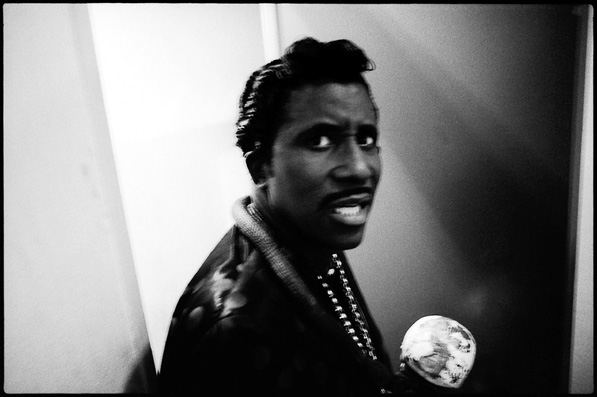
In honor of the 13th edition In The Dust, the first of the new year, one of doom and gloom in which the entire world will purportedly cease to be, it is only fitting that we begin said year with something different, something strange, something spooky.
To that aim, we can do no better than to look at the originator of shock rock, a true iconoclast with a magnificent career that has all too often been written off as novelty, the mystifying and freakish Screamin’ Jay Hawkins, whose unusual upbringing would produce an unusual adult and, most importantly, an unusual talent.
Born Jalacy Hawkins in Cleveland, Ohio in 1929, Jay was 18 months old and cared for by an orphanage when a Native American family of the Blackfoot Tribe adopted him. He managed to teach himself piano sometime during his toddlerhood and could read sheet music by the age of six. By fourteen he could play the saxophone as well. A prodigious talent in many respects, Hawkins was also an avid boxer and won a Golden Gloves Championship in 1943. Despite his skill at an apparent wealth of interests, his singular ambition lay in opera. Hawkins idolized singer Paul Robeson and wished to sing just like him. In 1943, concurrent with his Golden Gloves title, he enrolled in the Ohio Conservatory of Music to study opera.
Shortly into his tenure there Hawkins dropped out to join the war effort. He served primarily as an entertainer, falling back on his early musical roots, performing his own brand of blues-tinged popular songs and standards for weary soldiers, but Hawkins also told an apocryphal tale of his days as a paratrooper, a fact that is widely disputed, and of being captured and held as a prisoner of war, a claim that is largely unsubstantiated. According to Hawkins, upon his liberation from the prison camp, he decimated one of his captors by taping a hand-grenade into his mouth and pulling the pin.
Once he was allegedly freed, Hawkins continued to box and won the Middleweight Championship of Alaska. This would prove to be one of Hawkins’s last forays into the sport as a professional, amateur or otherwise.
After Hawkins’s discharge from the military in 1952, he would return to his musical career, this time without conventionally operatic ambitions, teaching himself how to play guitar and signing on as a vocalist and piano player in Tiny Grimes’s band, best known for his guitar work as a member of the Art Tatum Trio and on several sessions with Charlie Parker. Hawkins went on to perform with a time for Fats Domino, but was dismissed when he attempted to perform in a leopard skin suit.
It is around this time that he adopted the professional moniker “Screamin’ Jay” a nickname given to him by a boxing fan who, excited by Hawkins’s visceral energy in the ring, yelled, “Scream, baby, scream!”
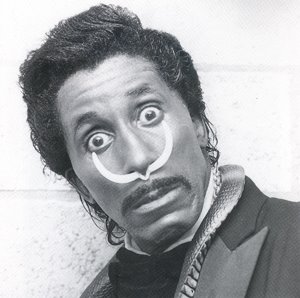
Screamin’ Jay, leopard-clad and often donning wild hats and large red leather boots in conjunction, was fed up with the personal and stylistic demands of the refined jazz-oriented band leaders in whose employ he’d become accustomed. He signed with Okeh Records as a solo artist in 1955, and set about recording his first hit, “I Put A Spell On You”.
Originally envisioned as a refined ballad, some claim “I Put A Spell On You” was released as such, but there are varying accounts as to the authenticity of this claim. Regardless, if it was released it sold very, very poorly. The evening Hawkins was scheduled to record the Okeh/Epic version, possibly the first, possibly the second, the engineer brought in ribs, whiskey and beer to enjoy prior. Not surprisingly, everyone got completely and totally wasted. They set about recording the song anyways. What resulted was a weird, guttural, booming, operatic and utterly insane take filled with odd sound effects, banter, ad-lib, and a heavy, loose band of blasting horns and skittering drums. The next day, when Hawkins and the band listened to the take, Hawkins admitted that he didn’t even remember recording it, but it worked, and he was forced to relearn the entire song according to his blacked out masterpiece.
Now there are countless re-recordings of this song, as it was Hawkins most popular and lucrative. The original article is the heavy, horn-laden and literally bone-jangling bellow-out.
The song, however, much like the rumored first recording, did not sell. Some found the sounds of rattling bones “offensive”, cited references to voodoo and pagan ritual, and a pervasive, overt sexuality. They were removed, the song was tamed and a cleaner version was rereleased. It caught the ear of famous “payola” DJ Alan Freed. Freed curated a “Rock and Roll Review,” and, inspired by Hawkins’s performance of “I Put A Spell On You”, encouraged him to perform, but Freed did not stop there. He urged Hawkins to adapt his stage show to the odd, eclectic world his recording, offering to pay him $300 to emerge onstage from a coffin, an offer which Hawkins accepted, inspiring him to create the outlandish stage persona for which he is still famous today, one featuring gold and leopard skin outfits of curious cut, rubber snakes, the soon-ubiquitous coffin and a skull on a stick adorned with rattling bones, which he affectionately dubbed “Henry”. He appeared occasionally with a bone through his nose, carried a spear and maybe a shield, dancing and chanting in a primitive way that attracted the close attention of the NAACP, who claimed that Hawkins was creating an irresponsible and false association of the black race with cannibalism. Even the National Coffin Association (which apparently exists) objected to Hawkins’s theatrics claimed he was poking fun at the dead.
In the face of such controversy, Hawkins’s stage show remained unchanged and, with his bellowing, classically trained bass voice, went on to reinvent the sound of 50s rock and roll, recording many more great songs for Okeh/Epic including the half doo-wop, half-stomp romp “Orange Colored Sky”, the scatty, horn-laden waltz “Hong Kong”, the bluesy, brash and simply great “Alligator Wine” and, later, for other labels, the downright gross “Constipation Blues”, and the infectious “Feast of the Mau Mau”.
Hawkins later claimed that the shamanic intensity of his performances and his entrance from a coffin gave him chills, which led to substance abuse and alcohol dependency, a hurdle that Hawkins eventually conquered. After numerous tours all over the world, some of which involved playing for troops just as he did at the start of his career, he retired to Hawaii where he lived until his death in 2000. Hawkins died of a failed surgery to treat an aneurysm. He was 70 years old.
His legacy lives on long after his death. None of Hawkins other songs ever surpassed the success of “I Put A Spell On You”, a song that has been covered innumerable times by artists the likes of Creedence Clearwater Revival and on. His act inspired KISS, Alice Cooper, Danzig, Gwar, Black Sabbath, The Cramps, Marilyn Manson and Tom Waits. The dense, operatic performance Hawkins delivered on the original version of “I Put A Spell On You” inspired The Rock and Roll Hall of Fame to select it as one of The 500 Songs That Shaped Rock And Roll.
The legacy of Hawkins personal life is, perhaps, also immortal. At the time of his death, he was said to have fathered over 55 illegitimate children. That number has now risen past 75. At one point, there was a foundation with the sole purpose of discovering and aiding all of Jay Hawkins’s offspring. That foundation has since, apparently, ceased to exist.
As with many great, perished artists, his work has been incessantly butchered out of its original form. Thus, it is nearly impossible to find a full, unadulterated Screamin’ Jay Hawkins release without buying an original LP, or a still reordered and chopped European import CD. It seems the closest and most faithful U.S. release to Hawkins’s original Okeh/Epic years is a collection appropriately titled, Cow Fingers and Mosquito Pie.
Screamin’ Jay Hawkins was an idiosyncratic wonder of prodigious talent, a singular phenomenon, an artist the likes of which we have never seen and, as the disparity between what one is and what has come before, in our time, has closed to an imperceptibly small distance, we will likely never see it again.
Written by Ben Brundage
In The Dust #12: The 10 Best Reissues of 2011
Once a week In The Dust rolls up its sleeves and digs to the back of the rack to find that record, the one you never knew you always wanted, the one that’s lost but not forgotten.
You’ve probably noticed a rush of lists lately, not only here at Thought On Tracks, but from every other music outlet. It’s that time of year, the output of new tracks slows and the critics begin to look back, not forward, as the calendar reaches its last page. We’ve seen the release of some brilliant new music this year, adeptly and diligently covered by our very talented authors, but as most of you may know, the eye of this piece looks not on the new, and this author’s sensibilities are dated and dusty. No release can better purse its lips and release one’s taste from the grime of age than the reissue.
Cleaned up, remastered, rediscovered, retooled, reordered, repackaged, revamped, the reissue is the music industry’s key weapon in the fight against time. Tastes change. Technology advances. Production slows and so does the heart. It is for all these reasons a reissue is necessary, to keep us from forgetting history in a society that is constantly looking forward, behaving as if it has none. Reissues, like Proust’s madeleine cake, re-invigorate a love that feels both lost and everlasting, tied to a period of life into which we are wholly thrust, through the channel of that love, and are allowed to somehow, indirectly, experience again. It is in this spirit that the best reissues are created: thoughtful, reverent, and comprehensive. It is in this same spirit that I present, in no particular order, for each is immortal in its own right, the 10 best reissues of 2011.
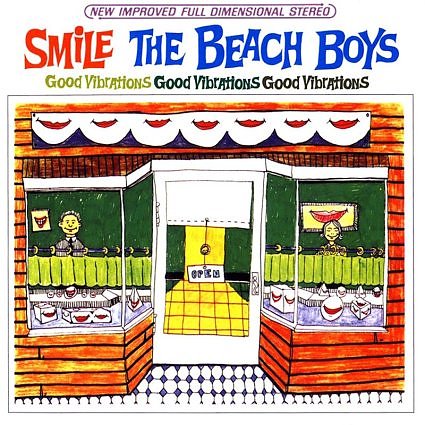
Brian Wilson – The Smile Sessions Box Set
What is there to say about an album that is at once completely incoherent and absolutely brilliant? Borne of utter insanity, Smile and its ancillary recordings are, not surprisingly, in large part utterly insane. Began by The Beach Boys in 1966 as an American answer to Sgt. Pepper’s, Smile held a reputation as one of the greatest and most fabled unfinished projects in the history of rock ‘n’ roll. The Smile Sessions Box Set collects all the tape from the definitive Smile sessions, recorded with The Beach Boys in 1966-1967.
Inextricably tied to its mastermind, Brian Wilson’s, mythical antics, deteriorating emotional condition, abuse of LSD and general erraticism, Smile, Wilson’s “teenage anthem to God”, was widely believed to be dead, forever lost to the annals of rock lore, but with the help of original lyricist Van Dyke Parks and musician and composer Darian Sahanaja, Wilson was able to finally complete the album, rerecording it in its entirety and releasing it in 2004.
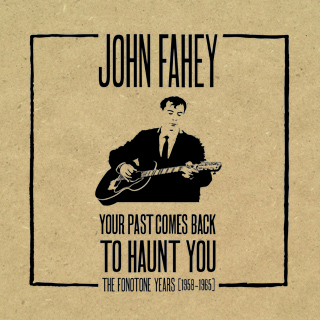
John Fahey – Your Past Comes Back to Haunt You: The Fonotone Years (1958-1965)
Many will not have heard of John Fahey, but if you like M. Ward, you like John Fahey. Ward admittedly built the bulk of his guitar style on Fahey’s brand of minimalist folk fingerpicking, often crediting with spawning its own genre, American Primitive Guitar. Borrowing from a number of American music traditions, Fahey yoked traditional musical strands of American roots together with world and the avant-garde to create something familiar, yet entirely unique.
Your Past Comes Back to Haunt You: The Fonotone Years (1958-1965) chronicles what one might call Fahey’s early nativist period, before he ventured deeper into the avant-garde. The collection is full of faithful interpretations of American music, from old Delta blues to Appalachian string ballads, western rumbles and stomps and beautiful, soul-stirring folk gospel. It is Fahey at his most natural, connecting with the music that, like his blood, sits just beneath the surface of his skin, waiting to leap from it like Whitman’s yawp. It is American musicology, and an American education, in a box.
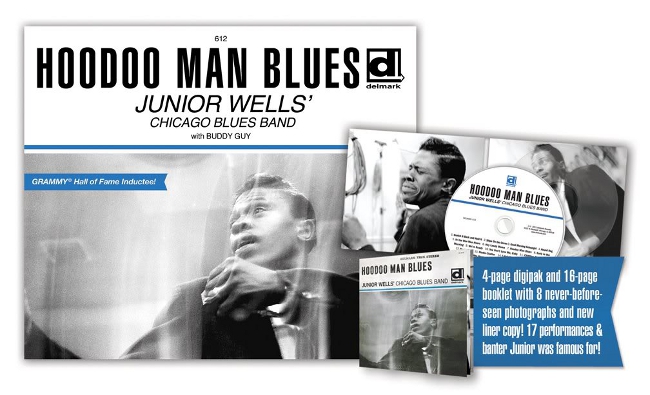
Junior Wells’ Chicago Blues Band – Hoodoo Man Blues [Expanded Edition]
This selection should come as no surprise. Subject of the 6th In The Dust, Hoodoo Man Blues, by Junior Wells’ Chicago Blues Band, is long an author’s favorite. Widely regarded as one of the greatest blues records ever recorded, the 2011 reissue of Hoodoo Man Blues includes one unreleased song, “I Ain’t Stranded”, and loads of studio chatter and alternate takes, giving you a direct look inside the “blues bar band” world of Chicago’s Southside. For more, please see In The Dust #6: Junior Wells’ Chicago Blues Band – Hoodoo Man Blues.
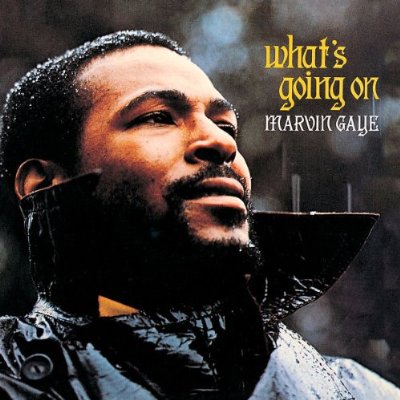
Marvin Gaye – What’s Going On [40th Anniversary Super Deluxe Edition]
In March of 1970, Tammi Terrell, Gaye’s long-time singing partner, died six weeks before her 25th birthday of a malignant brain tumor. Gaye was devastated. He felt responsible for her illness and death. Refusing to perform or record, he withdrew from music altogether and tried out for the Detroit Lions, hoping to begin a career as a professional football player. He was unsuccessful, but this tangent lead to working with songwriters Al Cleveland and The Four Tops’ Obie Benson on a track called, “What’s Going On”, co-written for The Originals. Cleveland and Benson convinced Gaye to record the song himself, eschewing in a newly social, political and further spiritually conscious period in Gaye’s music.
Now, Marvin Gaye’s 11th record, and arguably his most famous, gets the super deluxe treatment. Rereleased with a whopping 28 bonus tracks, 16 of which have never seen the light of day, including a stripped down test mix of “What’s Going On”, original mono mixes of the album’s singles, and a ton of spare parts, alternate mixes and jams, this is a bevy of information on a truly significant American artist at the crux of his career.
Miles Davis – Live In Europe 1967:Best Of The Bootleg Vol.1
Bop. Live. In Europe.
As if that isn’t enough, this recording of Miles Davis’s Second Great Quintet, the first in an intended series, features not only Miles Davis, the original cool cat, heir to Armstrong and Bechet’s thrones as king of the trumpet, it also boasts Herbie Hancock, Wayne Shorter, Ron Carter and Tony Williams, all of whom are fully-realized legends with storied and celebrated careers. This was at the time, and is today, one of the greatest bands ever assembled, and here they are raw, off-the-cuff, unfettered and uninhibited, playing the way the best bands play, fearlessly, dangerously, and in the best of all conditions for jazz: live.
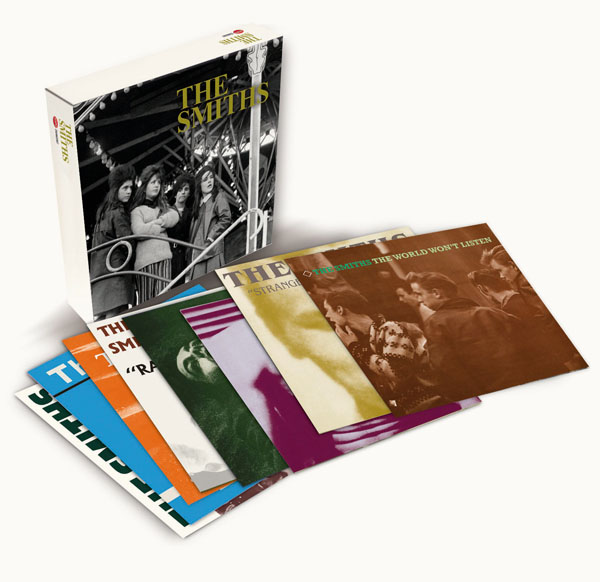
The Smiths – The Smiths Complete
First thing’s first, this is not technically “complete”, so this is not the end of the road for those who want to own everything. They did leave some things out, but this is almost everything: the four studio albums remastered, three compilations of the singles and one-offs and a live record.
For those who know The Smiths, this is a condensed representation of the long and tumultuous career of one of the best bands of all-time. For those who don’t know The Smiths, this is a dense, cavernous route to the essence of a legendarily depressive and hopelessly romantic Manchester alternative rock band, Johnny Marr, its innovative guitarist, and Morrissey, its lead singer, one of the most notorious and iconic frontmen ever, master of tragic beauty:
And if a double-decker bus / Crashes into us / To die by your side / Is such a heavenly way to die / And if a ten-ton truck / Kills the both of us / To die by your side / Well, the pleasure – the privilege is mine
“There Is a Light That Never Goes Out” – The Smiths, The Queen Is Dead
In the words of another poet, the French Dramatist, Jean Racine, “a tragedy need not have blood and death; it’s enough that it all be filled with that majestic sadness that is the pleasure of tragedy”.
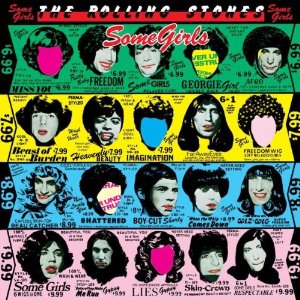
The Rolling Stones – Some Girls [Deluxe Edition]
In a lot of ways an oddball in The Stones’ oeuvre, Some Girls attempts to bridge The Stones’ trademark roughness and modern pop trends. The result is weird, commercial and excellent. The group tackles disco, very faithful country and several strange, punkish brands of western, echoing, as does its cover art, the rising punk movement in the U.S. and their native Britain.
Much more polished than their previous work, and unabashedly more commercially ambitious, Some Girls shows The Stones at a point of portage: crossover into the rage and the popular, or turn around and go the way they came. What resulted is the last great record they ever made. This reissue includes an entire bonus disc of unreleased recordings made during the Some Girls sessions, further document of a band in flux.
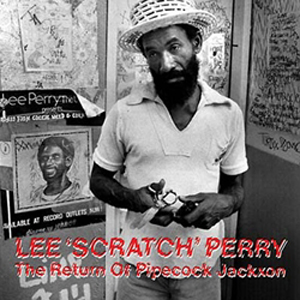
Lee “Scratch” Perry – Return of Pipecock Jackxon
Credited by some as the originator of “dub”, Lee “Scratch” Perry is a reggae legend, instrumental in the growth of reggae and its acceptance across the world. His production techniques are a thing of wonder, widely influential and totally innovative, but his personal life is truly stranger than all. Known to defecate in champagne flutes as an illustration of man’s primitive and animalistic nature and secret them around his house for his wife to later find, Perry’s insanity runs very, very deep, and on Return of Pipecock Jackxon he wears it on his sleeve.
The final album to emerge from Perry’s infamous Black Ark studio in Jamaica before burning it down in a fit of rage to “cleanse himself of his sins”, Perry recorded Pipecock Jackxon during a period in which he frequented Amsterdam and took LSD in bulk. This string of various “escapes” from mounting social tension and personal stress produced what many see as Perry’s darkhorse masterwork, a rich opus expanding on the themes of his past work, while also hinting at a strange and promising future for reggae, dub, and even soul and R&B to come.
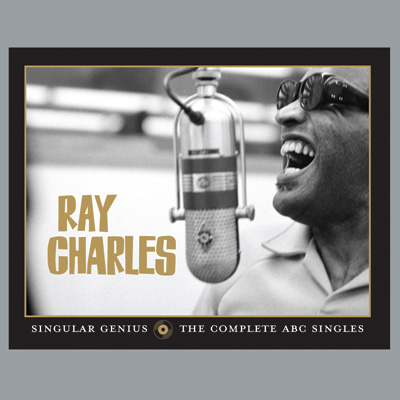
Ray Charles – Singular Genius: The Complete ABC Singles
106 songs and each better than the last, such is Ray Charles’s radical contribution to ABC Records during his 13-year tenure there. Recorded during what is known as Ray’s “crossover” years, the ABC singles are famous for racially integrating country and pop music, and for Ray’s legendary contract, one including several noteworthy stipulations like ownership of his masters, which virtually no one in the industry had ever received, much less a black artist. During this period Ray also realized his power as interpreter rather than author, ceasing to write new material and growing into the iconoclastic and idiosyncratic master of the popular standards for which he was famous in his later years. For fanatics, the set includes both the A and B sides of all 53 singles, 30 previously unreleased songs, and 21 receiving, for the first time, the digital treatment.
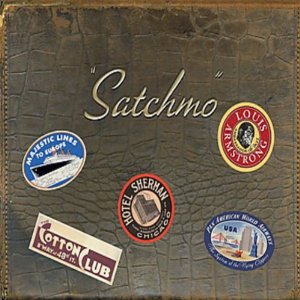
Louis Armstrong – Satchmo: Ambassador of Jazz
OK. Many of you are probably saying that this is cheating. Satchmo: Ambassador of Jazz will not be released in the U.S. for another three and a half weeks, but it’s Louis Armstrong. The rules do not apply.
Armstrong’s influence on music and the world is incalculable. Pioneer of “hot jazz”, scat singing and the trumpet as a solo instrument, Armstrong was truly a visionary, one-of-a-kind, and one the first black performers to completely “cross over”. As a musician he was second-to-none, and as a personality, he was irresistible. His importance, his grandeur, cannot, by any stretch, be overestimated and, honestly, it makes this author’s heart ache to even think about it.
This collection streamlines the former 10-CD Armstrong retrospective into a 4-CD set. Most will probably never need the 10 CDs containing virtually everything he’s ever done, but all should have it. At the very least, all should have this, for it is the gospel, the Bible of music, a love letter to and a symbol of all things indispensable.
As is the nature of a limited list, some things get left out. Honorable mention for the best reissues of 2011 goes to:
Pink Floyd – Discovery Box Set: The Complete Studio Recordings of Pink Floyd
Nirvana – Nevermind [Deluxe Edition]
Jesus & Mary Chain – Psychocandy [Expanded Edition]
And, last but not least:
Iggy Pop & James Williamson – Kill City (Restored, Remixed, Remastered)
All are immortal albums and all require space in everyone’s collection.
Written by Ben Brundage
In the Dust #11: Mississippi Fred McDowell ‘Steakbone Slide Guitar’

Once a week In The Dust rolls up its sleeves and digs to the back of the rack to find that record, the one you never knew you always wanted, the one that’s lost but not forgotten.
When most people today get to talking about the blues masters, they first mention names like Robert Johnson, Muddy Waters, Howlin’ Wolf, B.B. King and Buddy Guy. Further on into the conversation, you hear Elmore James, Mississippi John Hurt, Blind Lemon Jefferson and Son House. Stick around a while longer and there’s Skip James, Charley Patton, Furry Lewis and Tommy Johnson. Take root at that table, settle in, and you get to Mississippi Fred McDowell, slide guitar master, renowned to those well-initiated, but relatively obscure to many.
Of course this conversational progression is by no means doctrine of blues hierarchy, but it is a fact that Fred McDowell is rarely mentioned in the same breath as many other early masters of the craft, despite the fact that he was their contemporary. This is not for lack of talent, but rather the unusual origin of McDowell’s blues that set him apart.
McDowell was born in 1904 in Rossville, Tennessee but eventually moved to Mississippi, working for a spell in a feed mill in Memphis and settling in Como, a town in a region known as ‘North Mississippi’, just to the east of the Delta. It is here McDowell lived and developed his own brand of the blues. He began playing slide guitar with a pocketknife, as did Henry Sloan (a man mentioned many times here, famous for playing the first blues W.C. Handy ever heard and writing the ubiquitous lyric, ‘goin’ where The Southern cross The Dog’). McDowell then graduated to a ground-down steak bone, for which he is famous, and eventually a true glass bottleneck. As played by McDowell, this brand of blues, referred to as ‘hill country’, is a slide-based, Delta-esque style that incorporates some of the finger-picking flourishes of East Coast, ragtime-influenced Piedmont blues, while emphasizing African traditions like droning and single chord “harmonic centers” played in repetition, rather than complicated chord changes and drastic variations movement to movement. Succeeded by the more modern artists of Fat Possum Records such as Junior Kimbrough and R. L. Burnside, Mississippi Fred McDowell was arguably the first successful ‘hill country’ blues artist. He is widely regarded in deep blues circles as one of the most technically talented slide guitar players to ever slip on the bottleneck but does not often receive the same accolades as his contemporaries because of this slightly removed, heavily localized and “primitive” style.
Like many seminal blues artists active in the 20s and 30s, McDowell’s popularity subsided in the late thirties, concurrent to the approach of the Second World War, but a rise in the popularity of folk and blues music in the late fifties brought about an infamous rediscovery period for all music Americana, of which McDowell was a primary beneficiary. He recorded with the truly immortal Alan Lomax in 1959, which eschewed McDowell into a career renaissance. His music received state-of-the-art sonic treatment, rather than the hasty, acetate field recording he was used to. The uniqueness and virtuosity of McDowell’s sound showed through for the first time in crystal lucidity (a track recorded by Lomax from early in this period, indicative of the audio quality and guitar styling of the sessions, is “What’s The Matter Now?”, and well worth checking out). The records recorded by McDowell and Lomax proved immensely popular and he toured extensively as a result. Those recordings still stand today as some of the finest, most poised and truly remarkable tracks of his career.
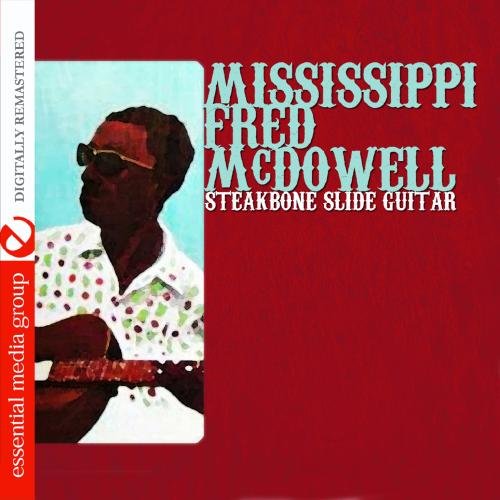
One such record, Steakbone Slide Guitar, McDowell’s first solo electric album and one of the last he recorded before his death in 1972, exhibits the searing slide, soulful articulation and idiosyncratic, indefatigable spirit for which his music, and the man himself, is still revered.
The album opens with the blues standard, “Good Morning Little Schoolgirl”, originally recorded in 1937 by John Lee Williamson (AKA Sonny Boy Williamson I). This song has been done and done and done by almost every bluesman under the sun, but McDowell, somehow, seems to imbue it with new life unlike any other rendition this author has heard. His acrid but immensely satisfying slide work elicits a kind of vibration deep in your mind’s center akin to floating in still waters. The hypnotic tweak and twang of his glass bottleneck, mimicking his vocal patterns in a songbird’s call-and-response, juxtaposes with a clean, sharp melodic attack his gruff, aged vocals, emulsifying into a strange, southern syrup tinged with the mellow sweetness of sugar cane and decades of toil’s salty tang.
McDowell proceeds to play several timeless blues standards, such as the first song he ever learned, “Big Fat Mama”, as well as “The Train I Ride”, “Get Right Church” and “Worried Life Blues”, billed here as “You Ain’t Gonna Worry My Life Anymore”, all in beautiful, skillful fashion, sliding up and down his open-tuned neck with a calm and practiced air, often embellishing with “talking slide”, a common but nonetheless impressive technique where the last, or last few, words of a particular phrase are dropped and replaced by a slide guitar’s approximate enunciation, fore-father to the modern talk box popularized by Peter Frampton and wah-wah pedals of Hendrix and countless funk acts.
The centerpiece of the record is a McDowell original, “What’s The Matter With Papa’s Little Angel Child?”. Perhaps the most classically ‘hill country’ of all the songs on the record, McDowell stays on a repetitive, finger-picked progression, circling doggedly the harmonic center, milking from it a churning, trance-like phrase which he intersperses with choice flourishes on his top strings, moving his thumb-heavy bass up a string or two but working still underneath, anchoring, pulling you deeper and deeper into the groove and out of your body. “I wonder what’s a-matter / With Papa’s little angel child? / She won’t come home / ‘Til twelve o’clock at night,” he cries, his guitar seething and writhing as if it were his rogue thoughts and he is wrestling with it, calling out in desperate agony like a snake charmer no longer in control of his serpent: “the meanest woman, lord, you’ve e’er seen.”
The album closes with the song for which McDowell is likely most well-known, “You Gotta Move”, a slow, twisting exhibition of slide mastery made famous by The Rolling Stones of their celebrated 1971 album, Sticky Fingers. McDowell, who was later clung to like a shark with so many suckerfish by the rock-and-rollers and blues-wannabe, rediscoverers-and-appropriators the 60s and 70s, famous declared, “I do not play no rock ‘n’ roll.” He was reluctant to associate himself with younger pop acts, but taught the worthy, including Bonnie Raitt, with generosity and patience the ways of slide. Despite his aversion to rock-and-rollers, McDowell was flattered and delighted by The Rolling Stones remarkably faithful rendition of this song, and when listening to McDowell’s original, it is clear that The Stones went to great lengths to preserve the essence and tonal integrity of a master’s masterpiece.
Blues historian and music critic, Robert Palmer, wrote in his classic book, Deep Blues, about the truly subtle and almost imperceptible tonal intricacies of blues music, the bending of notes so delicately and precisely that a particular intonation is achieved, both vocally and instrumentally. A music thought by many uninitiated to be primitive, loose, even sloppy, Palmer argued is, in fact, extraordinarily and almost incomprehensibly complex, a somewhat mystical musical style built upon difficult techniques honed over years of physical and mental preparation, often born of a very specific upbringing, one of anguish, hard work and a complicated relationship with a very Southern brand of faith.
“You Gotta Move” is, in the author’s mind, perhaps the best example of that precise intonation. McDowell delivers a powerful, brilliant performance, but the magnitude of its brilliance could just as easily be confused for not giving a shit whatsoever. Somewhere in this gray area is the mystical allure of the blues, a seemingly relaxed, low-down and easy musical form that, once examined, becomes a convoluted abyss of names, genres, sub-genres, styles, apocryphal tales and astonishing skill. McDowell straddles that line better than most, laying back during “You Gotta Move” in a special sweet spot, “the pocket”, setting fire to shine soaked juke joints with the scorch of his slide and beckoning patrons to dance the building down with a cool, throaty holler.
Maybe it is the seemingly sleepy, sly, cock-eyed vibe of the droning ‘hill country’ blues that kept the genre and its artists so long from the popularity that other brands of other Southern blues experienced? Maybe it is their slightly removed position from the Delta, plantation-cum-blues Meccas Dockery and Stovall and the infamous Beale Street that held them back? Maybe it is the superficially simple use of the harmonic center that led audiences to gravitate to more apparently complex forms? What it is the author cannot say, but if exploring the vast musical tradition of the ‘hill country’ means digging deep into blues and its periphery, passing on the way the Blinds, the Johnsons and the Jameses, marooning oneself on a distant and reputedly “lesser” form of blues all in the name of finding one man who can make the guitar speak in a tongue you’ve never heard, then the answer is simple. You gotta move.
This album is available via Spotify and iTunes.
Written by Ben Brundage
 Thought on Tracks