


Vintage Track: Curley Moore “Don’t Pity Me”
New Orleans has long maintained its rightful reputation as one of the all-time great music cities. If the U.S. can claim one genre of music as “ours” then it is most certainly jazz, the foundations of which were laid down in the seedier corners of the Crescent City’s brothels and bar rooms at the turn of the 20th century. Though I have an appreciation for its jazz heritage, I’ve always been more taken by New Orleans’ contribution to R&B and soul that reached a fever pitch in the early 1960s. Artists like Dave Bartholomew, Ernie K-Doe, Earl King, Allen Toussaint and Professor Longhair deserve a lion’s share of the credit for shaping a sound that would serve as the backbone of rock n’ roll and funk for the decades to follow.
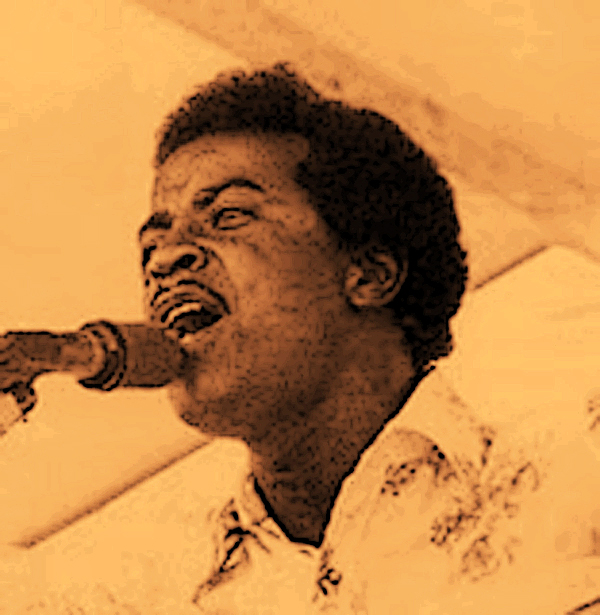
One under-appreciated voice from this golden era of Crescent City soul arrives in the form of June “Curley” Moore. Moore’s contributions can be traced back to a handful of 45s and compilation appearances cut by local labels like Sansu and Hot Line Records. With such a limited catalog, serious vinyl collectors are left to fork over hundreds of dollars on the rare occasion that one of these gems surfaces. Fortunately, for those of us with shallow pockets, a phenomenal compilation Allen Toussaint: Saint of New Orleans was made available in 2009. The disc features two of Curley’s tracks, my favorite of which is featured below. Listen to “Don’t Pity Me” for a taste of Moore at his best. Though wrought with emotion, Moore’s vocal style could be described as thin, occasionally quavering. Regardless of the description, Moore’s is a voice that we can all agree was criminally under-circulated, both then and now.
Written by Rob Peoni
You Might Also Like:
Album Review: Van Morrison ‘Veedon Fleece’
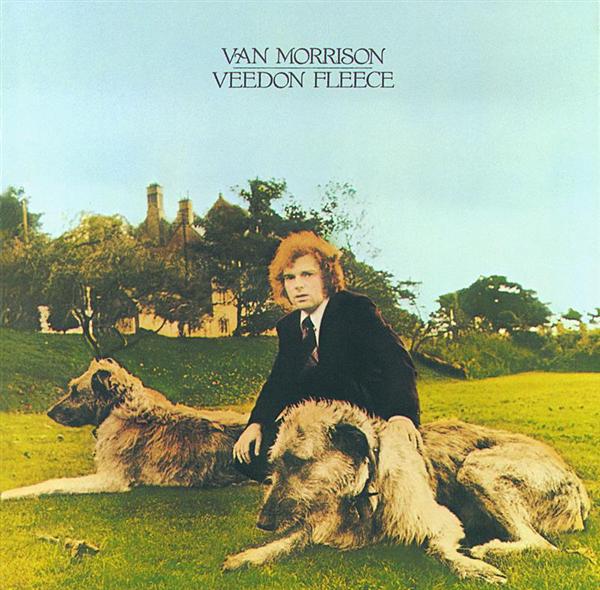
In the fall of 1973, Van Morrison returned to his native Ireland for the first time since his 1967 departure. The vacation arrived on the heels of a successful summer tour with his 11-piece band The Caledonia Soul Orchestra and the dissolution of his marriage to Janet Rigsbee. Accompanied by his new fiancée and the core of his orchestra, Morrison spent the bulk of the trip traveling southern Ireland and recording much of the material that would comprise his eighth studio album Veedon Fleece.
Released a year later, Veedon Fleece was dismissed by critics as a misguided attempt to recreate the magic of Astral Weeks. Rolling Stone’s Jim Miller went so far as to refer to the album’s score as “mood music for mature hippies” and argue that Morrison’s vocals suggested “a pinched vocal nerve drowning in porridge.” Needless to say, the reaction was less than a ringing endorsement of the songwriter’s return to his mellower roots.
In the decades since its release, Veedon Fleece has taken on a mythical quality amongst Morrison devotees, with many slapping the title of “forgotten masterpiece” on the release. One prominent reason for Veedon Fleece‘s forgotten status largely falls on the shoulders of Morrison, whom at least publicly, appears to have no affection for the LP. He has rarely, if ever, performed the material live and it is routinely ignored on Greatest Hits releases and retrospective compilations. The album is unavailable for digital download on iTunes and cannot be streamed by U.S. users on Spotify. However, CDs and vinyl surface routinely on Amazon and most decent record stores. Morrison appears content to leave the album as what it is: a stream-of-consciousness snapshot of an artist’s return home in the midst of an emotional transition.
Morrison spent the years between Astral Weeks and Veedon Fleece churning out a string of R&B and soul classics. Moondance, Tupelo Honey, St. Dominic’s Preview and Hard Nose the Highway all found their way into the top 30 of the Billboard charts for their respective years. Those releases solidified Morrison’s position as a bona fide star, and largely found the artist working within the constraints of American pop music of the era. Though much of that material represented a sharp contrast to the free-flowing Astral Weeks, tracks like 1972’s “Listen to the Lion” should have indicated Morrison’s return to his earlier self.
Veedon Fleece opens with a pair of sprawling, piano-driven tracks accompanied by an upright bass, brush-stroked drums and acoustic guitar. Flourishes of flute and strings replace the big brass sound that had dominated Morrison’s preceding records. The additions provide depth without abandoning the album’s sparse, intimate feel. The music tends to swell and recede in intensity giving the collective tracks the feeling of a long conversation more than separate discussions. While Veedon Fleece may not reinvent the wheel from a musical standpoint, it is nevertheless a satisfying slow roll that coheres nicely.
Lyrically, Morrison appears inspired by his Irish landscape and the bards of previous generations. He references Oscar Wilde, William Blake and the Eternals and the “architecture of his mind.” Miller is reasonable in his assessment of these themes in his review, arguing that they are pretentious and self-aggrandizing. However, I would argue that it’s little more than Van being Van. To expect otherwise is a futile task.
There is little on Veedon Fleece that resembles a radio-ready track, with the notable exceptions of the album’s centerpieces “Cul de Sac” and “Bulbs.” Although, the same could be said about Astral Weeks, long thought of as an all-time-great pop record, but one that largely worked in contrast to the more traditional folk and rock of its peers. Love it or hate it, Veedon Fleece is the closest that Morrison ever came to offering up a sequel to Astral Weeks. For that reason alone, it deserves your consideration.
Connect with Van Morrison via Facebook | Twitter
Written by Rob Peoni
Funky Reissue: The Pharaohs ‘Awakening’
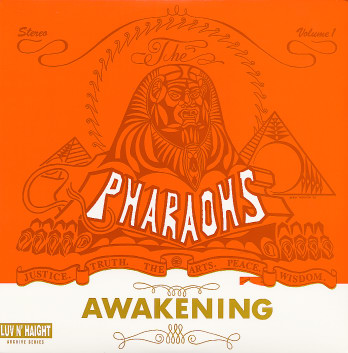
Somewhere between the drug-infused madness of Parliament Funkadelic and more traditional 60s-era jazz and soul releases, resides The Pharaohs 1971 LP Awakening. The album is one of a pair of releases by a band whose members would go on to leave an indelible mark on popular music, both of which are currently available through Ubiquity Records.
The story of The Pharaohs is forever intertwined with the establishment of the Affro Arts Theater on Chicago’s southside, in 1967. The venue doubled as a community center that served as a prominent outlet for black artistic culture of all kinds. The Affro Arts Theater was founded, in part by Phil Cohran, original cornetist in Sun Ra’s legendary Arkestra. Cohran’s presence began to attract a who’s who of session musicians from Chess Records, Crane Junior College and other hotbeds of the Chicago music scene at the time. The Pharaohs were the result of a merger between the Cohran-led Artistic Heritage Ensemble and a student band called The Jazzmen.
Awakening begins with “Damballa”, a statement piece named for the voodoo Sky God that clocks in at just more than eight minutes. Imagine an up-tempo version of the jazz standard “Caravan” with Brazilian-tinged, Afrobeat underpinnings. It begins with the alarming punch of the horn section followed by relentless, rollicking play on percussion. The chanting that appears intermittently throughout “Damballa” points to an almost ritualistic element to the music. With that, the stage is set.
The Pharaohs remain in this African motif for the second track “Ibo” before entering guilty pleasure territory on a lounge-like rendition of Smokey Robinson’s “Tracks of My Tears.” The cover and follow-up track “Black Enuff” serve as an accurate portrayal of popular black culture at the time, serving as a preview of the music that would supply the soundtrack to popular films like Superfly the following year.
For my money, the real magic happens on the album’s latter half. Just two tracks, the b-side clocks in at just less than 20 minutes. “Freedom Road” and “Great House” feature The Pharaohs at their loosest, with trumpeter Charles Handy and trombonist Louis Satterfield offering alien riffs on horns. In 1971, jazz had yet to take on its professorial persona and performances still implied a raucous dance party.
The Pharaohs released their lone follow-up in the form of 1972’s In The Basement. By 1973, Maurice White, original drummer for the Artistic Heritage Ensemble, poached much of the band’s brass section to form the foundation of The Phenix Horns – the widely celebrated horn section of the White-led Earth, Wind, and Fire. The rest as they say is history. The sound created by The Pharaohs, and Sun Ra before them, would be borrowed and imitated for decades to come. Fortunately, thanks to Ubiquity, we all have the opportunity to enjoy the original article.
Written by Rob Peoni
 Thought on Tracks